A cloud of winged insects circling the porch light on a warm, damp evening is how many South Florida homeowners first meet termites. Those insects are termite swarmers. They do not eat wood, yet their arrival says a good deal about what is living in or near the house.
What Termite Swarmers Are
Swarmers, also called alates, are the winged reproductive adults of a termite colony. They have one job: leave the nest, find a mate and start a colony of their own. Most measure about a quarter to three-eighths of an inch long and carry two pairs of wings that are equal in length.The wood damage in a home comes from the workers, which never leave the colony and are rarely seen. Winged termites cause no structural damage themselves. Researchers describe them as an indicator of a potential problem, which is the most useful way to read a swarm.
Why Flying Termites Suddenly Appear
A swarm looks sudden because the colony has been waiting for the right conditions. Colonies release swarmers only after reaching a certain size, and for most that happens once a year. The preferred launch window is the day after a rain shower, with overcast skies and winds under 6 mph. Humid air improves the odds that the fliers survive.That description fits a large share of evenings in Miami-Dade, Broward and Palm Beach counties, where warm rain is routine for much of the year. Timing also varies among the termite species in Florida, with some flying at dusk or after dark and others in daylight, so flights here are spread across more months than homeowners in cooler states expect.
One flight is rarely the whole event. Launches are typically spread over a few days, with one large release followed by smaller ones.
What an Indoor Swarm Means Compared With an Outdoor One
Location is the first thing a technician asks about, because it changes the meaning of what you saw.A termite swarm outdoors, around a streetlight or drifting across the yard, may have come from a tree stump, a fence or a neighboring property. After mating, the pairs drop to the ground, shed their wings and search for a place to nest. Subterranean colonies can send out hundreds or even thousands of fliers, while drywood swarms are usually far smaller, often no more than 100. An outdoor flight means termites are established in the neighborhood and are looking for new sites, yours included.
Swarmers emerging inside the house are a stronger signal. Fliers coming out of a wall, a window frame, a baseboard or the attic point to a mature colony in the structure or directly beneath it. Those that cannot get outside usually die from lack of moisture.
Dead Swarmers and Discarded Wings
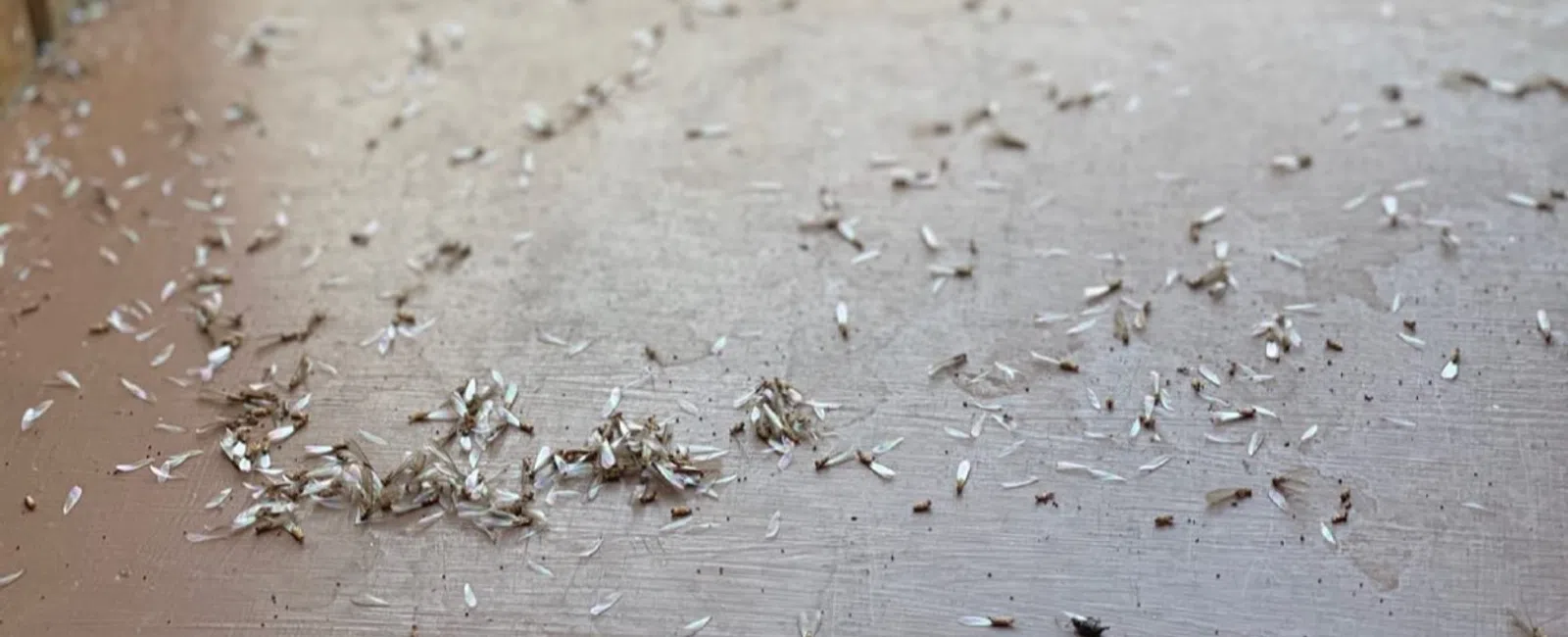
Many homeowners never see the flight itself. Swarmers are drawn to light, so the evidence tends to collect on windowsills, around sliding doors and beneath light fixtures. Quite often all that remains is a scatter of dead insects or only the wings.Small, translucent wings of identical size count among the more reliable signs of termites in a South Florida home, and they are worth taking seriously even when no live insect is in sight. Drywood colonies leave a second clue nearby, since termite droppings pushed out of the wood tend to pile up below the same infested trim or framing.
Flying Ants That Get Mistaken for Swarmers
Ants send out winged reproductives too, often in the same weather. A termite swarmer has a tube-like body, straight beaded antennae and four wings of matching length. A flying ant has a narrow waist, elbowed antennae and front wings noticeably longer than the back pair. The two can be hard to separate once the insects are dead and dried on a windowsill, which is one reason identification is part of an inspection.Why Killing the Swarm Does Not Solve the Problem
Reaching for a spray can is the natural reaction, and it does remove the insects in the room. The trouble is that the swarmers were going to die indoors anyway, and the colony that produced them is somewhere else: inside wall framing, in attic lumber or in the soil under the slab. Nothing aimed at the fliers reaches it. Sweeping or vacuuming them up is all the cleanup they need.Stopping the source takes two answers a homeowner usually cannot get from the swarm alone:
- One is the species, because drywood and subterranean termites live in different parts of a building and call for different treatment.
- The other is the extent of the activity, since swarmers reveal that a colony exists and nothing about how far it has spread. This is the point where a professional termite inspection does the heavy lifting. Royal Pest & Termite inspects the interior and exterior of the home, identifies the termite involved and matches the treatment to what is found. A contained drywood colony may be treated without a tent, a subterranean colony is addressed at the soil, and widespread drywood activity can call for whole-structure fumigation.
What to Save for the Inspector
A little evidence speeds up the visit. Keep a few of the insects or wings in a sealed bag or jar, take a photo of where they gathered, and note the date and time of day you saw them. Time of day matters because species fly on different schedules, and the exact spot helps the technician narrow down where the colony is exiting.Homeowners planning to sell have one more reason to act early. Evidence of termites is what a WDO inspection documents during a real estate transaction, and it is easier to deal with on your own schedule than in the middle of a closing.