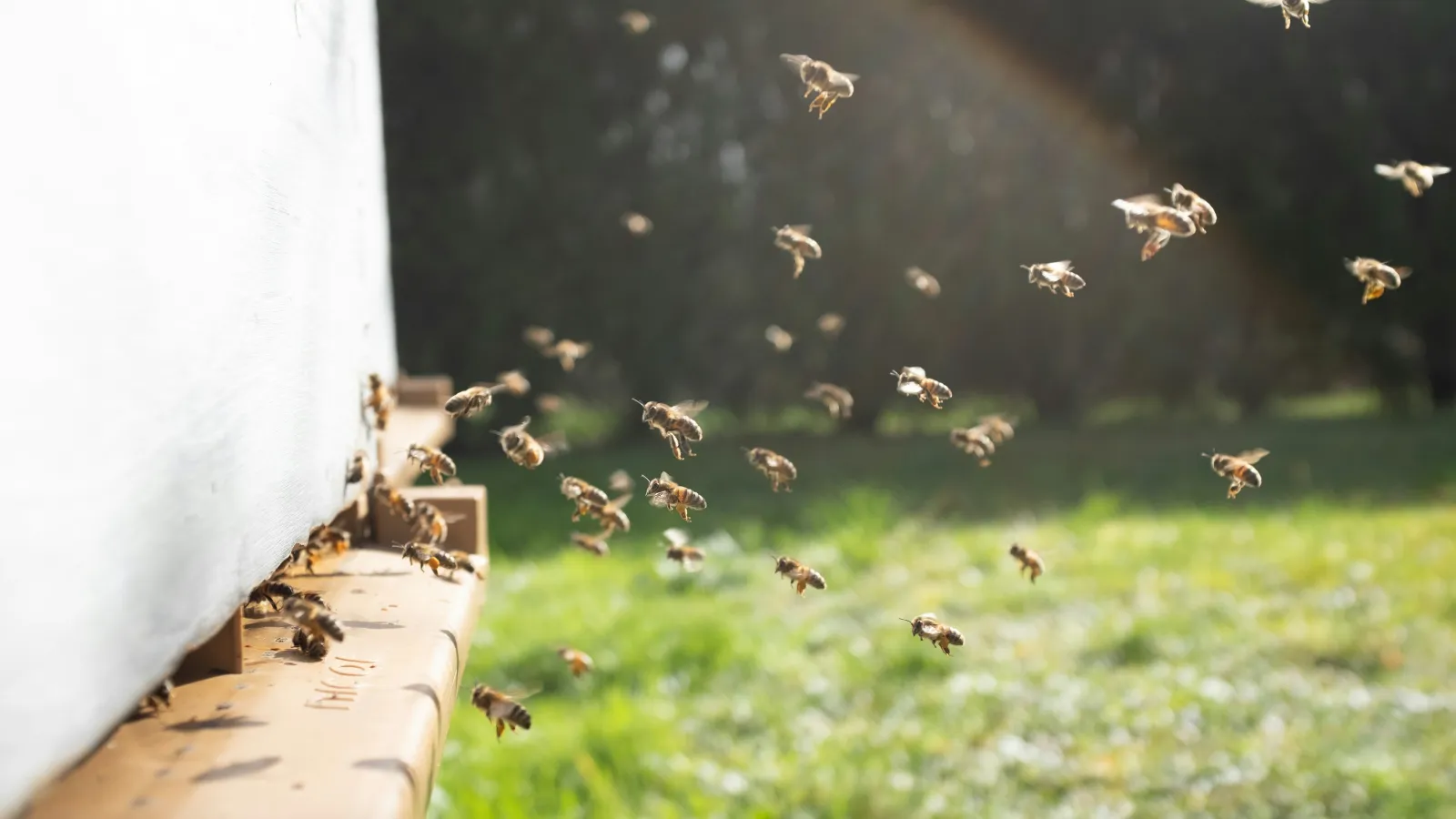
hero image

Bee & Wasp Control in South Florida

Safe Removal of Bees, Wasps, Hornets & Yellow Jackets From Your Property

Request a Quote

Black circular logo with the stylized letters C and G intertwined on a white background

★★★★★

4.8 Rating

Black lowercase letter f on white background representing Facebook logo symbol.

★★★★★

4.6 Rating

Man in full beekeeping suit giving thumbs up near truck loaded with beekeeping equipment outdoors.

Professional Bee Removal & Wasp Nest Removal in South Florida

Finding a bee hive in your soffit, a wasp nest under your eaves, or yellow jackets nesting in your wall isn't just alarming; it's a safety risk for your family, your pets, and anyone who visits your property. Stinging insects become aggressive when their nest is disturbed, and for people with allergies, a single sting can be a medical emergency.

At Royal Pest & Termite, we handle the full range of stinging insect problems that South Florida homeowners deal with: honeybees, carpenter bees, paper wasps, yellow jackets, hornets, mud daubers, and everything in between.

Bees, Wasps, Hornets & Yellow Jackets in South Florida

Identifying the species is the first step in any stinging insect treatment, because different species require different approaches. Here are the most common stinging insects we remove from properties:
Beekeeper in yellow gloves holding a honeycomb frame with bees in a sunny grassy field.

Honeybees

Honeybees are essential pollinators and are generally non-aggressive unless their hive is threatened. They build large, waxy hives containing honeycomb, often inside wall cavities, soffits, under roof overhangs, in hollow trees, and inside utility boxes. Honeybee hives can contain thousands of bees and produce significant amounts of honey and wax that can attract other pests and cause structural staining if not properly removed.
Bumblebee collecting nectar from pale pink clustered flowers in a natural green garden setting.

Carpenter Bees

Carpenter bees are large, solitary bees that bore perfectly round holes into wood to create nesting galleries. They target fascia boards, deck railings, pergolas, wooden furniture, and unpainted or untreated wood surfaces. While a single carpenter bee may seem harmless, they return to the same wood structures year after year, and their holes allow moisture, decay, and woodpeckers to compound the damage.
Close-up of an orange wasp with transparent wings on a white surface with dirt marks.

Paper Wasps

Paper wasps build small, open-celled, umbrella-shaped nests from chewed wood fiber. You'll find them under eaves, porch ceilings, pergolas, playsets, mailboxes, and in any protected overhang. Paper wasps are semi-aggressive and will sting if they feel their nests are threatened, making nests near doorways, walkways, and outdoor living areas a safety concern. They're the most common wasp species in South Florida homes.
Close-up of a yellow and black wasp resting on a reflective surface showing its detailed body and reflection

Yellow Jackets

Yellow jackets are the most aggressive stinging insect in Florida. They build enclosed nests in the ground, inside wall voids, in attics, and inside other protected cavities. Unlike honeybees, yellow jackets can sting multiple times and become extremely aggressive when their nest is disturbed. They’re attracted to food and sugary drinks, making them a particular problem around outdoor dining areas, garbage cans, and barbecues.
Close-up of a yellow and brown wasp resting on a textured green leaf with detailed body and wings visible

Hornets

Hornets build large, enclosed, paper-like nests that are often found in trees, under eaves, in shrubs, and occasionally on structures. Bald-faced hornets are the most common species in South Florida and are highly territorial; they will aggressively defend their nest if they perceive a threat within several feet. Hornet nests can contain hundreds of individuals and should never be approached without protective equipment.
Close-up of a black and orange wasp perched on delicate yellow wildflower buds with blurred green background

Mud Daubers

Mud daubers are solitary wasps that build small, tube-shaped mud nests on walls, under eaves, in garages, and on outdoor structures. They’re generally non-aggressive and rarely sting, but their nests are unsightly and can stain surfaces. Multiple mud dauber nests in the same area can also indicate a larger insect population nearby, since mud daubers stock their nests with spiders as food for their larvae.

How Our Stinging Insect Removal Process Works

From your first call to ongoing protection, here's what to expect when you partner with Royal Pest & Termite.
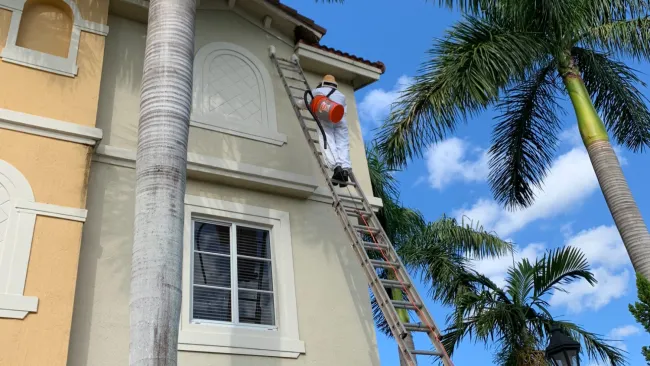
Painter wearing protective gear climbs ladder to paint a two-story house exterior on a sunny day.

Free Inspection & Estimate

We start by assessing the situation: identifying the species, locating the nest, evaluating the size of the colony, and determining the safest and most effective treatment approach. We'll discuss the bee activity you've observed, how long it's been going on, and whether anyone in the household has a sting allergy.
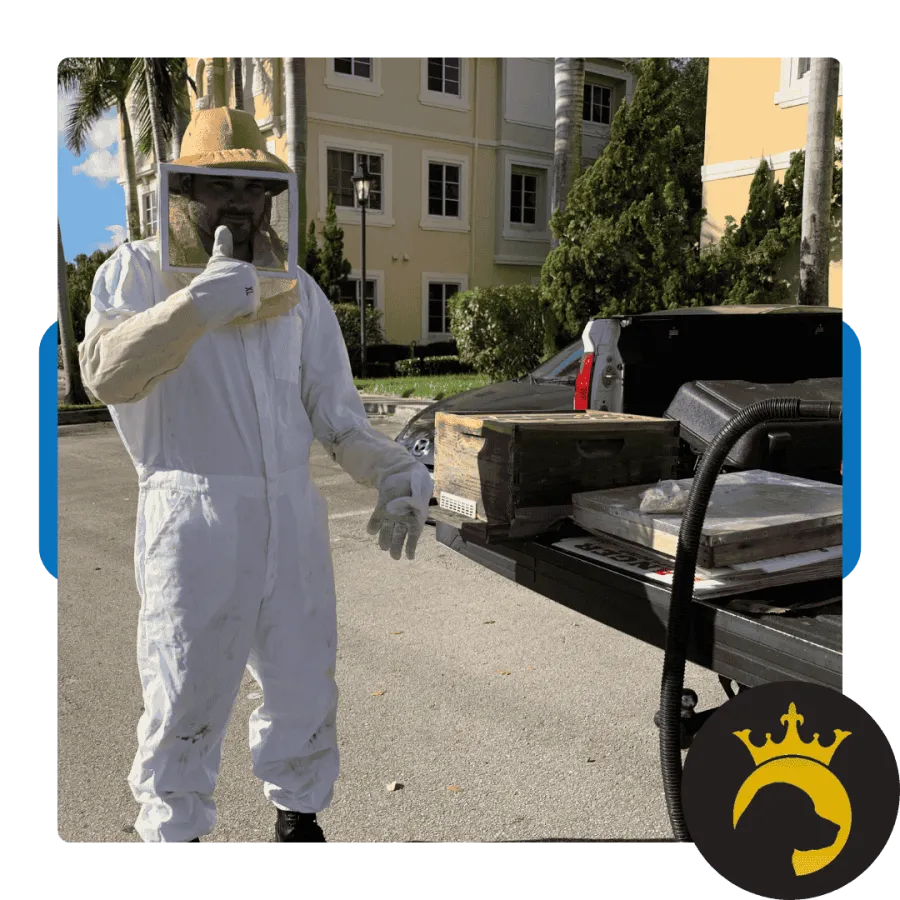
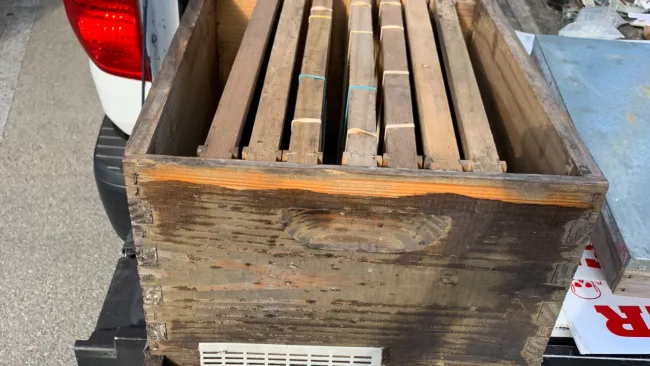
Old wooden bee hive box with removable frames sitting on a truck bed outdoors.

Treatment or Relocation

Based on the species and situation, we either relocate the colony (for honeybees when feasible) or treat the nest with targeted methods. For larger colonies, we may use a combination of methods. Our technicians wear full protective equipment when treating aggressive species like yellow jackets and hornets.
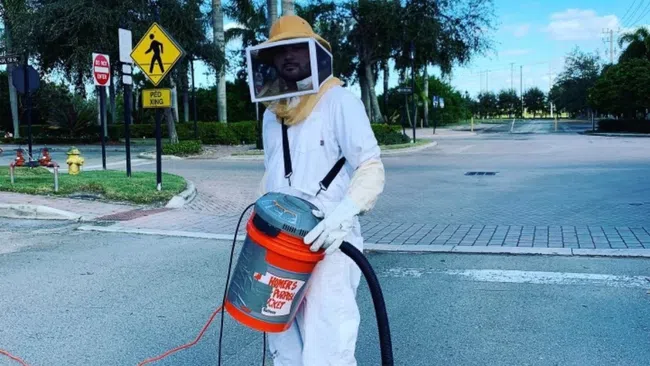
Person in protective beekeeper suit holding a homemade bee vacuum on an urban street.

Nest Removal (When Accessible)

After the colony is eliminated, we remove the nest when it's accessible. For honeybee hives in wall cavities, we remove as much honeycomb and wax as possible to prevent it from melting, attracting other pests, and staining the interior surfaces. For wasp and hornet nests on exterior surfaces, we remove the nest and treat the area to discourage rebuilding.

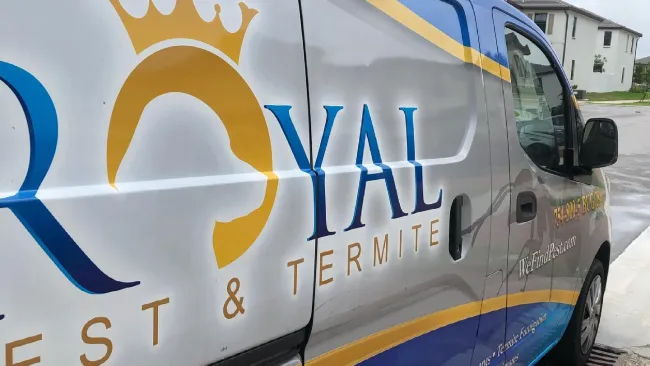
Side view of Royal Pest & Termite service van with company logo and contact information on a residential street.

Follow-Up

We follow up within 24 hours of treatment to confirm the colony has been fully addressed. If any residual activity remains, we return to re-treat at no additional cost.

Why Customers Choose Royal Pest & Termite

Three blue hands surrounding and protecting a heart icon symbolizing care and support.

Locally Trusted

Blank white square with a vertical light gray thin line near the left edge on a white background

Licensed & Insured

Blue shield icon with a white check mark symbolizing security and verification.

Guarantee + Call-Backs

Blue curved brackets symbol on a white background representing code or programming.

Award-Winning

Solid blue five-point star icon on a white background symbolizing quality and excellence

Top-Rated

Blue icon of a person presenting to an audience with a checkmark symbol on the board

Ongoing Training

4.8 out of 5 stars - 177 votes

4.8 Stars (177 Reviews)

What South Florida Homeowners Say About Royal Pest & Termite

“Finally, a Company that protects my home and my animals.”

5

Excellent service! The owner and his crew are professional, knowledgeable, and took the time to explain the treatment process while answering all of my questions. I highly recommend them.

5

We recently had our home tented by Royal Pest & Termite, and Chris and his team truly exceeded our expectations. They communicated with us every step of the way and made the entire process smooth and stress‑free. Melissa at the main office was also incredibly helpful and always willing to...
We recently had our home tented by Royal Pest & Termite, and Chris and his team truly exceeded our expectations. They communicated with us every step of the way and made the entire process smooth and stress‑free. Melissa at the main office was also incredibly helpful and always willing to assist. We highly recommend Royal Pest & Termite for any tenting needs.

5

Royal Pest & Termite is truly exceptional! Their team is professional, knowledgeable, and extremely thorough when it comes to both pest control, fumigation services, and lawns.

5

Southwest Ranches property means more bugs, but Royal Pest & Termite keeps termites and ants under control with their quarterly plan. Techs are respectful, thorough, and always on schedule. We've avoided major issues for over a year now. Reliable service for this area.

5

Chris is great, Aaron is great, Mike is great. Very good company and they take the organic approach to treating your lawn. They always pick up the phone and let you know what’s going on. They are honest and let you know that this will be a process. Can’t complain.

5

We've been with Royal Pest & Termite for over a year now for quarterly pest control and couldn't be happier. They handle termites, ants, bugs, you name it, without harsh smells or disrupting our schedule. Always on time and the team is genuinely helpful. In South Florida, having a reliable pest...
We've been with Royal Pest & Termite for over a year now for quarterly pest control and couldn't be happier. They handle termites, ants, bugs, you name it, without harsh smells or disrupting our schedule. Always on time and the team is genuinely helpful. In South Florida, having a reliable pest control company is a must, and these folks are top tier.

5

We just had tenting done at our house. Chris and his team were amazing to deal with. Quick, efficient, and very communicative process. Simone at the main office is always willing and able to help! Highly recommend them for fumigation and tenting needs.

5

Just had a No Tent Termite Service completed today. I live in Miramar and wanted to use a local company. I am very satisfied. The process began 2 weeks ago with their Sales Representative Aaron Wilton. I am in sales so I recognize a professional. He was knowledgeable and presented options...
Just had a No Tent Termite Service completed today. I live in Miramar and wanted to use a local company. I am very satisfied. The process began 2 weeks ago with their Sales Representative Aaron Wilton. I am in sales so I recognize a professional. He was knowledgeable and presented options clearly without pressure including attractive payment terms. The 2 techs who preformed the service were Greg and Michael who were polite, through and efficient. I would certainly recommend Royal Pest.

Florida Pest Management Association logo with blue text over green Florida state silhouette

Proud Members of the Florida Pest Management Association

Ready to Protect Your Home, Kids & Pets?

With Safe Reliable Pest Control

Bee & Wasp Removal FAQs

How much does bee removal cost?
The cost depends on the species, the size of the colony, and the location of the nest. A small paper wasp nest under an eave is a different scope than a large honeybee hive inside a wall cavity that requires comb removal. We provide a free assessment and will give you a clear estimate based on your specific situation before any work begins.
How much does wasp nest removal cost?
Wasp nest removal pricing varies based on the nest’s location, size, and the species involved. Ground-level nests and accessible exterior nests are typically less complex than nests inside walls, in attics, or at significant heights. We’ll assess the situation for free and provide a detailed estimate.
Do you relocate bees instead of killing them?
When feasible, yes. Honeybees are important pollinators, and we prefer to relocate them rather than eliminate them. We isolate the queen bee, which causes the colony to follow, and move them to a location away from your property. However, relocation isn’t always possible, for example, when the hive is inside a wall cavity or in a location where safe removal of the queen isn’t practical. In those cases, we eliminate the colony as safely as possible.
What should I do if I find a wasp nest on my house?
Don’t approach it, spray it, or try to knock it down. Disturbing a wasp nest can trigger a defensive swarm that results in multiple stings. Keep family members and pets away from the area and call a professional. We can often provide same-day service for urgent situations.
What’s the difference between bees and wasps?
Bees are generally rounder, fuzzier, and less aggressive. Most bees sting only once. Wasps (including yellow jackets and hornets) are sleeker, more aggressive, and can sting multiple times. Bees build waxy hives with honeycomb, while wasps build papery nests from chewed wood fiber. The distinction matters because treatment methods differ, and bees may be candidates for relocation while wasps typically are not.
Are carpenter bees destroying my wood?
Carpenter bees bore perfectly round holes (about half an inch in diameter) into wood to create nesting tunnels. They prefer soft, unpainted, or untreated wood; fascia boards, deck railings, pergolas, and porch beams are common targets. Individual holes may seem minor, but carpenter bees return to the same structures year after year, and the accumulated tunneling weakens the wood over time. Woodpeckers also target carpenter bee galleries, causing additional damage. We treat the galleries, seal the holes, and recommend prevention measures.