hero image

Chinch Bug Control & Treatment in South Florida

South Florida’s #1 Lawn Killer: Identified, Treated & Prevented

Request a Quote

Black circular logo with the stylized letters C and G intertwined on a white background

★★★★★

4.8 Rating

Black lowercase letter f on white background representing Facebook logo symbol.

★★★★★

4.6 Rating

Person watering a green lawn with a hose in a residential neighborhood on a sunny day

South Florida’s Most Destructive Lawn Pest

Chinch bugs are the single most common cause of lawn damage in South Florida. If you have St. Augustine grass, your lawn is a target. Chinch bugs feed by inserting their needle-like mouthparts into grass blades, sucking out the plant fluids, and injecting a toxin that causes the grass to turn yellow, then brown, and die. The damage starts in the hottest, sunniest areas of your lawn and spreads outward, and by the time most homeowners notice the brown patches, the chinch bug population is already well established.

At Royal Pest & Termite, our chinch bug control service provides both preventive treatments applied in early spring before chinch bugs become active, and curative treatments for active infestations.

What Does Chinch Bug Damage Look Like?

Chinch bug damage follows a predictable pattern that's important to recognize:

Black number one digit with outline on a white background symbolizing the number 1

Yellowing in sunny areas

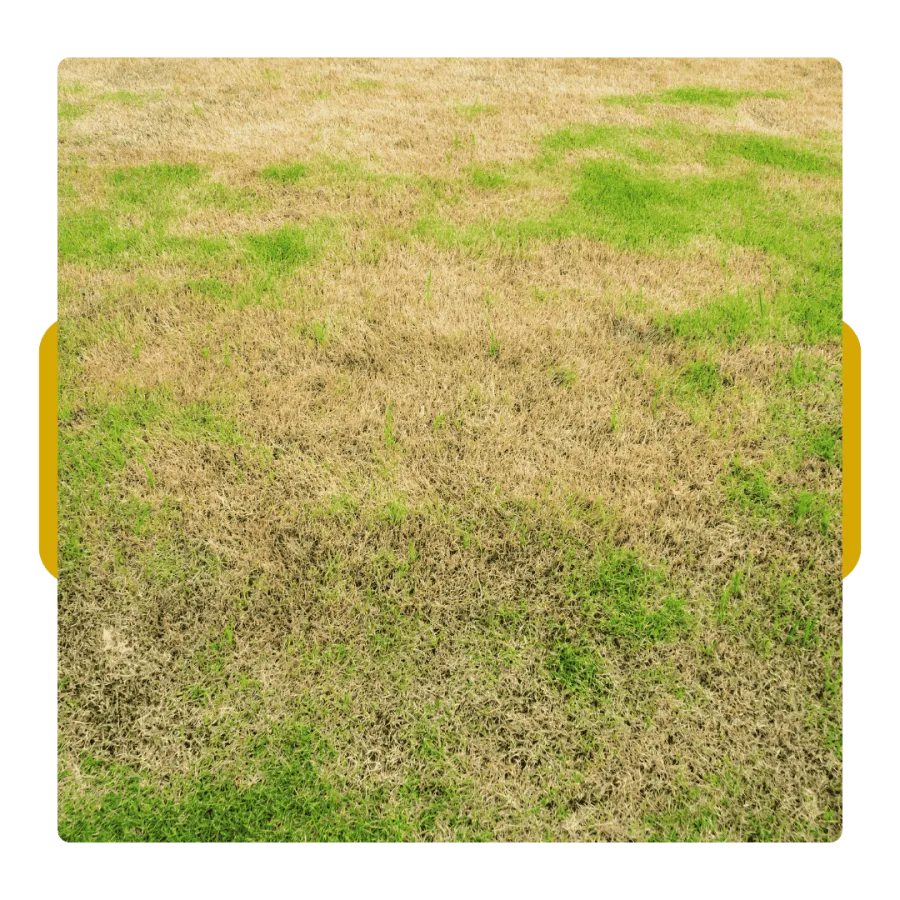
The first sign is irregular patches of yellowing grass in the hottest, sunniest parts of your lawn, typically along driveways, sidewalks, south-facing edges, and areas near concrete or pavement that radiate heat.

Black number two outlined in bold against a white background

Brown patches

The yellow patches turn brown as the grass dies. The brown areas spread outward from the initial damage point as chinch bugs migrate from the dead grass to feed on the living grass at the edges.

Black outlined number three on a white background with a rounded, bold font style.

Dead, straw-like grass

Without treatment, the affected areas turn completely brown and straw-like. The grass is dead, not dormant.

Icon / Logo

Expanding damage

If untreated, chinch bugs continue to spread outward from the dead zones, eating their way through the lawn. A severe chinch bug infestation can kill an entire yard.

How We Treat Chinch Bugs

From your first call to ongoing protection, here's what to expect when you partner with Royal Pest & Termite.
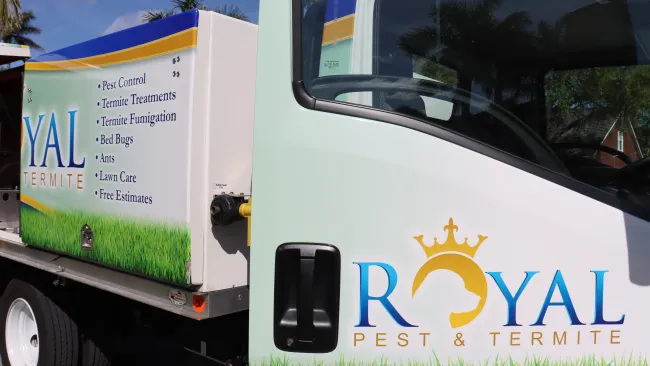
Royal Pest & Termite service truck with logo and list of pest control services parked outdoors under blue sky.

Preventive Treatment (Recommended)

Preventive chinch bug treatment is applied in early spring before chinch bug populations become active. The insecticide is absorbed into the soil and grass, creating a barrier that eliminates chinch bugs as they begin feeding. Preventive treatment is the most reliable approach because it stops the infestation before damage occurs.
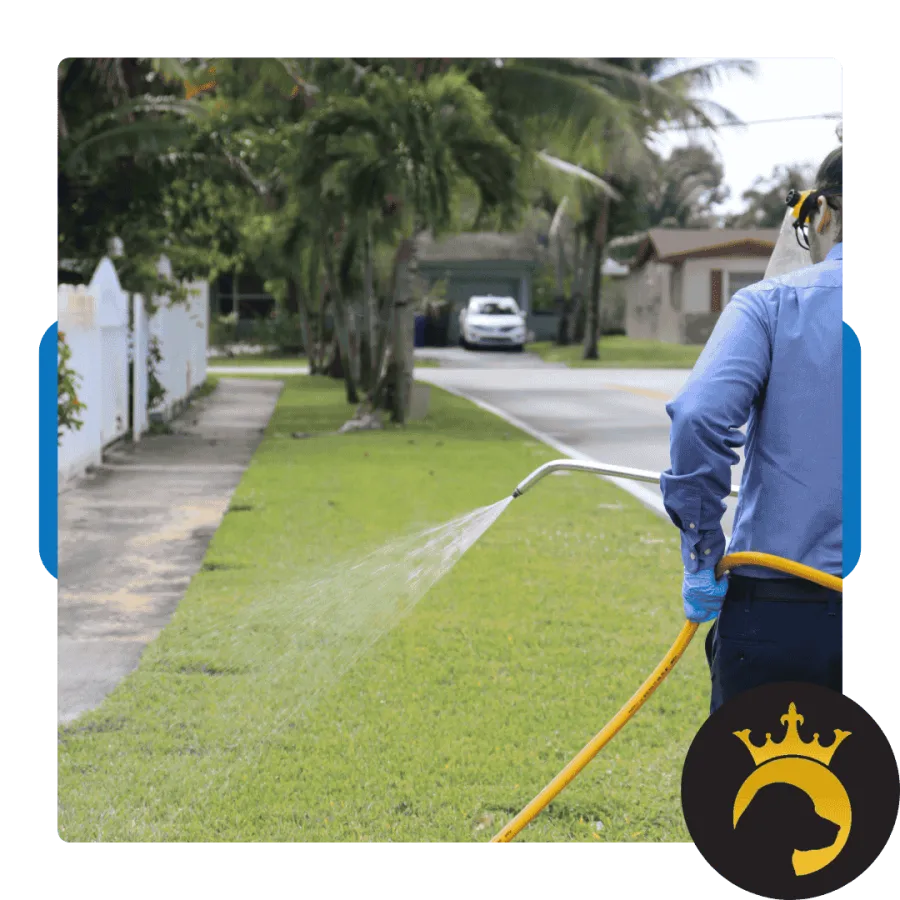
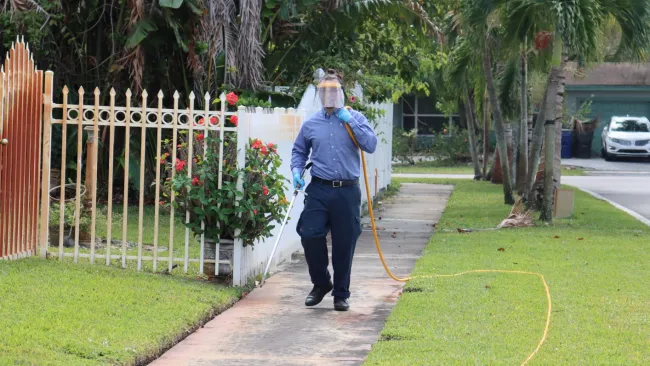
Man wearing protective gear spraying pesticides along a residential sidewalk with green lawns and palm trees.

Curative Treatment

If chinch bugs are already active and causing visible damage, we apply a curative insecticide to eliminate the current population. Curative treatment works quickly to stop the feeding and halt the spread of damage. The product is applied across the affected areas and the surrounding healthy turf to catch chinch bugs that have migrated outward from the damage center.

Patchy grass lawn with green and dry brown areas showing uneven health and drought stress

Identifying Chinch Bugs in Your Lawn

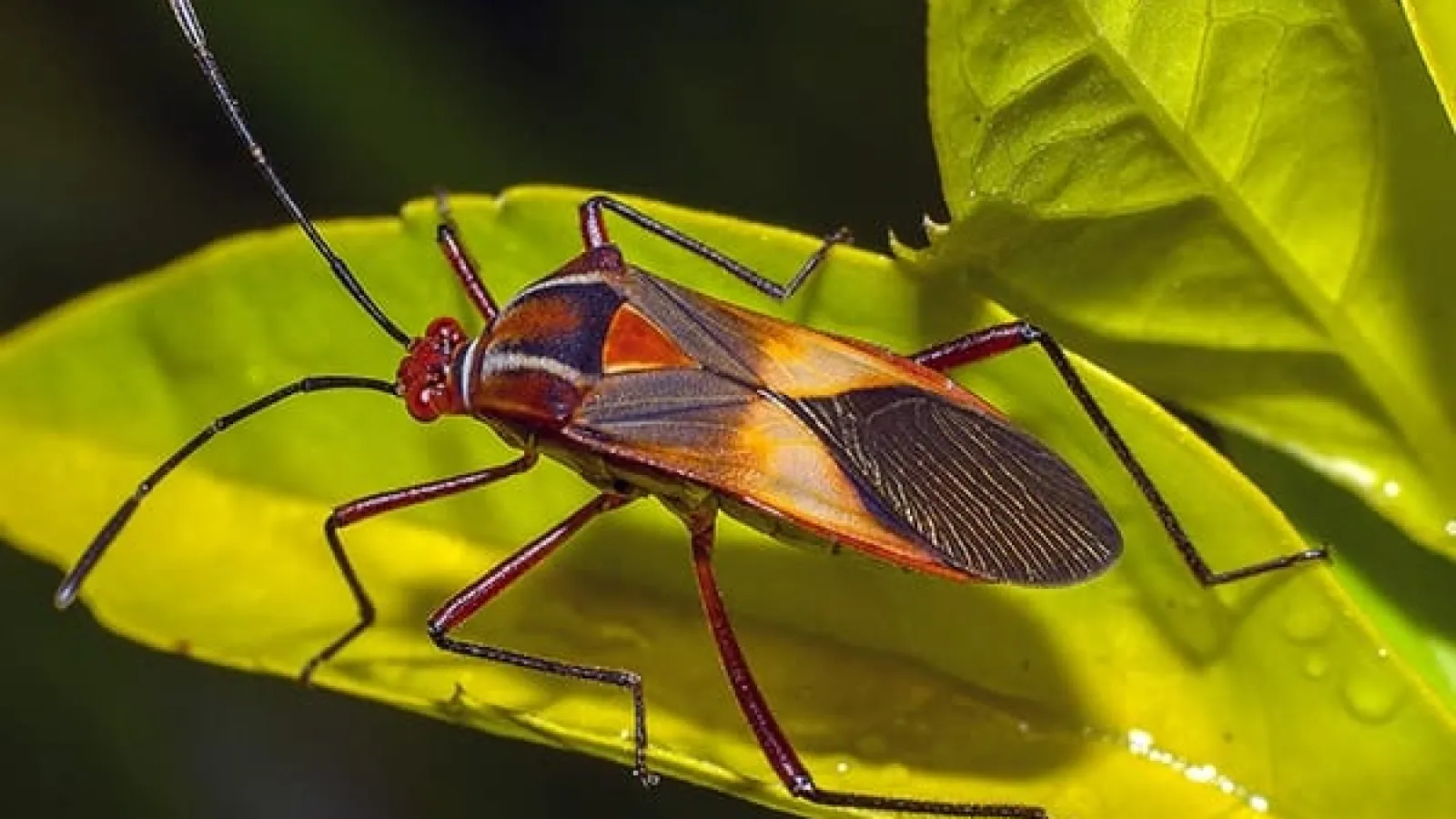
The southern chinch bug is a tiny insect; adults are only about 1/5 of an inch long. They're black with white wings that fold flat across their backs, creating a distinctive X-shaped pattern. Nymphs (immature chinch bugs) are even smaller and range from bright red-orange with a white band across the back (young nymphs) to black with developing wing pads (older nymphs).

Chinch bugs live in the thatch layer of your lawn, the spongy mat of organic material between the grass blades and the soil surface.

Why Customers Choose Royal Pest & Termite

Three blue hands surrounding and protecting a heart icon symbolizing care and support.

Locally Trusted

Blank white square with a vertical light gray thin line near the left edge on a white background

Licensed & Insured

Blue shield icon with a white check mark symbolizing security and verification.

Guarantee + Call-Backs

Blue curved brackets symbol on a white background representing code or programming.

Award-Winning

Solid blue five-point star icon on a white background symbolizing quality and excellence

Top-Rated

Blue icon of a person presenting to an audience with a checkmark symbol on the board

Ongoing Training

4.8 out of 5 stars - 177 votes

4.8 Stars (177 Reviews)

What South Florida Homeowners Say About Royal Pest & Termite

“Finally, a Company that protects my home and my animals.”

5

We recently had our home tented by Royal Pest & Termite, and Chris and his team truly exceeded our expectations. They communicated with us every step of the way and made the entire process smooth and stress‑free. Melissa at the main office was also incredibly helpful and always willing to...
We recently had our home tented by Royal Pest & Termite, and Chris and his team truly exceeded our expectations. They communicated with us every step of the way and made the entire process smooth and stress‑free. Melissa at the main office was also incredibly helpful and always willing to assist. We highly recommend Royal Pest & Termite for any tenting needs.

5

Southwest Ranches property means more bugs, but Royal Pest & Termite keeps termites and ants under control with their quarterly plan. Techs are respectful, thorough, and always on schedule. We've avoided major issues for over a year now. Reliable service for this area.

5

Just had a No Tent Termite Service completed today. I live in Miramar and wanted to use a local company. I am very satisfied. The process began 2 weeks ago with their Sales Representative Aaron Wilton. I am in sales so I recognize a professional. He was knowledgeable and presented options...
Just had a No Tent Termite Service completed today. I live in Miramar and wanted to use a local company. I am very satisfied. The process began 2 weeks ago with their Sales Representative Aaron Wilton. I am in sales so I recognize a professional. He was knowledgeable and presented options clearly without pressure including attractive payment terms. The 2 techs who preformed the service were Greg and Michael who were polite, through and efficient. I would certainly recommend Royal Pest.

5

Excellent service! The owner and his crew are professional, knowledgeable, and took the time to explain the treatment process while answering all of my questions. I highly recommend them.

5

Chris is great, Aaron is great, Mike is great. Very good company and they take the organic approach to treating your lawn. They always pick up the phone and let you know what’s going on. They are honest and let you know that this will be a process. Can’t complain.
Florida Pest Management Association logo with blue text over green Florida state silhouette

Proud Members of the Florida Pest Management Association

Ready to Protect Your Home, Kids & Pets?

With Safe Reliable Pest Control

Chinch Bug Control FAQs

How do I get rid of chinch bugs in my lawn?
Professional insecticide treatment is the most effective approach. Our preventive treatment applied in early spring stops chinch bugs before they cause damage. For active infestations, we apply a curative insecticide that eliminates the feeding population. DIY treatments from the hardware store can work on small populations, but they're often misapplied, underdosed, or applied too late, by which time significant lawn damage has already occurred. Call us for treatment before the damage spreads.
How do I know if I have chinch bugs or just drought stress?
Water the brown area thoroughly and check it in 24 to 48 hours. If the grass recovers and greens up, it was drought stress. If it stays brown, chinch bugs are the likely cause. You can also look for the damage pattern: chinch bug damage typically starts in hot, sunny areas near pavement and has a sharp boundary between dead and green grass. Drought stress tends to be more uniform and corresponds to irrigation coverage gaps. The float test (push a bottomless coffee can into the soil, fill with water, and watch for tiny black insects floating to the surface) confirms chinch bug activity.
When are chinch bugs most active in Florida?
Chinch bugs are most active from late spring through early fall in South Florida (roughly April through November). Peak activity occurs during the hottest, driest months, June through September. However, in Broward County’s warm climate, chinch bugs can remain active in lower numbers year-round, and they can produce three to four generations per year. Preventive treatment in early spring (February to March) is given before the peak activity period.
Will my lawn grow back after chinch bug damage?
It depends on the severity. If the grass crowns and stolons are still alive, St. Augustine grass can regrow from the runners with proper watering and fertilization. If the grass is completely dead (straw-like, doesn’t green up at all), those areas will need to be resodded. We can assess the damage after treatment and recommend whether recovery through fertilization or resodding is the best path forward.
Why do chinch bugs attack my St. Augustine grass?
St. Augustine grass is the primary host for the southern chinch bug. It’s the species’ preferred food source. Because St. Augustine is the most commonly planted turfgrass in South Florida, virtually every Broward County lawn is a potential target. Chinch bugs prefer sunny, warm areas of the lawn, especially sections adjacent to driveways, sidewalks, and pavement that radiate heat.
When should I schedule preventive chinch bug treatment?
In Broward County, we recommend scheduling preventive treatment in February or March, before chinch bug populations become active in late spring. The product needs time to be absorbed into the soil and turf so it’s effective when chinch bugs start feeding. Waiting until you see damage means the prevention window has passed, and you need curative treatment instead.