hero image

Lawn Insect Control in South Florida

Preventive & Curative Treatment for the Insects That Destroy South Florida Lawns

Request a Quote

Black circular logo with the stylized letters C and G intertwined on a white background

★★★★★

4.8 Rating

Black lowercase letter f on white background representing Facebook logo symbol.

★★★★★

4.6 Rating

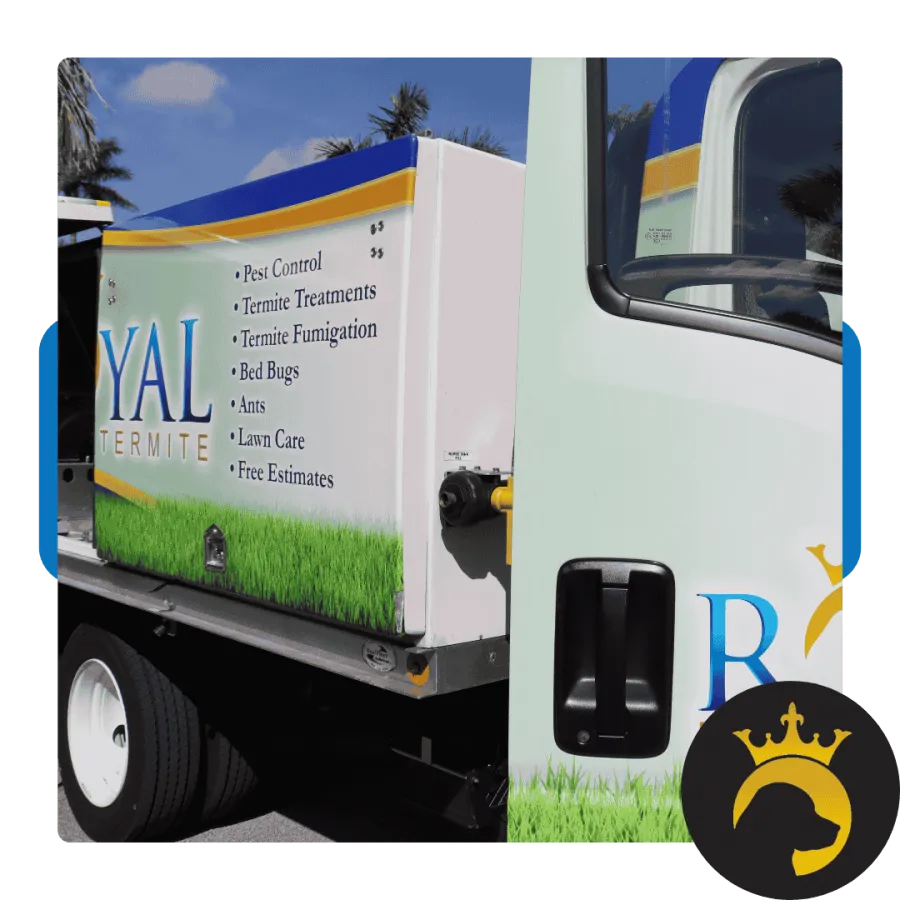
Pest control service truck with list of treatments including termite, bed bugs, ants, and lawn care services.

Professional Lawn Pest Control for South Florida Homes

South Florida's warm, humid climate doesn't just grow grass; it grows the insects that feed on it. Chinch bugs, grubs, sod webworms, mole crickets, and armyworms are all active in Broward County, and each one can turn a healthy lawn into a patchwork of brown, thinning, and dying turf. By the time you notice the damage, the insects have usually been feeding for weeks.

At Royal Pest & Termite, our lawn insect control service offers both preventive treatments to stop infestations before they start and curative treatments to eliminate insects that are already damaging your lawn.

Insects That Damage South Florida Lawns

Close-up of a mole cricket burrowing in sandy soil showing its detailed wings and segmented body.

Mole Crickets

Mole crickets are one of the most destructive lawn pests in South Florida. They live underground, tunneling through the soil just below the surface and feeding on grass roots as they go. Their tunneling activity loosens the soil around grass roots, causing the turf to dry out, turn brown, and die, even before the root damage becomes visible.
Close-up of a colorful insect with orange and black wings resting on a bright green leaf in sunlight.

Chinch Bugs

Chinch bugs are the most common cause of lawn damage in Broward County St. Augustine grass lawns. They feed by inserting their mouthparts into grass blades and sucking out the plant fluids while injecting a toxin that causes the grass to turn yellow, then brown, and die.
Small white and brown moth with delicate patterns resting on a vibrant green textured leaf.

Sod Webworms

Sod webworms are caterpillars (the larval stage of small lawn moths) that feed on grass blades at night, chewing them off near the soil surface. The tropical sod webworm is the species most active in South Florida, and it can cause severe damage to St. Augustine, Bermuda, and zoysia grass in a very short time.

Close-up of white grub larvae on dark soil surface, highlighting soft bodies and segmented legs in natural environment.

Grubs

Grubs are the larval stage of beetles (including June beetles, masked chafers, and others) that live in the soil and feed on grass roots. Grub damage appears as brown patches of turf that can be rolled back like a carpet because the root system has been eaten away. Heavy grub infestations also attract digging animals, raccoons, armadillos, and birds, which tear up the lawn to reach the grubs.

Close-up of a brown caterpillar with striped patterns on a green leaf background.

Armyworms

Armyworms are caterpillars that feed on grass blades in large groups, "marching" across a lawn and consuming everything in their path. Fall armyworms are the species most common in South Florida, and they can cause rapid, devastating damage, sometimes stripping an entire lawn in just a few days during heavy infestations.

Close-up of tiny spider mites on a green leaf surface showing their detailed body and legs.

Lawn Mites

Lawn mites are microscopic pests that feed on grass blades, causing yellowing, stunting, and a general decline in turf health. Bermuda grass mites are the most common species in South Florida lawns, causing a characteristic "witches' broom" or rosetting of the grass blades. Other mites can cause silvery discoloration or general thinning.

How to Tell If Your Lawn Has an Insect Problem

Lawn insect damage is often mistaken for drought stress, disease, or poor fertilization. Here's how to tell the difference:

Black triangular warning sign with an exclamation mark in the center on a white background

Brown patches

If you’re watering adequately and brown patches persist or spread, insects are a likely cause. Drought stress recovers when you water. Insect damage doesn’t.
Icon / Logo

Grass pulls up easily

If you can pull up brown grass with almost no resistance, or the turf feels soft and spongy underfoot, the root system has been damaged, typically by grubs or mole crickets.

Icon / Logo

Damage that starts in hot, sunny areas

Brown patches that begin along driveways, sidewalks, and south-facing edges of the lawn are classic chinch bug damage patterns. Chinch bugs prefer the hottest, driest areas of the lawn.

Icon / Logo

Rapid onset of damage

If your lawn looked fine three days ago and now has large brown sections, sod webworms or armyworms are the most likely culprits. These caterpillars can consume enormous amounts of grass in a very short time.
Icon / Logo

Moths flying low

Small tan or gray moths fluttering just above the lawn surface in the evening are adult sod webworms laying eggs. This is an early warning that caterpillar damage is coming.

Icon / Logo

Increased animal activity

Birds pecking at your lawn, raccoons digging holes, or armadillos rooting through the turf are signs of a grub or mole cricket infestation below the surface. These animals are hunting the insects.

Two Approaches to Protecting Your Lawn

From your first call to ongoing protection, here's what to expect when you partner with Royal Pest & Termite.
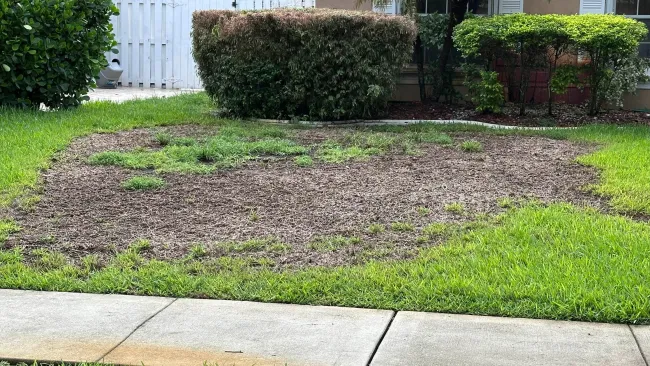
Patchy brown dead grass area surrounded by green grass in front yard near sidewalk and bushes.

Preventive Treatment

Preventive insecticide is applied before insects cause visible damage, creating a barrier in the soil or on the turf that eliminates insects as they arrive or hatch. Preventive treatment is most effective for grubs and mole crickets, which have predictable seasonal patterns. By treating before the eggs hatch, you eliminate the next generation before it can feed.
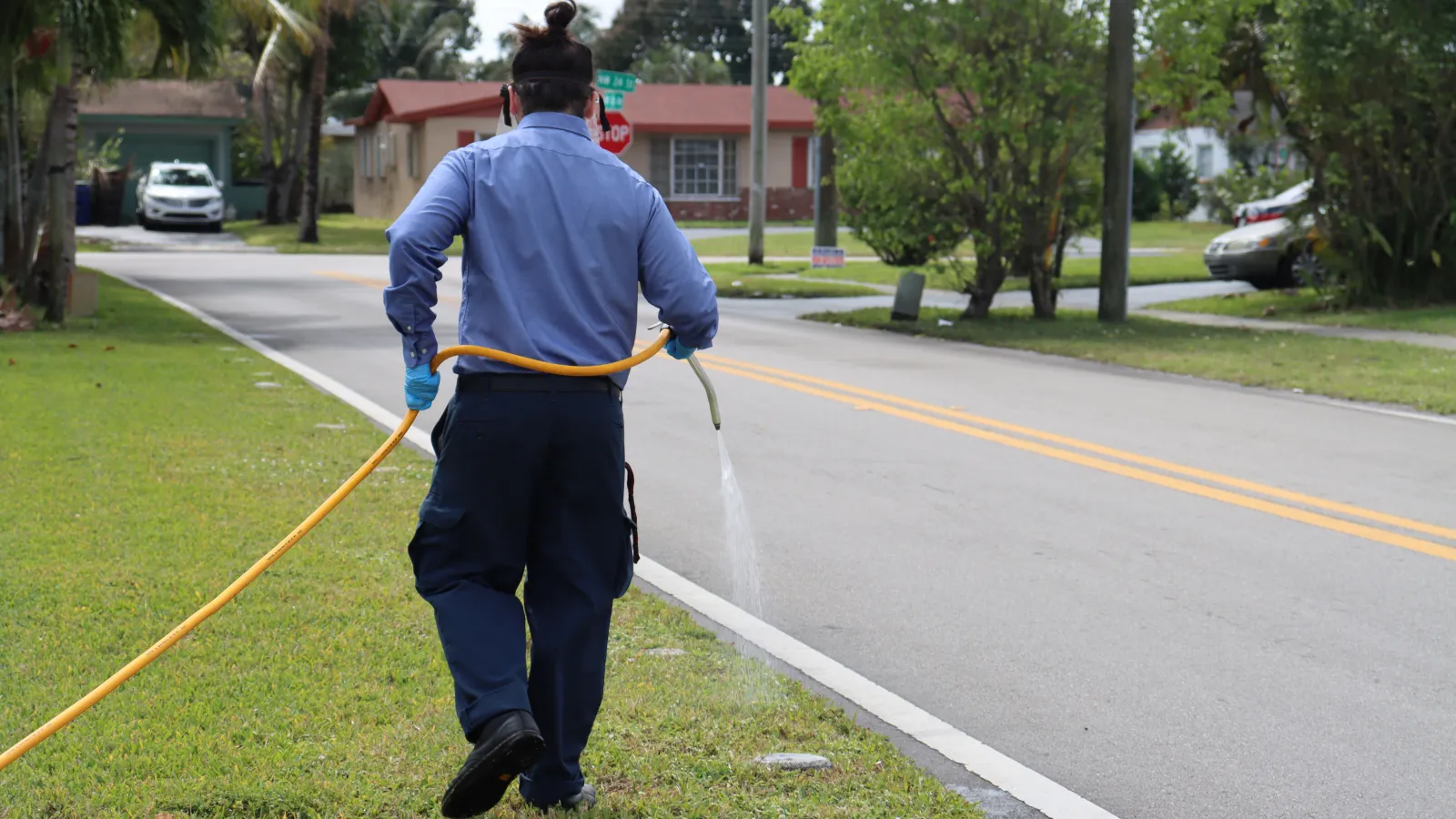
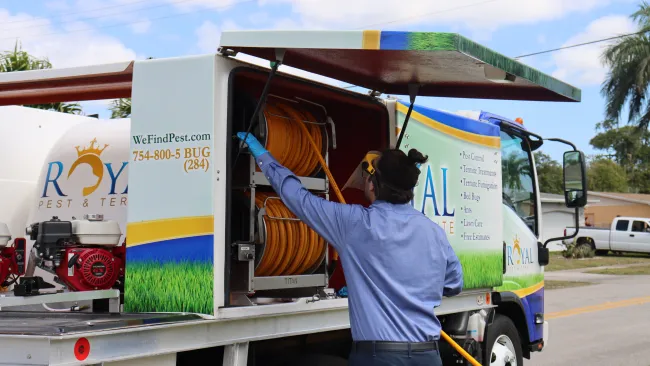
Pest control worker in blue shirt handling hose from Royal Pest & Termite truck on street under blue sky.

Curative Treatment

Curative insecticide is applied when an active infestation is already underway. It eliminates the insects that are currently damaging your lawn. Curative treatment is essential for fast-moving pests like sod webworms and armyworms, which can devastate a lawn in a matter of days. It's also necessary when chinch bug damage is already visible and spreading.

Why Customers Choose Royal Pest & Termite

Three blue hands surrounding and protecting a heart icon symbolizing care and support.

Locally Trusted

Blank white square with a vertical light gray thin line near the left edge on a white background

Licensed & Insured

Blue shield icon with a white check mark symbolizing security and verification.

Guarantee + Call-Backs

Blue curved brackets symbol on a white background representing code or programming.

Award-Winning

Solid blue five-point star icon on a white background symbolizing quality and excellence

Top-Rated

Blue icon of a person presenting to an audience with a checkmark symbol on the board

Ongoing Training

4.8 out of 5 stars - 177 votes

4.8 Stars (177 Reviews)

What South Florida Homeowners Say About Royal Pest & Termite

“Finally, a Company that protects my home and my animals.”

5

Southwest Ranches property means more bugs, but Royal Pest & Termite keeps termites and ants under control with their quarterly plan. Techs are respectful, thorough, and always on schedule. We've avoided major issues for over a year now. Reliable service for this area.

5

Excellent service! The owner and his crew are professional, knowledgeable, and took the time to explain the treatment process while answering all of my questions. I highly recommend them.

5

Royal Pest & Termite is truly exceptional! Their team is professional, knowledgeable, and extremely thorough when it comes to both pest control, fumigation services, and lawns.

5

Just had a No Tent Termite Service completed today. I live in Miramar and wanted to use a local company. I am very satisfied. The process began 2 weeks ago with their Sales Representative Aaron Wilton. I am in sales so I recognize a professional. He was knowledgeable and presented options...
Just had a No Tent Termite Service completed today. I live in Miramar and wanted to use a local company. I am very satisfied. The process began 2 weeks ago with their Sales Representative Aaron Wilton. I am in sales so I recognize a professional. He was knowledgeable and presented options clearly without pressure including attractive payment terms. The 2 techs who preformed the service were Greg and Michael who were polite, through and efficient. I would certainly recommend Royal Pest.

5

We recently had our home tented by Royal Pest & Termite, and Chris and his team truly exceeded our expectations. They communicated with us every step of the way and made the entire process smooth and stress‑free. Melissa at the main office was also incredibly helpful and always willing to...
We recently had our home tented by Royal Pest & Termite, and Chris and his team truly exceeded our expectations. They communicated with us every step of the way and made the entire process smooth and stress‑free. Melissa at the main office was also incredibly helpful and always willing to assist. We highly recommend Royal Pest & Termite for any tenting needs.

5

We just had tenting done at our house. Chris and his team were amazing to deal with. Quick, efficient, and very communicative process. Simone at the main office is always willing and able to help! Highly recommend them for fumigation and tenting needs.

5

Chris is great, Aaron is great, Mike is great. Very good company and they take the organic approach to treating your lawn. They always pick up the phone and let you know what’s going on. They are honest and let you know that this will be a process. Can’t complain.

5

We've been with Royal Pest & Termite for over a year now for quarterly pest control and couldn't be happier. They handle termites, ants, bugs, you name it, without harsh smells or disrupting our schedule. Always on time and the team is genuinely helpful. In South Florida, having a reliable pest...
We've been with Royal Pest & Termite for over a year now for quarterly pest control and couldn't be happier. They handle termites, ants, bugs, you name it, without harsh smells or disrupting our schedule. Always on time and the team is genuinely helpful. In South Florida, having a reliable pest control company is a must, and these folks are top tier.

Florida Pest Management Association logo with blue text over green Florida state silhouette

Proud Members of the Florida Pest Management Association

Ready to Protect Your Home, Kids & Pets?

With Safe Reliable Pest Control

Lawn Insect Control FAQs

What insects are destroying my lawn?
The most common lawn-damaging insects in Broward County are chinch bugs (cause yellowing and browning in sunny areas of St. Augustine grass), mole crickets (tunnel underground and sever grass roots), sod webworms (caterpillars that chew grass blades down to the soil), grubs (beetle larvae that eat grass roots), and armyworms (caterpillars that strip grass in large swaths). Each causes different damage patterns, and we identify the specific insect during our assessment to select the right treatment.
What are mole crickets and how do I know if I have them?
Mole crickets are burrowing insects that tunnel through the soil just below the surface, feeding on grass roots and loosening the soil around them. Signs include spongy turf that feels soft underfoot, raised tunneling trails visible at the surface, grass that turns brown and pulls up easily, small soil mounds from exit holes, and increased bird activity on the lawn. Mole crickets are most active in spring and summer in South Florida.
What’s the difference between preventive and curative treatment?
Preventive treatment is applied before insects cause damage, creating a barrier that eliminates them as they arrive or hatch. Curative treatment is applied after an active infestation is detected, killing the insects that are currently feeding. Preventive treatment is proactive and less expensive; curative treatment is reactive but necessary when damage is already occurring. We recommend both preventive measures during peak seasons, with curative treatment available as a backup.
Will my lawn recover after insect damage?
In most cases, yes, if the insects are eliminated and the lawn receives proper aftercare. Grass damaged by chinch bugs, sod webworms, and armyworms can regrow from the surviving stolons and root system if the crown is still alive. Grub and mole cricket damage, where the root system is completely destroyed, may require resodding in severely affected areas. We can assess the damage and recommend the best recovery approach, which may include fertilization, irrigation adjustments, and targeted lawn care treatments.
How do I know if my brown patches are from insects or something else?
Brown patches can be caused by insects, disease, drought, or nutrient deficiency. The quickest diagnostic: water the area, if it doesn’t recover within a day or two, it’s likely not drought. Check the edges of the brown area for active insects (chinch bugs are visible if you part the grass at the boundary between green and brown).
When is the best time to apply preventive lawn insect treatment?
For grubs and mole crickets, preventive treatment is most effective in late spring to early summer, before the eggs hatch and the new generation begins feeding. For sod webworms and armyworms, preventive treatment during the warm, wet months (June through October) helps suppress populations during peak activity. We can recommend a treatment schedule based on your lawn’s specific conditions and history.