hero image

Termite Control & Treatment in South Florida

Defending South Florida Homes Against Termites Since 2014

Request a Quote

Black circular logo with the stylized letters C and G intertwined on a white background

★★★★★

4.8 Rating

Black lowercase letter f on white background representing Facebook logo symbol.

★★★★★

4.6 Rating

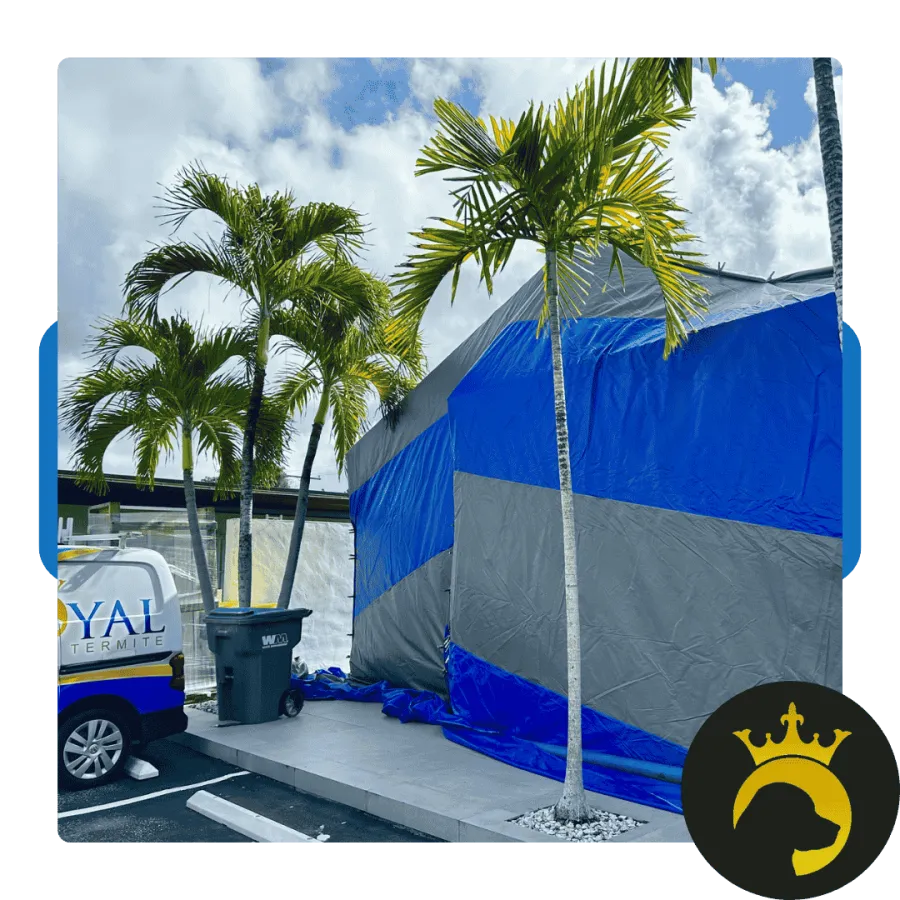
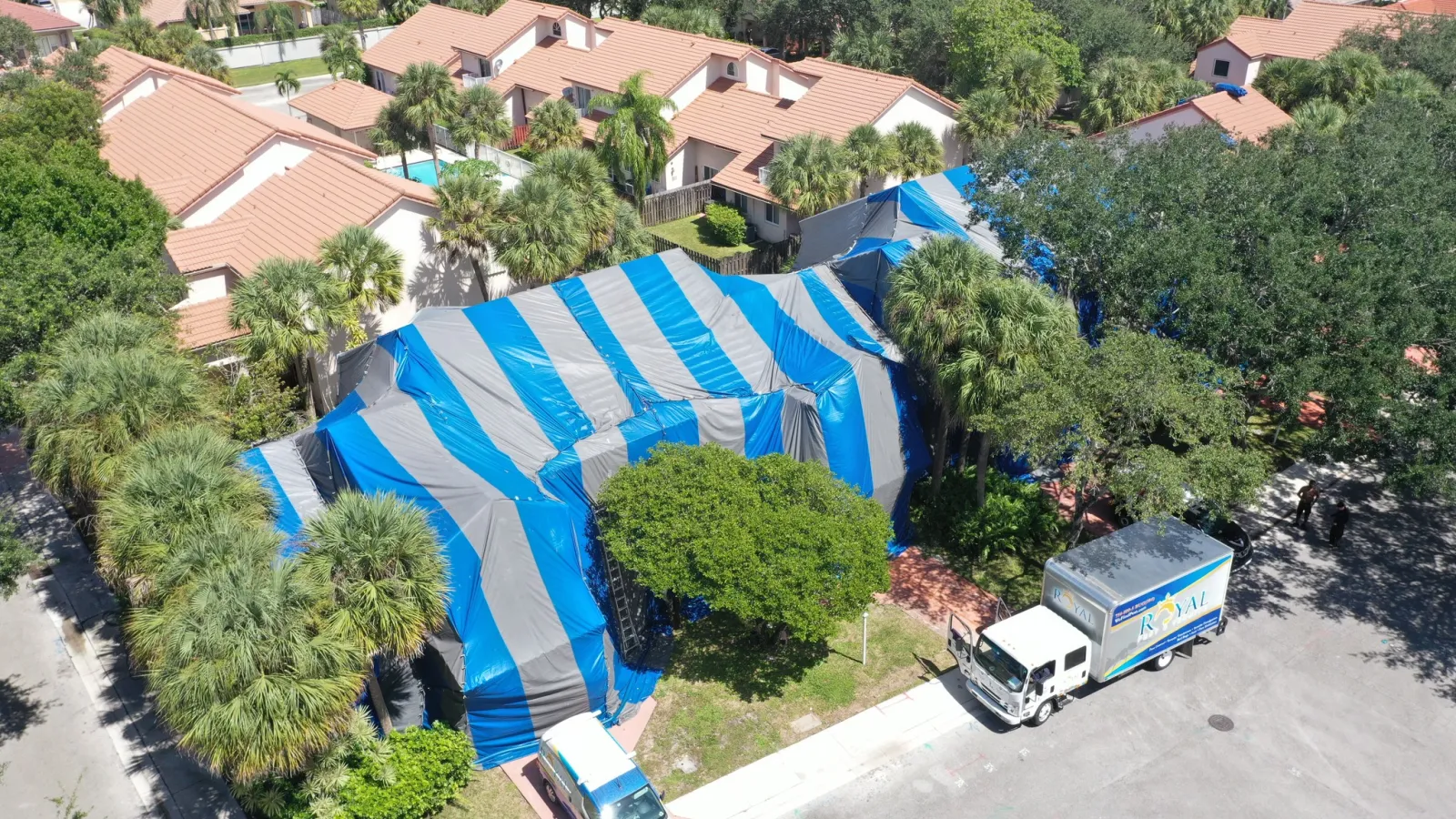
Blue and gray tented structure surrounded by palm trees in a parking lot with a Royal Termite service van nearby

Professional Termite Treatment for South Florida Homes

Florida leads the nation in termite activity, and South Florida's warm, humid climate makes homes here especially vulnerable. Whether it's drywood termites eating through your attic framing or subterranean termites tunneling up through your foundation, the damage can be severe, and most homeowners' insurance policies won't cover it.

At Royal Pest & Termite, we've been protecting South Florida homes from termite damage since 2014.

Termite Treatment Options for Your Home

Not every termite problem requires the same solution. Here are the termite control methods we offer:
Royal Pest and Termite service vehicles parked on a sunny street with company branding and contact info visible.

No-Tent Termite Treatment

If your drywood termite infestation is localized to specific areas of your home, our no-tent termite treatment can eliminate the colony without the disruption of full fumigation. We inject termiticide foam directly into the active termite galleries hidden within your walls, door frames, and window frames.
Blue and white Royal Pest & Termite van parked under tall green trees with sunlight filtering through leaves.

Termite Bait Stations

Termite bait stations are the most effective preventive solution for subterranean termites. We install pre-loaded bait stations at regular intervals around your home's foundation, typically every 10 to 20 linear feet.
Pest control technician in blue uniform spraying outside a house lawn with safety gloves and goggles.

Liquid Termiticide

For active subterranean termite infestations or homes that need immediate barrier protection, we offer liquid termiticide trenching around your foundation. We dig shallow trenches along the exterior of your home and apply a pet-safe liquid termiticide that creates a continuous barrier in the soil.

Royal Pest & Termite banner on a wrapped structure with phone number and website under clear blue sky.

Termite Fumigation

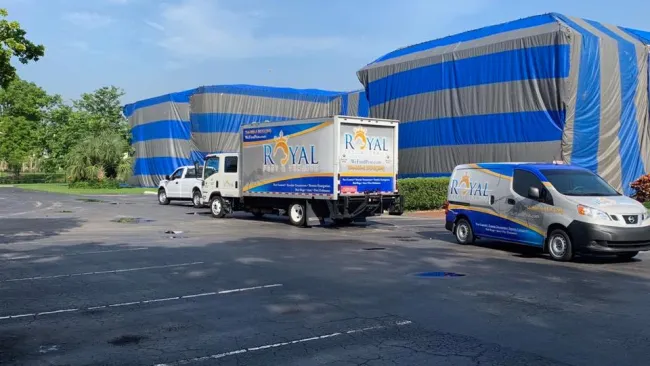
For severe or widespread drywood termite infestations, fumigation remains the most effective treatment method. During fumigation, your home is enclosed in a tent and treated with a gas that penetrates every crack, crevice, and piece of wood, ensuring no termite colony is missed, regardless of where it's hiding.

How to Tell If You Have Termites

Termites are often called "silent destroyers" because they can cause significant damage before you ever see one. Knowing what to look for can help you catch an infestation early and minimize costly repairs. Here are the most common signs of termites in South Florida homes:

1. Discarded Wings - Winged termites (swarmers) emerge from mature colonies to start new ones. If you find piles of small, translucent wings near windows, doors, or light fixtures, a colony is likely nearby, or already in your home.

2. Termite Frass (Droppings) - Drywood termites push their droppings, called frass, out of tiny holes in the wood they're consuming.

3. Mud Tubes - Subterranean termites build pencil-width mud tubes along foundation walls, pipes, and other surfaces to travel between their underground colony and the wood in your home.

4. Hollow or Damaged Wood - Tap on wood surfaces around your home, door frames, window frames, baseboards, and support beams. If the wood sounds hollow or feels soft and crumbles easily, termites may be feeding inside.

5. Bubbling or Peeling Paint - Paint that appears to bubble, peel, or become uneven on wooden surfaces can indicate moisture buildup from termite activity underneath.

6. Tight-Fitting Doors or Windows - As termites consume wood in door and window frames, the structural shape can shift, making doors and windows stick or difficult to open and close.

How Our Termite Inspection & Treatment Process Works

From your first call to ongoing protection, here's what to expect when you partner with Royal Pest & Termite.
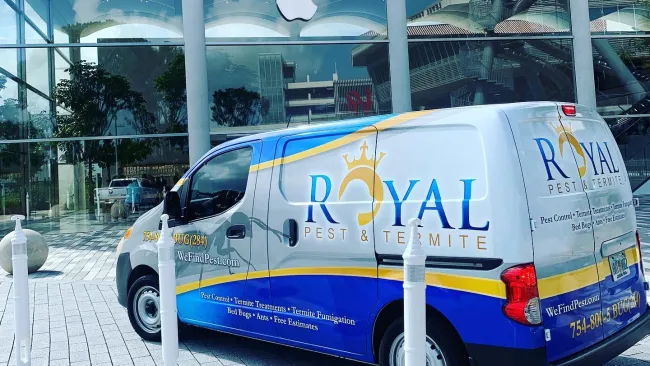
Royal Pest & Termite service van parked outside a modern building with Apple logo on glass facade

Free Inspection & Estimate

Our licensed termite inspector performs a comprehensive visual inspection of your home's interior and exterior. We check common problem areas including the attic, crawl spaces, foundation walls, door frames, window frames, baseboards, and any wood-to-soil contact points.
Blue and white Royal Pest & Termite service van parked under green trees with sunlight and shadows.

Identify the Species

Drywood and subterranean termites require completely different treatment approaches. Based on the evidence we find, frass, mud tubes, swarmer wings, and damaged wood, we identify which species is present and the extent of the infestation. We'll show you exactly what we found and explain what it means.

Royal Pest Control trucks parked near large buildings covered with blue and gray protective tarps under a clear sky

Customized Treatment

We recommend the treatment method that fits your specific situation. Whether it's no-tent treatment for a localized drywood problem, bait stations for subterranean prevention, foundation trenching for active subterranean colonies, or fumigation for a severe infestation, you'll get a clear explanation of what we recommend, why, and what it costs. No surprises.

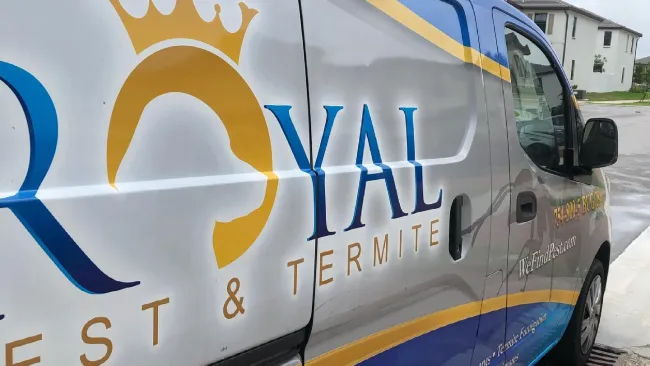
Side view of Royal Pest & Termite service van with company logo and contact information on a residential street.

Professional Treatment

Our licensed technicians carry out the treatment using the methods and products we discussed. Every product we use is selected to be safe for your family and pets. We'll explain any precautions or preparation needed before we begin.

Types of Termites in South Florida

Understanding which type of termite you're dealing with is critical because each species requires a different treatment approach. South Florida homes are at risk from both of Florida's primary termite types:

Drywood Termites

Drywood termites live entirely inside the dry, undecayed wood they consume. They don't need contact with soil or an external water source, which means they can infest any wooden structure in your home: attic framing, door frames, window sills, baseboards, and even wooden furniture.

Subterranean Termites

Subterranean termites are the most destructive termite species in the United States. They build massive underground colonies that can contain over a million termites and forage up to 150 feet in search of wood. They enter homes through cracks in the foundation, expansion joints in concrete slabs, and around plumbing penetrations.

Why Customers Choose Royal Pest & Termite

Three blue hands surrounding and protecting a heart icon symbolizing care and support.

Locally Trusted

Blank white square with a vertical light gray thin line near the left edge on a white background

Licensed & Insured

Blue shield icon with a white check mark symbolizing security and verification.

Guarantee + Call-Backs

Blue curved brackets symbol on a white background representing code or programming.

Award-Winning

Solid blue five-point star icon on a white background symbolizing quality and excellence

Top-Rated

Blue icon of a person presenting to an audience with a checkmark symbol on the board

Ongoing Training

4.8 out of 5 stars - 177 votes

4.8 Stars (177 Reviews)

What South Florida Homeowners Say About Royal Pest & Termite

“Finally, a Company that protects my home and my animals.”

5

Royal Pest & Termite is truly exceptional! Their team is professional, knowledgeable, and extremely thorough when it comes to both pest control, fumigation services, and lawns.

5

Excellent service! The owner and his crew are professional, knowledgeable, and took the time to explain the treatment process while answering all of my questions. I highly recommend them.

5

Southwest Ranches property means more bugs, but Royal Pest & Termite keeps termites and ants under control with their quarterly plan. Techs are respectful, thorough, and always on schedule. We've avoided major issues for over a year now. Reliable service for this area.

5

We recently had our home tented by Royal Pest & Termite, and Chris and his team truly exceeded our expectations. They communicated with us every step of the way and made the entire process smooth and stress‑free. Melissa at the main office was also incredibly helpful and always willing to...
We recently had our home tented by Royal Pest & Termite, and Chris and his team truly exceeded our expectations. They communicated with us every step of the way and made the entire process smooth and stress‑free. Melissa at the main office was also incredibly helpful and always willing to assist. We highly recommend Royal Pest & Termite for any tenting needs.

5

We just had tenting done at our house. Chris and his team were amazing to deal with. Quick, efficient, and very communicative process. Simone at the main office is always willing and able to help! Highly recommend them for fumigation and tenting needs.

5

We've been with Royal Pest & Termite for over a year now for quarterly pest control and couldn't be happier. They handle termites, ants, bugs, you name it, without harsh smells or disrupting our schedule. Always on time and the team is genuinely helpful. In South Florida, having a reliable pest...
We've been with Royal Pest & Termite for over a year now for quarterly pest control and couldn't be happier. They handle termites, ants, bugs, you name it, without harsh smells or disrupting our schedule. Always on time and the team is genuinely helpful. In South Florida, having a reliable pest control company is a must, and these folks are top tier.

5

Chris is great, Aaron is great, Mike is great. Very good company and they take the organic approach to treating your lawn. They always pick up the phone and let you know what’s going on. They are honest and let you know that this will be a process. Can’t complain.

5

Just had a No Tent Termite Service completed today. I live in Miramar and wanted to use a local company. I am very satisfied. The process began 2 weeks ago with their Sales Representative Aaron Wilton. I am in sales so I recognize a professional. He was knowledgeable and presented options...
Just had a No Tent Termite Service completed today. I live in Miramar and wanted to use a local company. I am very satisfied. The process began 2 weeks ago with their Sales Representative Aaron Wilton. I am in sales so I recognize a professional. He was knowledgeable and presented options clearly without pressure including attractive payment terms. The 2 techs who preformed the service were Greg and Michael who were polite, through and efficient. I would certainly recommend Royal Pest.

Florida Pest Management Association logo with blue text over green Florida state silhouette

Proud Members of the Florida Pest Management Association

Ready to Protect Your Home, Kids & Pets?

With Safe Reliable Termite Control

Termite Control FAQs for South Florida Homeowners

How do I know if I have termites?
The most common signs include small piles of pellet-like droppings (frass) near wood surfaces, pencil-width mud tubes on your foundation walls, discarded wings near windows or doors, wood that sounds hollow when tapped, and paint that bubbles or peels on wooden surfaces. In South Florida, you may also see termite swarmers — winged termites that emerge to start new colonies, typically in spring and early summer. If you notice any of these signs, call us for a free inspection.
What’s the difference between drywood and subterranean termites?
Drywood termites live inside the wood they eat and don’t need contact with soil. They’re typically found in attics, door frames, and window sills, and they leave behind small pellet-like droppings called frass. Subterranean termites build colonies underground and travel to your home through mud tubes. They’re more destructive because their colonies are much larger — often containing over a million termites. Each type requires different treatment methods, which is why a proper inspection is the first step.
How much does termite treatment cost?
The cost of termite treatment depends on several factors including the type of termite, the size and construction of your home, the severity of the infestation, and the treatment method required. For drywood termites, pricing is typically based on cubic footage since the gas or foam needs to reach throughout the structure. For subterranean treatments like bait stations or trenching, pricing is based on linear footage around the foundation. We provide free inspections and detailed estimates so you know exactly what to expect before any work begins.
Are your termite treatments safe for pets and children?
Yes. Every termite treatment product we use is selected with your family’s safety in mind. For non-tenting treatments like bait stations, foam injection, and foundation trenching, the products are applied in targeted areas that are inaccessible to kids and pets. Our company was named after the owner’s dog — protecting pets is a core value, not an afterthought.
What is a no-tent termite treatment?
A no-tent termite treatment eliminates drywood termites without enclosing your home in a tent. We inject termiticide foam directly into the wood where termites are active. The product flows through the termite galleries and is transferred between colony members, eventually reaching the queen. This method works best for localized infestations and doesn’t require you to leave your home or to prepare.
How long does termite treatment last?
Our termite treatments are effective for 6 to 10 years, depending on the method used. Bait stations are inspected and maintained annually, with bait lasting 2 to 4 years before replacement. Liquid foundation trenching provides approximately 5 years of barrier protection. All treatments include a warranty, and we offer annual renewals to extend your coverage.