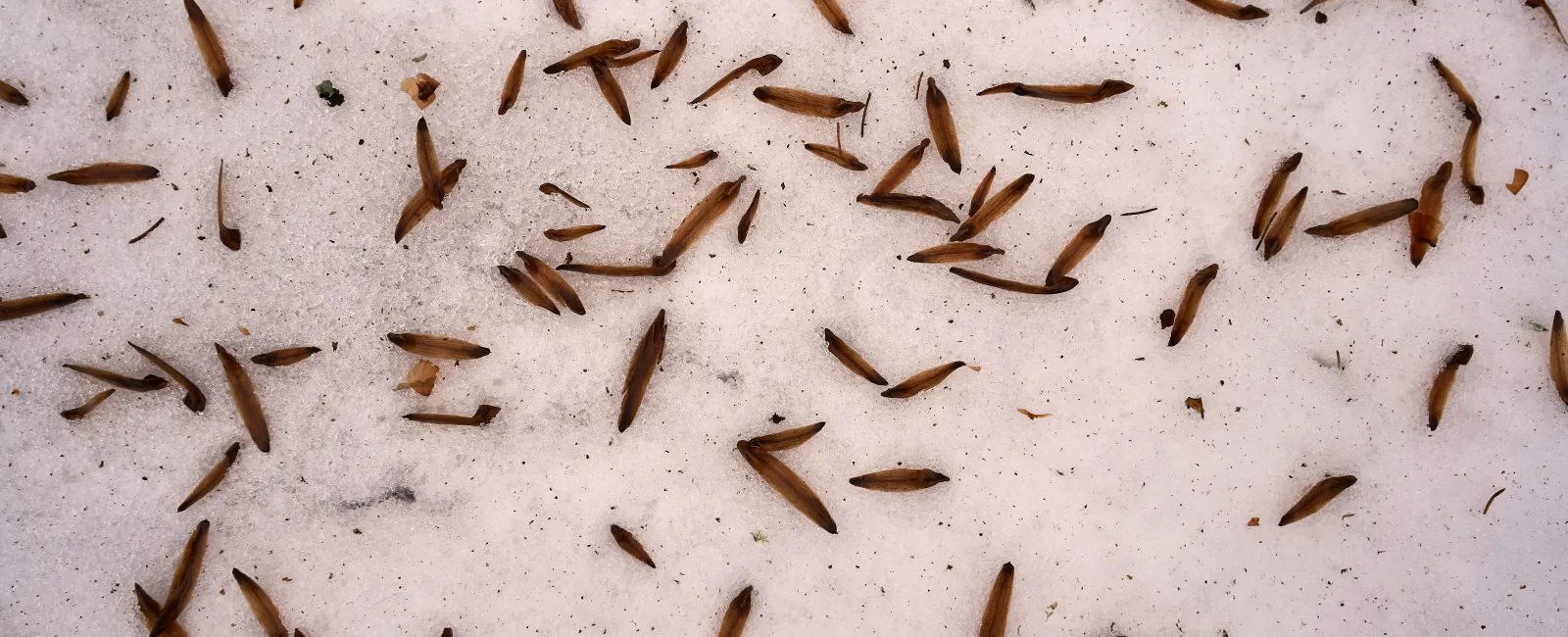
If you've been enjoying the beautiful Florida sunshine lately, you're not alone. Your local termite population is enjoying it too.
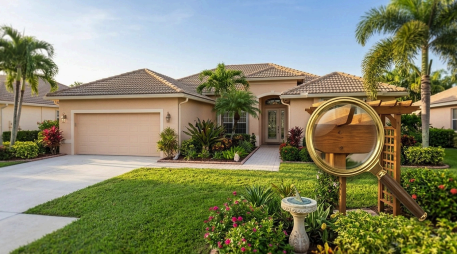
As we move through 2026, University of Florida entomologists have documented an acceleration in the spread of invasive termite species across Miami-Dade, Broward, and Palm Beach Counties. The Formosan subterranean termite and the Asian subterranean termite have expanded well beyond their previously projected ranges, and South Florida is at the center of the zone where both species are most densely established. South Florida's tri-county area, with its mature landscaping, older established neighborhoods, canal systems, and year-round soil moisture, provides exactly the conditions these species thrive in.
At Royal Pest & Termite, we've been protecting homes across Miami-Dade, Broward, and Palm Beach Counties since 2014.
How Do You Know If You Have Termites in Florida?
Florida has three primary termite threats that homeowners need to know about: Formosan subterranean termites, Asian subterranean termites, and drywood termites. Each species behaves differently, leaves different evidence, and requires a different treatment approach. Knowing which one you're dealing with matters before any money is spent on treatment.
Formosan subterranean termites are the most aggressive and destructive species active across South Florida's tri-county area. A mature colony can contain several million workers foraging continuously. They travel through the soil, build mud tubes to access above-ground wood, and can cause tens of thousands of dollars in structural damage faster than native subterranean species. The mature trees, older wood-frame construction, and high water table found throughout Miami-Dade, Broward, and Palm Beach Counties provide ideal targets.
Asian subterranean termites are particularly concentrated in South Florida's tropical zone. They are known to attack live trees and structures, hollowing them from the inside. Because their colonies tend to be smaller and more dispersed than Formosan colonies, they're often harder to detect early.
Drywood termites live entirely within the wood they consume; no soil contact is required. They're common throughout South Florida homes and are the species most likely to require fumigation.
5 Warning Signs Every South Florida Homeowner Should Know
Termites are called "silent destroyers" because they work from the inside out. By the time visible damage appears, the colony has often been active for a year or more. But they do leave evidence if you know what to look for.
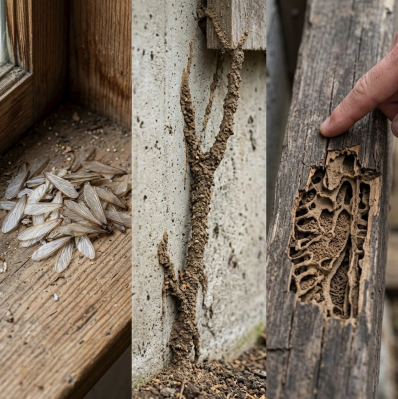
1. Discarded wings on windowsills or floors. During swarming season (typically late spring through summer in South Florida), reproductive termites fly out to start new colonies. Once they find a mate, they shed their wings. Small, translucent, fish-scale-shaped wings near doors, windows, or light fixtures are a reliable indicator of a nearby mature colony.
2. Mud tubes along your foundation. Subterranean termites need moisture to survive above ground. They build pencil-thin tunnels made of soil, wood particles, and debris to travel from the soil into your home without drying out. Check your concrete foundation, exterior walls, and any wood that comes into contact with the ground. A tube you can't explain is a tube that needs to be investigated.
3. Hollow-sounding wood. Take a screwdriver handle and tap along baseboards, door frames, window frames, and exposed beams. A papery or hollow sound indicates the interior has been consumed while the surface remains intact. Wood that gives way or shows a honeycomb-like structure inside is a serious sign.
4. Frass near wood surfaces. Drywood termites push their pellet-like waste (called frass) out of small holes in the wood. If you find small piles of what looks like wood-colored coffee grounds near baseboards, furniture, or trim, that's drywood termite frass.
5. Paint bubbling or blistering. Moisture buildup from termite activity behind walls can cause paint to bubble or blister, mimicking water damage. If there's no plumbing nearby to explain it, termites may be the source.
Is Termite Fumigation Worth It?
This is one of the most common questions we get, and the answer depends entirely on what species you have.
For drywood termites, which live inside the wood and can't be reached by soil treatments or baits, fumigation (tenting) is often the most effective option, particularly for widespread infestations that have spread beyond a single localized area. Spot treatments work for early, contained drywood infestations. Once they've spread through multiple areas of the structure, fumigation is the only way to achieve complete elimination.
For subterranean termites (Formosan and Asian), fumigation eliminates the termites currently inside the structure but does not address the underground colony in the soil. This is important to understand: you need a soil treatment or baiting system in addition to any structural treatment to address the source.
The cost of fumigation is high, but it needs to be weighed against the alternative. Structural repairs from an established Formosan termite infestation regularly run into the tens of thousands of dollars, damage that homeowner's insurance almost never covers. Treated early, the investment in termite fumigation is a fraction of what deferred action costs.
Our Defense Strategy: Step by Step
Every home in South Florida is built differently, and every infestation requires an approach matched to what's actually there. Here is how we secure your property:
Step 1: The honest assessment. A free, no-pressure inspection of your home's interior, exterior, attic, and foundation. We identify the species, document what we find, and give you a clear, upfront estimate. No fear tactics, no pressure, just facts about what's in your home and what it takes to address it.
Step 2: Targeted treatment or perimeter defense. For early or localized infestations, we may use targeted spot treatments or localized soil applications. We also apply perimeter pest control as a preventive barrier around your home's foundation, stopping new colonies from establishing before they reach your structure. Our termite pre-treatment program is particularly valuable for homes near construction or in neighborhoods with confirmed Formosan activity.
Step 3: Full-structure tent fumigation when necessary. When drywood termites have spread through multiple areas of the structure, tent fumigation is the most thorough solution. Here's how the process works:
The process involves carefully tenting your entire home so the treatment gas reaches every void, cavity, and piece of wood in the structure. You and your household (including pets) will need to vacate for 2 to 3 days. Our licensed technicians use certified gas-monitoring equipment to confirm that the structure is 100% clear before re-entry is approved. Once we give the all-clear, it is completely safe to return.
Step 4: Long-term protection. Fumigation eliminates every termite currently inside your structure. What it doesn't do is prevent new subterranean termites from approaching from the soil. This is why post-fumigation protection is essential in South Florida, where termite pressure is year-round and constant. We offer ongoing monitoring plans and soil treatment programs that keep the perimeter protected after the tent comes down.
Pet-Safe Termite Treatment: Why It Matters to Us
At Royal Pest & Termite, the dog in our logo isn't a stock image. His name is Royal, and he's the reason this company exists. Our founder started Royal Pest & Termite with pet safety as a core value from day one, not as a marketing phrase, but as a genuine standard for every product and method we use.
For standard pest control and soil treatments, we use modern, low-toxicity formulations that are highly effective against termites and safe for pets and children once dry. For fumigation, the 2 to 3 day vacate period applies to your pets as well, and re-entry is only cleared after our technicians confirm the air quality meets the certified safety standard.
We're also happy to walk you through exactly what we're applying, where we're applying it, and the specific re-entry guidance before any treatment begins. You should never feel like you're choosing between protecting your home and protecting your animals.
Why Local Expertise Matters for Tri-County Termite Control
When you call Royal Pest & Termite, you're not talking to a national call center. You're talking to a team that's been based in Miramar since 2014, serving communities throughout Miami-Dade, Broward, and Palm Beach Counties where we actually live.
We know the specific pest pressure patterns across the tri-county area. Canal-adjacent neighborhoods in Miramar, Pembroke Pines, and Davie see heavier subterranean termite pressure than inland communities. The older wood-frame homes in Fort Lauderdale's historic districts and Hialeah carry a higher drywood termite risk. Large-lot equestrian properties in Davie and Southwest Ranches have mature trees that are frequent targets of Formosan and Asian subterranean termites. Coastal communities in Boca Raton, Hollywood, and Miami Beach face year-round high humidity that accelerates colony growth. This kind of local knowledge is what separates a treatment that holds from one that doesn't.
Our technicians are state-licensed and never subcontracted. When you book with Royal, our team shows up. Not a third-party crew; we have no control over them.
Frequently Asked Questions
What are the first signs of termites in a South Florida home? The most reliable early signs are discarded wings near windows or light fixtures during swarm season, mud tubes along your concrete foundation or baseboards, and frass (small pellet piles) near wood surfaces. Hollow-sounding wood when tapped is a sign of more advanced damage. In South Florida, swarming season runs from late spring through summer, so seeing any winged insects or shed wings near your home during that window warrants a professional inspection.
How often should I have my home inspected for termites in South Florida? At a minimum, once per year. Given how quickly Formosan subterranean termites can cause structural damage and the fact that termite damage is almost never covered by homeowner's insurance, annual inspection is the minimum standard. Homes in canal-adjacent neighborhoods or with large trees close to the structure benefit from twice-yearly inspections.
Is termite fumigation safe for my pets? Yes, once the re-entry clearance is given. You and your pets will need to vacate for 2 to 3 days. Before anyone returns, our licensed technicians use certified monitoring equipment to confirm that the air quality is fully clear. Once re-entry is approved, the structure is completely safe. We'll walk you through all preparations and re-entry requirements in detail before scheduling.
Does your guarantee cover termites after fumigation? Our unlimited callback guarantee covers pest activity that returns between your scheduled service visits for the services included in your plan. For termite-specific coverage, our ongoing monitoring programs keep the perimeter protected against new subterranean activity after fumigation. We're your partners in long-term protection, not a one-visit service.
Ready to Protect Your South Florida Home?
Don't wait until you see wings on the windowsill. The earlier a termite infestation is identified in your Miami-Dade, Broward, or Palm Beach County home, the less expensive and disruptive the treatment will be.
Call Royal Pest & Termite at (754) 202-4605 or schedule your free inspection online. We'll walk your property, tell you exactly what we find, and give you a clear, upfront estimate with no pressure and no hidden fees.
Whether you need a routine annual inspection, a termite pre-treatment for a new construction project, or a full termite fumigation, we're ready to help.
We serve Miramar, Pembroke Pines, Davie, Hollywood, Fort Lauderdale, Boca Raton, South Palm Beach County, and most of Broward County, FL. We also service select areas in northern Miami-Dade County. Call us to confirm availability at your address.