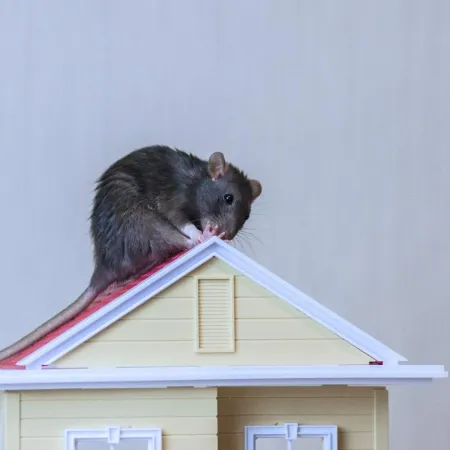
Mid-November brings cooler nights across Miami-Dade, Broward, and Palm Beach Counties, and roof rats already living in the trees spend more time inside attic voids. Rats in attic insulation leave droppings, chewed wiring, and nighttime scratching that does not fade after a single cold front. The animals are already in the structure. Waiting for warmer weather will not clear them out. Fruit in the trees is thinner at this point in the year, and the stable warmth of attic insulation becomes more attractive as overnight temperatures drop.
Signs of Rats in Attic Spaces
Rats in attic voids stay hidden during the day, so the first clues are usually sounds and debris rather than a sighting. Scratching or scurrying in the ceiling after dark is the classic sign, especially along eaves and above bedrooms. Tufts of insulation pulled or packed into a corner, gnaw marks on roof sheathing or stored boxes, and dark grease smears near a vent or soffit all point to a regular travel path.
Droppings in insulation or on attic joists confirm active use of the space. What rat droppings look like matters because fresh pellets in the attic mean the infestation is current, not leftover from a past season. A stale, musky odor in an upstairs room can appear once urine and droppings build up in the insulation below the decking. Chewed electrical wiring is a separate hazard: damaged cables inside an attic can spark and are expensive to repair.
Heavy thumps during daylight hours can indicate a squirrel instead of a rat. Night-only traffic in the ceiling is more consistent with rats in attic nesting sites. Either way, the next step is an inspection, not a guess based on one sound. Activity that starts in mid-November can already be well established in the insulation, even if droppings have not yet appeared in a living room.
How Roof Rats Reach an Attic
Roof rats in South Florida are agile climbers. They travel tree limbs, utility lines, and trellises, then enter through gaps at the roofline: damaged soffits, loose vent screens, open eaves, and openings where pipes or cables pass through the fascia. A branch that touches the roof is a bridge. So is a dense hedge grown up against the siding under an eave.
Once inside, the attic offers warmth, dark nesting material, and a path into wall voids. Rats in attic insulation rarely stay in one spot. The same animals may move between the attic, a garage ceiling, and a wall cavity in a single night. Closing one obvious hole without a full inspection simply sends traffic to the next gap, which is why partial sealing often fails.
Why Amateur Traps and Poison Fall Short
A single snap trap in a hallway or a grocery-store bait station in the garage does not solve rats in attic nesting areas. The colony is above the living space. Rats in attic voids will not abandon a nest because a few traps were set in the garage. Food in the kitchen may be a bonus, not the only reason the animals stay. Traps set in the wrong place catch little or nothing, and the rest of the group keeps breeding in the insulation.
Poison is a poorer fit in a house with pets or children. A rodent that feeds on bait can die inside a wall or in the attic, where the carcass is hard to reach and the odor lingers. Secondary poisoning is a real concern for dogs and cats that find a dead or dying rat. Professional crews that serve South Florida homes typically rely on traps rather than bait for that reason, and they place those traps after entry points are sealed so new animals cannot replace the ones that are caught.
Unsealed entry is the usual reason a problem seems to come back. It never left. New rats in attic spaces use the same soffit gap the first group used. Store-bought kits do not include a thorough inspection of the roofline, and they do not include follow-up visits to confirm the activity has stopped.
What Professional Attic Rat Work Includes
A proper job starts on the roofline and in the attic, not with a guess made in the kitchen. A technician inspects vents, soffits, utility penetrations, tree contact, and interior signs, then identifies the species and the active paths. Rodent exclusion and trapping then happens in order: every usable entry is sealed with materials rats cannot chew through, and traps are placed on the paths already in use. Sealing first keeps new animals out and stops the ones inside from slipping into a wall, where a carcass would sit out of reach.
If activity continues after four weeks of that work, a smoke test can reveal a hidden route, including a cracked or disconnected plumbing line under a slab, which is a known issue in older South Florida homes. On a typical professional job, most rodent activity is eliminated within two weeks once exclusion and trapping are in place.
How to get rid of rats in attic spaces is that sequence, not a single night of traps in the pantry. The same process covers rats in the attic after a mid-November cold snap and infestations that have been running quietly for months. How to get rid of rats in the attic is not a different method. It is the same inspection, exclusion, and trapping plan, done thoroughly enough that the ceiling goes quiet and stays quiet.
Attic Rat Control in South Florida
Royal Pest & Termite has provided rodent and wildlife service in Miami-Dade, Broward, and Palm Beach Counties since 2014. The Miramar company is licensed and insured. For rats in attic problems, technicians inspect the roofline, seal entry points, and use traps rather than poison whenever possible. Inspections are free. If pests return between scheduled visits, the company returns at no additional charge. Call 754-800-5284 to schedule a free inspection.