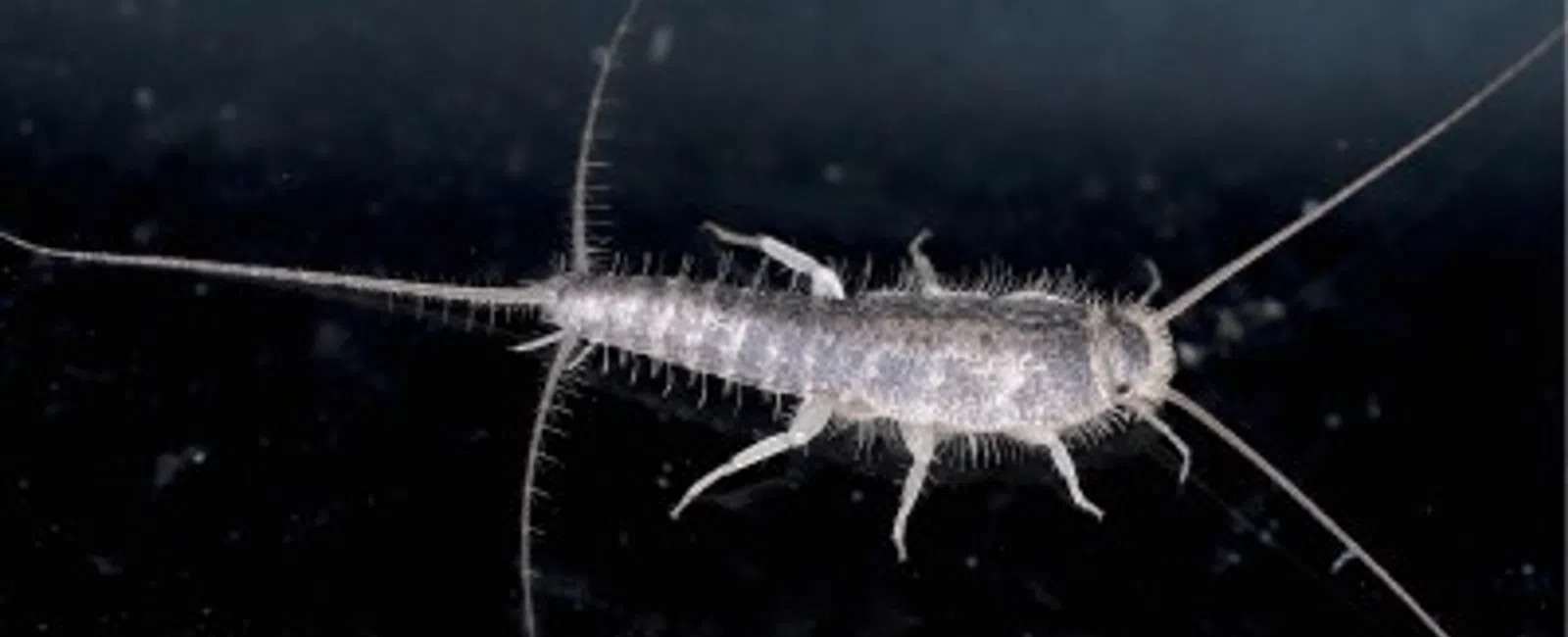
A tiny white insect darting across the bathroom
tile or slipping into the gap behind a bookshelf is easy to dismiss. In many
South Florida homes, it is a baby silverfish, and it says more about what is
happening inside the walls than a single adult ever could.
What Baby Silverfish Look Like
Young silverfish, called nymphs, look like small versions of the adults: a flattened body that tapers toward the rear, long antennae up front, and three slender tail filaments behind. The difference
is color. Nymphs are whitish and soft, and they hatch without the silvery
scales that give the adults their name. The scales develop over the following
months, and it takes several weeks before a young silverfish darkens toward
adult coloring.
Adults reach about half an inch to
three-quarters of an inch long, so a nymph that is only a fraction of an inch
can look like a different insect altogether. Both stages move fast, prefer the
dark, and are mostly active at night, which is why a sighting under a light
switched on late in the evening is so common.
How the Silverfish Life Cycle Works
The silverfish life cycle is slow and steady. A
female may lay more than 100 eggs over her lifetime, placing them singly or in
small groups inside cracks, crevices, and other hidden spots. Silverfish eggs
hatch in roughly three to six weeks.
What comes out is a nymph that grows through a
long series of molts. Unlike most insects, silverfish keep molting even after
they reach adulthood, so the pale, freshly molted look can appear at any age.
Under warm, favorable conditions, a nymph can mature in about three months,
while cooler settings stretch development out to as long as two years. Adults
are long-lived for an insect, with a lifespan of roughly two to eight years.
Put those numbers together, and a small
population can grow quietly for a long time before anyone notices it.
Why Young Silverfish Mean They Are Breeding Indoors
An adult silverfish can wander in with a
cardboard box or a stack of old books. A nymph is different. Seeing young ones
inside means eggs were laid and hatched inside the house, which points to a
population that is reproducing in the home and not a stray visitor.
The other clues usually turn up in the same
places. Silverfish leave cast skins, loose scales, and tiny dark droppings behind, and their feeding shows up as notched edges or small holes in paper, ragged spots on book bindings, and damage to stored fabrics. They go after starch, glue, paper, and some dry pet foods, so closets, bookshelves, storage boxes, and laundry areas tend to show the evidence first.
Why South Florida Humidity Keeps Them Coming Back
Silverfish prefer damp spaces, and their
development speeds up in warmth. Nymphs mature faster and live longer at higher
temperatures, and the species favors humid rooms in roughly the 70 to 90 degree
range. That describes a large share of South Florida homes for much of the
year, especially in bathrooms, laundry rooms, closets on exterior walls, and
anywhere a slow plumbing leak keeps the surrounding material damp.
That is the link between humidity and the young silverfish you keep finding. Moisture does not create silverfish, but it decides how well the eggs and nymphs survive. Adult silverfish need moisture to survive, which is why controlling indoor humidity sits at the center of any plan to prevent silverfish in a South Florida home.
The point for
nymphs is that a home with persistent damp pockets gives every new hatch a good
chance of reaching adulthood. The same conditions feed other moisture pests
too, and homes with silverfish often have booklice in damp areas or other small insects drawn to the same spots.
Bugs Mistaken for Silverfish Nymphs
Several small, pale insects can be mistaken for silverfish nymphs. Booklice are tiny and soft-bodied but lack the tapered shape
and the three tail filaments. Firebrats are close relatives that look much like
silverfish but favor hot spots near water heaters and appliances. And the
long-legged hunter some homeowners spot at the same time is often a house centipede, which is a predator. Because house centipedes eat silverfish, finding both together usually means the
centipedes have found a steady food supply.
Damage can be confusing as well. Holes in stored
clothing may come from silverfish or from carpet beetle larvae, and the two call for different responses,
which is one reason identification comes before treatment.
Why Spot Treatment Misses the Next Generation
Killing the nymph on the floor does almost
nothing to the population. Eggs are tucked into crevices where they are hard to
see and harder to reach; they hatch on a staggered schedule over several weeks,
and adults in the walls can keep laying for years. Treatments aimed only at
what is visible tend to clear the room for a while, then the next hatch walks
out of the same gap.
This is the hardest decision point, and it is where a technician makes the difference. Lasting control means finding the harborage, identifying the moisture sources that let eggs and nymphs survive, and treating the cracks and concealed areas where silverfish actually live.
Royal Pest & Termite covers silverfish under its year-round pest control plan, with quarterly visits that include interior
treatment of baseboards, plumbing areas, cabinets, and closets, so the staggered
hatches are addressed over time and not only on the day of the first service.
Technicians also point out the damp spots and hidden pest warning signs that keep a population going.
Schedule a Silverfish Inspection With Royal Pest & Termite
Young silverfish are a small sight with a clear message: the insects are breeding somewhere close, and the humidity is helping them do it.
Royal Pest & Termite serves homeowners across Miami-Dade,
Broward, and Palm Beach counties, and the 4.8 stars the team has earned across
173 Google reviews come from neighbors who wanted the source found and the
moisture problem named. Call us today to schedule a free pest inspection
and stop the next generation of silverfish before next summer's rainy season gives
it room to grow.