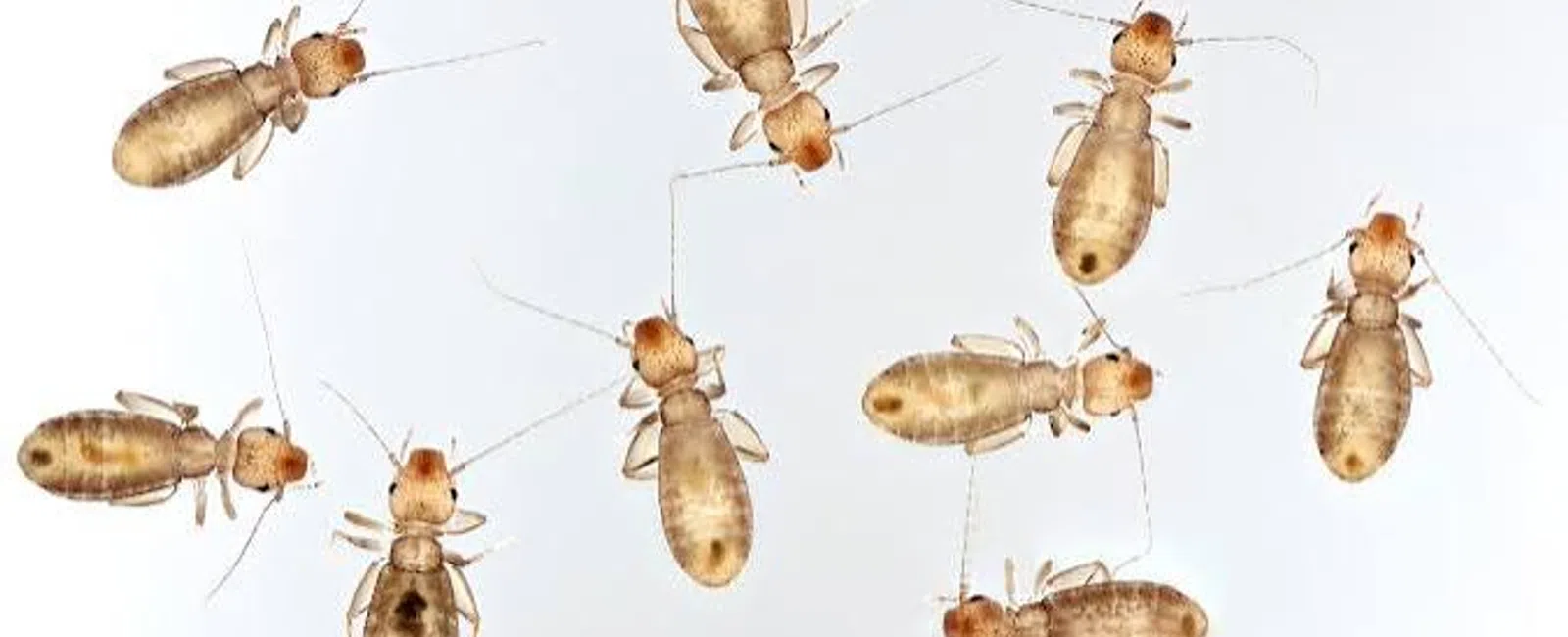
Booklice, also called psocids, are tiny household insects that appear in humid areas such as pantries, bathroom cabinets, closets, cardboard boxes, and stored books. In South Florida, they are common because they thrive in moisture.
The good news: booklice are not actual lice. They do not live on people or pets, do not bite, and do not feed on blood. They are nuisance pests that feed on mold, mildew, fungi, and starchy materials found in paper, cardboard, wallpaper, and food packaging.
If you are seeing booklice, the real problem is usually humidity or hidden moisture. Getting rid of them starts with drying out the area, removing mold or contaminated materials, and improving storage conditions. If the problem persists or you are unsure what you are dealing with, our general pest control services can help identify and address the issue.
What Are Booklice?
Booklice are tiny insects, usually about 1 to 2mm long. They are soft-bodied, pale white, gray, or light brown, and often move in quick, jerky bursts across a surface.
Despite the name, booklice are not true lice. True lice are parasites that live on people or animals. Booklice are free-living insects that feed on mold, mildew, fungi, algae, and organic debris in damp environments.
Most booklice found indoors are wingless. They are most often noticed when pantry items, cardboard boxes, books, or stored paper are moved.
Booklice vs. Lice
Booklice are often mistaken for head lice or body lice, but the difference is simple.
- Booklice are found on surfaces, shelves, paper, walls, food packaging, bathroom cabinets, and humid storage areas. They do not live in hair, do not live on skin, and do not bite.
- Head lice and body lice are found on the human body, in hair, or in clothing and bedding. They feed on blood and cannot survive long away from a human host.
If the insects are crawling on a pantry shelf, bathroom cabinet, book, cardboard box, or wall, they are not head lice.
Booklice vs. Baby Bed Bugs
Booklice can also be confused with baby bed bugs. Location is the easiest way to tell the difference.
- Baby bed bugs are usually found around beds, mattress seams, bed frames, furniture joints, and sleeping areas. They feed on blood and move more slowly. If you suspect bed bugs, our bed bug treatment services include a thorough inspection to confirm identification.
- Booklice are usually found in humid spaces with mold, paper, cardboard, or food packaging. Common areas include pantries, bathrooms, closets, bookshelves, cardboard storage, and newly renovated spaces.
If the insects are in a kitchen pantry or bathroom cabinet, they are much more likely to be booklice than bed bugs.
Why Booklice Are Common in South Florida
Booklice need humidity to survive. They dry out quickly in low-humidity conditions and are more likely to reproduce when indoor humidity stays high.
South Florida homes are especially prone to booklice because humidity stays elevated for much of the year. Homes in Broward County, Miami-Dade County, and Palm Beach County often experience moisture pockets in cabinets, closets, pantries, garages, and other storage areas.
Booklice are especially common in:
- Pantries with cardboard food packaging
- Bathroom cabinets with poor ventilation
- Closets that stay warm and humid
- Stacks of paper, books, or cardboard boxes
- Areas with mold or mildew growth
- Window frames with condensation
- New or recently renovated spaces that still hold construction moisture
Are Booklice Harmful?
Booklice do not bite people or pets, do not spread disease, and are not parasitic. For most homeowners, they are more of a nuisance than a direct health threat.
The two main concerns are food contamination and moisture.
Food contamination. If booklice are found in dry food, cereal, flour, crackers, or other pantry items, the affected food should be thrown away. The issue is not toxicity. It is contamination from insects, shed skins, and waste. For more on pantry pests, see our guide on pantry moths, which can appear alongside booklice in the same storage areas.
Moisture or mold problems. Booklice feed on mold and mildew. If they keep appearing in the same cabinet, pantry, closet, or wall area, it may point to a moisture problem that needs to be corrected.
How to Get Rid of Booklice
Booklice are a moisture problem first and an insect problem second. Spraying alone will not solve the issue if the area stays humid.
1. Reduce Humidity
Use a dehumidifier in affected areas, improve ventilation, and keep air conditioning running consistently. In South Florida, turning the AC off for long periods can raise indoor humidity to levels that support booklice and mold growth.
Check bathroom fans, pantry airflow, closet ventilation, and cabinets near plumbing. If a space feels damp or musty, booklice can survive there.
2. Inspect and Remove Affected Food
Remove all food from the affected pantry or cabinet. Throw away any items that contain booklice, shed skins, or signs of contamination.
Move dry goods into airtight glass or hard plastic containers. Avoid storing food in cardboard for long-term storage, since cardboard retains moisture and can provide food and shelter for booklice.
3. Clean Affected Surfaces
Wipe down shelves, cabinet interiors, shelf undersides, corners, and nearby surfaces. Use a cleaning product with antifungal properties or a properly diluted bleach solution, where safe for the material.
Vacuum cracks, corners, shelf joints, and storage areas where booklice were seen. Empty the vacuum immediately after cleaning.
4. Fix the Moisture Source
If booklice keep returning, look for the source of moisture. Common causes include condensation from plumbing, slow leaks, poor ventilation, damp cabinets, wall moisture, or high indoor humidity.
Cleaning helps, but lasting control comes from correcting the condition that allowed mold and booklice to survive. If you are finding other moisture-driven pests alongside booklice, such as cockroaches, silverfish, or drain flies, the same underlying moisture conditions are likely contributing.
5. Use Pest Treatment When Needed
Residual insecticide may help reduce the number of surviving booklice after the area has been cleaned and dried. However, treatment should be used as a supplement, not the main solution.
If humidity and mold remain, booklice will likely return. Our pest control services include an inspection to identify the moisture and pest conditions driving the infestation.
How to Prevent Booklice
- Keep humidity under control. Run air conditioning consistently and use dehumidifiers in problem areas.
- Store dry goods properly. Use airtight glass or plastic containers instead of cardboard boxes.
- Improve airflow. Open cabinet doors periodically, use small fans in problem spaces, and make sure bathroom exhaust fans work properly.
- Limit cardboard storage. Cardboard absorbs moisture and can support booklice activity.
- Inspect secondhand books and paper. Used books, stored paper, and items from storage units can bring booklice into the home. Freezing paper items in a sealed bag for one week can kill all life stages.
- Address mold quickly. Visible mold or mildew should be cleaned, and the moisture source corrected.
When to Call a Professional
Most booklice problems can be solved by reducing humidity, cleaning the area, and improving storage. Professional pest control may be needed when:
- Booklice keep returning after cleaning and drying the area
- The insects are showing up in multiple rooms
- There is visible mold growth
- You suspect a hidden leak or wall moisture problem
- You are not sure whether the insects are booklice, bed bugs, lice, or another pest
If a persistent booklice problem is tied to moisture, mold, or another pest issue, Royal Pest & Termite can help identify the conditions driving the infestation and recommend the right next step.
Frequently Asked Questions
What are booklice?
Booklice, or psocids, are tiny insects that feed on mold, mildew, fungi, and starchy materials in humid spaces. They are not true lice and do not live on people or pets.
Are booklice harmful?
Booklice do not bite, sting, or spread disease. The main concerns are contaminated pantry items and the possibility of hidden moisture or mold.
Are booklice the same as lice?
No. True lice live on humans or animals and feed on blood. Booklice live on surfaces in humid areas and feed on mold and organic debris.
How do booklice get into the house?
Booklice can enter through small gaps, secondhand books, paper, cardboard, or food packaging. Once inside, they survive in areas with high humidity and mold. For help identifying how pests are entering your home, our pest inspection service includes a full entry point assessment.
Why do booklice keep coming back?
Recurring booklice usually mean the humidity problem has not been fixed. Look for poor ventilation, condensation, plumbing leaks, damp cabinets, or mold growth.
Can booklice infest food?
They can appear in dry food storage areas and on food packaging. Any food containing booklice should be discarded, and the pantry should be cleaned and dried before restocking.
Schedule a Pest Inspection
Royal Pest & Termite is locally owned, based in Miramar, and has served South Florida homes since 2014. If you are dealing with booklice, pantry pests, moisture-related pest activity, or an insect you cannot identify, we can help inspect the issue and recommend the right next step.
Call (754) 202-4605 or schedule a free inspection online.
We serve Miramar, Pembroke Pines, Davie, Hollywood, Fort Lauderdale, Boca Raton, South Palm Beach County, and most of Broward County, FL. We also service select areas in northern Miami-Dade County. Call us to confirm availability at your address.