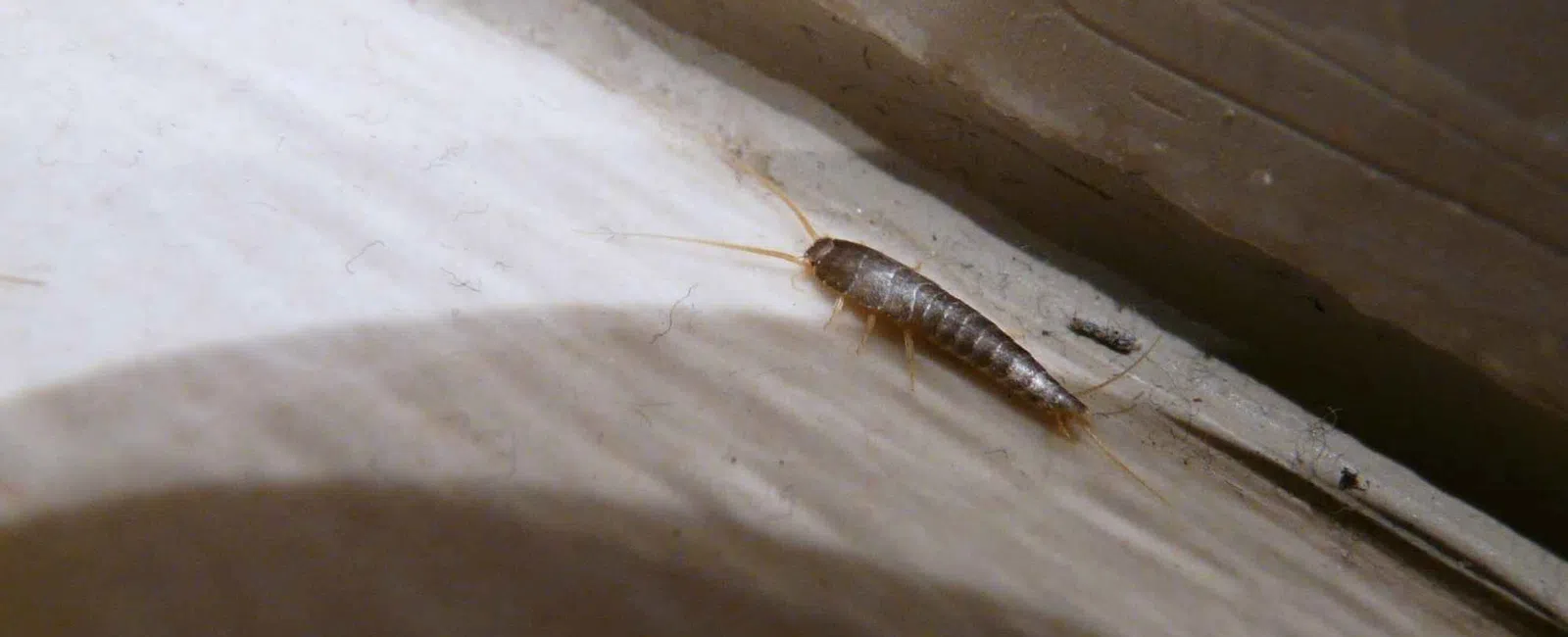
Silverfish are common in South Florida homes because they thrive in warm, humid spaces. They are fast-moving, active at night, and often found in bathrooms, kitchens, closets, garages, and storage areas.
If you are seeing silverfish, the real issue is usually moisture plus available food sources. The best way to control them is to reduce humidity, remove clutter and cardboard, seal entry points, and treat the areas where they hide.
What Do Silverfish Look Like?
Silverfish are small, wingless insects with a silvery-gray color and a tapered, fish-like body. They are usually about 12 to 19mm long and have long antennae with three tail-like appendages at the rear.
They move quickly in short, darting bursts. Most homeowners notice them when they turn on a light and see one running toward a dark hiding spot.
Silverfish are sometimes confused with earwigs, firebrats, or house centipedes. Earwigs have pinchers at the rear. Firebrats are usually mottled brown and prefer heat. House centipedes have many long legs and move much faster.
What Do Silverfish Eat?
Silverfish feed on starches, carbohydrates, proteins, and cellulose-based materials. In homes, their food sources often include:
- Paper, cardboard, books, and bookbinding glue
- Wallpaper paste
- Cotton, linen, silk, and some blended fabrics
- Flour, oats, cereal, crackers, and other dry pantry goods
- Mold and fungi in humid areas
- Dead insects, hair, skin flakes, and debris in undisturbed areas
What Causes Silverfish in a House?
Silverfish usually show up when two conditions are present: humidity and food.
- High humidity. Silverfish need moisture to survive. Bathrooms, laundry rooms, kitchens, closets, garages, and poorly ventilated storage areas are common problem spots.
- Food sources. Cardboard boxes, paper storage, books, natural-fiber clothing, wallpaper, and open pantry packaging all give silverfish something to feed on.
- Entry points. Silverfish can enter through gaps around pipes, window frames, door frames, foundation cracks, and exterior openings. They can also come in on cardboard boxes, used books, and stored items brought in from garages or storage units.
Why Silverfish Are Common in South Florida
South Florida gives silverfish what they need: warmth and humidity almost all year. Unlike colder or drier climates, there is no real seasonal break that naturally reduces their activity.
Homes in Broward County, Miami-Dade County, Palm Beach County, and surrounding areas often have humid garages, bathrooms, closets, and storage spaces where silverfish can survive and reproduce.
Cardboard storage is a major issue. Boxes stored in garages or closets absorb moisture, provide shelter, and serve as a food source. When those boxes are moved into the home, silverfish can move with them.
How to Get Rid of Silverfish
Effective silverfish control takes more than spraying one room. You need to reduce humidity, remove food sources, block entry points, and treat the areas where silverfish hide.
1. Reduce Humidity
Run the air conditioning consistently, use bathroom exhaust fans during and after showers, and consider a dehumidifier in garages, closets, laundry rooms, or other damp storage areas.
Also check for plumbing drips, condensation under sinks, and damp areas around pipes. Silverfish activity often continues when small moisture problems are ignored.
2. Remove Food Sources
Move dry pantry goods into airtight glass or plastic containers. Replace cardboard storage boxes with sealed plastic bins. Keep books, documents, and natural-fiber clothing out of damp areas whenever possible.
Reducing access to paper, cardboard, fabric, and pantry items makes the home less supportive for silverfish.
3. Seal Entry Points
Caulk gaps around pipes, baseboards, windows, doors, and visible cracks where silverfish may enter or travel between rooms.
This helps reduce new activity and limits movement through the structure.
4. Vacuum Problem Areas
Vacuum along baseboards, inside closets, under furniture, behind stored items, and anywhere you have seen silverfish, shed skins, or droppings.
Regular vacuuming removes eggs, insects, debris, and the small food sources that collect in undisturbed areas.
5. Use Targeted Treatment
Residual insecticide can be applied to cracks, crevices, baseboards, closet interiors, and other hiding areas. Diatomaceous earth or boric acid may also be used in dry, inaccessible areas, but they should be kept away from children and pets.
For lasting control, treatment should be paired with humidity reduction and source removal.
Our general pest control programs address silverfish with interior and exterior treatments that target the areas where they live, hide, and enter the home.
What Do Silverfish Damage?
Silverfish do not damage your home's structure, but they can damage stored belongings and contaminate pantry items.
- Books and documents. Silverfish are drawn to paper, bookbinding glue, and stored files. Damage often appears as surface scraping, yellow staining, or irregular marks along the edges and spines of books.
- Wallpaper. Silverfish can feed on wallpaper paste, causing loose seams, scraping, and damage around edges and corners.
- Clothing and fabric. Cotton, linen, silk, and other natural fabrics can be damaged, especially when stored for long periods and exposed to body oils, food stains, or moisture.
- Pantry items. Flour, oats, cereal, crackers, and other dry goods can be contaminated by silverfish, shed skins, and droppings. Affected food should be discarded.
- Photographs. Older photos and albums stored in humid closets or boxes can be damaged by silverfish feeding on the backing or surface materials.
How to Prevent Silverfish
- Control indoor humidity. Keep the air conditioning running consistently and use dehumidifiers in problem areas.
- Use sealed storage. Store paper, books, documents, clothing, and keepsakes in airtight plastic bins instead of cardboard boxes.
- Protect pantry items. Store dry goods in sealed glass or plastic containers.
- Clean storage areas regularly. Vacuum closets, baseboards, under furniture, and garage storage areas where dust, hair, paper, and debris collect.
- Inspect items before bringing them inside. Used books, cardboard boxes, and items from storage units can introduce silverfish into the home.
Schedule a Pest Inspection
If silverfish are showing up in multiple rooms or damaging paper, fabric, or pantry items, a professional inspection can help identify where they are hiding and what conditions are sustaining them.
Royal Pest & Termite is locally owned, based in Miramar, and has served South Florida homes since 2014. Our general pest control programs address silverfish and other moisture-driven pests common in Broward County and surrounding communities.
Call us at (754) 202-4605 or schedule a free inspection online.
We serve Miramar, Pembroke Pines, Davie, Hollywood, Fort Lauderdale, Boca Raton, South Palm Beach County, and most of Broward County, FL. We also service select areas in northern Miami-Dade County. Call us to confirm availability at your address.