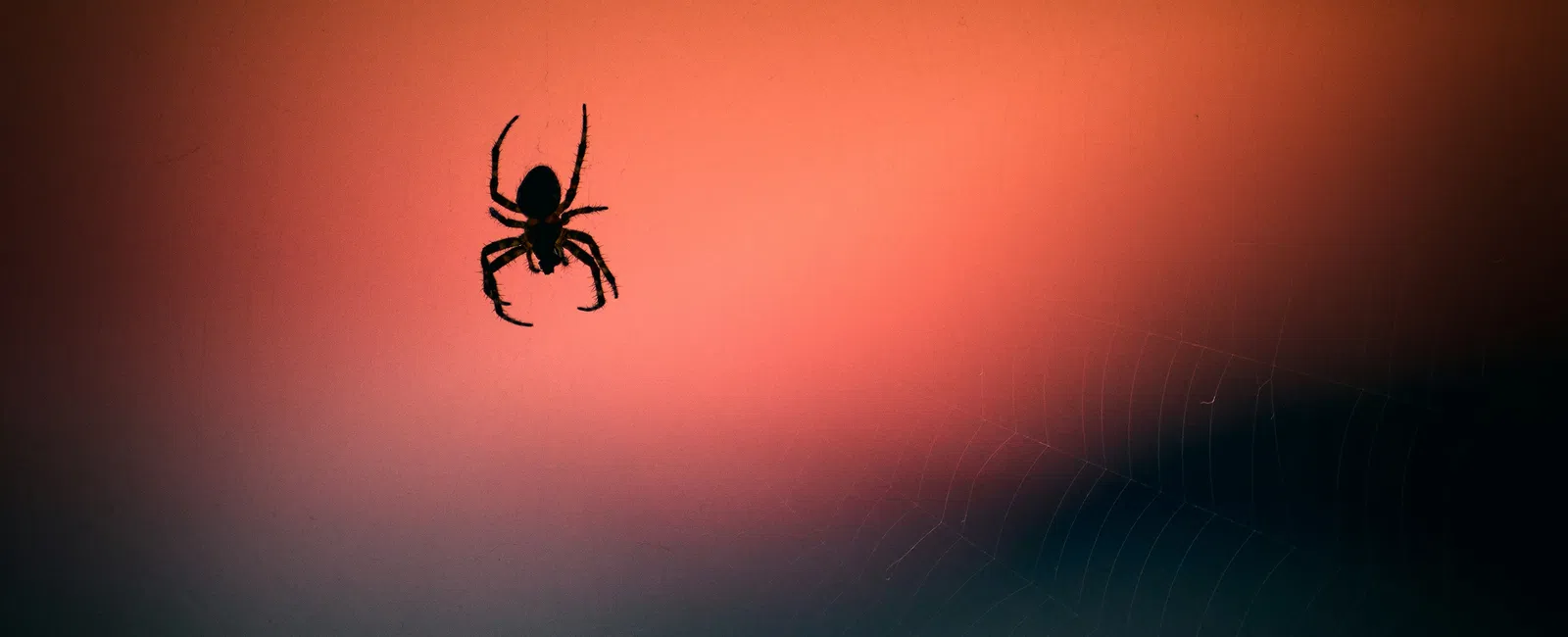
Florida is home to many spider species, and several are common in homes across Broward, Miami-Dade, and Palm Beach counties. Most are harmless and even helpful because they feed on insects. A few, however, are medically significant and should be taken seriously when found around living spaces.
The best way to handle spiders is to know which species you are seeing, what is attracting them, and whether they point to a larger pest issue inside or around the home.
Common Spiders Found in South Florida Homes
Wolf Spiders
Wolf spiders are one of the spiders South Florida homeowners notice most often. They are large, fast, brown to gray, and covered in fine hair. Because of their size and speed, they can look more alarming than they really are.
Wolf spiders do not build webs. They hunt on the ground, which is why they are often found in garages, along baseboards, near storage areas, and on ground-level floors.
Wolf spiders are not medically significant. A bite may cause localized pain or redness, similar to a bee sting, but they are not aggressive and usually bite only when handled or trapped.
Southern House Spiders
Southern house spiders are common web-building spiders in homes in South Florida. Males are brown and long-legged and are often mistaken for brown recluse spiders. Females are darker, heavier-bodied, and less commonly seen.
They build flat, messy webs in corners, window frames, eaves, garages, and other quiet areas. Southern house spiders are not dangerous, but their webs and their resemblance to brown recluse spiders can concern homeowners.
Cellar Spiders
Cellar spiders are the pale, long-legged spiders often called daddy long-legs. They build loose, irregular webs in room corners, garages, closets, and utility areas.
They are harmless to people. The common claim that daddy long-legs are extremely venomous is a myth. Their venom is not dangerous to humans.
Jumping Spiders
Jumping spiders are small, compact spiders with large forward-facing eyes. They are usually less than half an inch long and may be seen on exterior walls, window frames, plants, and occasionally indoors.
They do not build webs to catch prey. Instead, they stalk and jump. Jumping spiders are not medically significant and are not aggressive toward people.
Orb Weaver Spiders
Orb weavers build large, circular webs outside around gardens, walkways, rooflines, and exterior walls. South Florida species include golden silk orb weavers and spiny orb weavers.
Orb weavers are not dangerous to humans. They are beneficial predators of flying insects, but they can become a nuisance when their webs are built across walkways, doors, patios, or high-traffic areas.
Dangerous Spiders in South Florida
Most spiders in South Florida are harmless, but widow spiders deserve attention. Black widows and brown widows can both be found in the region.
Black Widows
Black widows are present throughout Florida and are one of the most medically significant spiders in the state. The female is glossy black with a red hourglass marking on the underside of the abdomen.
Black widows build messy, tangled webs in dark, sheltered areas close to the ground. Common locations include garages, woodpiles, outdoor furniture, gaps in block walls, storage areas, eaves, and undisturbed corners.
They are not aggressive, but they may bite when accidentally pressed against skin, such as when someone reaches into a box, puts on a shoe left outside, or handles stored items.
Black widow bite symptoms can include intense pain, muscle cramps, abdominal or back rigidity, sweating, nausea, and elevated blood pressure. Any suspected black widow bite should be treated as a medical issue, especially for children, elderly adults, or anyone with a compromised immune system.
Brown Widows
Brown widows are now widespread in South Florida. They are related to black widows and have potent venom, but their bites are generally considered less severe because they usually inject less venom.
Brown widows are tan to brown with mottled markings and an orange to yellow hourglass on the underside. Their egg sacs are easy to recognize because they look like small spiky balls.
They are often found around outdoor furniture, patio structures, eaves, garage areas, block wall openings, and outdoor storage. In many South Florida neighborhoods, brown widows are found more often than black widows.
Any bite from a widow spider should be evaluated by a medical professional.
Are Brown Recluse Spiders in Florida?
Brown recluse spiders are often blamed for spider-related concerns in South Florida, but they are not established there. They are native to the south-central United States, not South Florida.
Most suspected brown recluse sightings in Florida turn out to be southern house spiders or other brown spiders. True brown recluse spiders found in Florida are usually transported in boxes, furniture, or belongings from states where they are established.
If you believe you have found a brown recluse, save the specimen and have it professionally identified before making treatment decisions.
What Attracts Spiders to South Florida Homes?
Spiders usually show up where there is food and shelter. If you keep seeing spiders, there is often another insect population nearby feeding them.
- Other insects. Cockroaches, ants, silverfish, flies, and other pests serve as food sources for spiders.
- Exterior lighting. Outdoor lights attract flying insects at night, which then attract spiders near doors, windows, patios, and entryways.
- Clutter and storage. Cardboard boxes, wood piles, garage clutter, and stored items give spiders and their prey places to hide.
- Mulch and moisture. Thick mulch, leaf litter, damp areas, and heavy ground cover attract insects, which draw spiders closer to the home.
- Entry points. Gaps under doors, garage doors, utility penetrations, window frames, and block construction openings allow spiders to move inside.
How to Get Rid of Spiders
Effective spider control means treating the spiders and reducing the conditions that attract them.
- Control the insects they feed on. A general pest control program that targets ants, roaches, flies, silverfish, and other insects helps reduce the food supply that supports spider activity.
- Reduce outdoor hiding places. Remove debris, wood piles, heavy ground cover, and clutter stored against the home. Pull mulch back from the foundation to reduce moisture and pest activity.
- Seal entry points. Caulk gaps around doors, windows, pipes, utility penetrations, and foundation openings. Add or repair door sweeps on exterior and garage doors.
- Adjust exterior lighting. Use yellow or amber bulbs near entry points to reduce flying insect activity at night.
- Remove webs and egg sacs. Regularly clear webs from eaves, garages, patios, corners, and exterior walls. Removing egg sacs before they hatch helps reduce future spider activity.
- Use targeted treatment. Residual treatment around foundations, entry points, baseboards, corners, and harborage areas can reduce spiders and the insects they feed on.
- Be careful around widow spiders. If black or brown widows are found, avoid handling outdoor furniture, boxes, woodpiles, or stored items without gloves until the area has been inspected or treated.
Our spider and pest control services address spider activity and the insect populations that attract them, using a recurring plan suited to South Florida's year-round pest pressure.
When to Schedule a Pest Inspection
Recurring spider activity, especially widow spider sightings around garages, patios, outdoor furniture, or storage areas, should be inspected professionally. An inspection can identify harborage areas, entry points, insect prey, and exterior conditions that are keeping spiders active.
Royal Pest & Termite is locally owned, based in Miramar, and has served South Florida homes since 2014. Our general pest control programs address spiders and the insects that sustain them throughout Broward County and surrounding communities.
Call us at (754) 202-4605 or schedule a free inspection online.
We serve Miramar, Pembroke Pines, Davie, Hollywood, Fort Lauderdale, Boca Raton, South Palm Beach County, and most of Broward County, FL. We also service select areas in northern Miami-Dade County. Call us to confirm availability at your address.