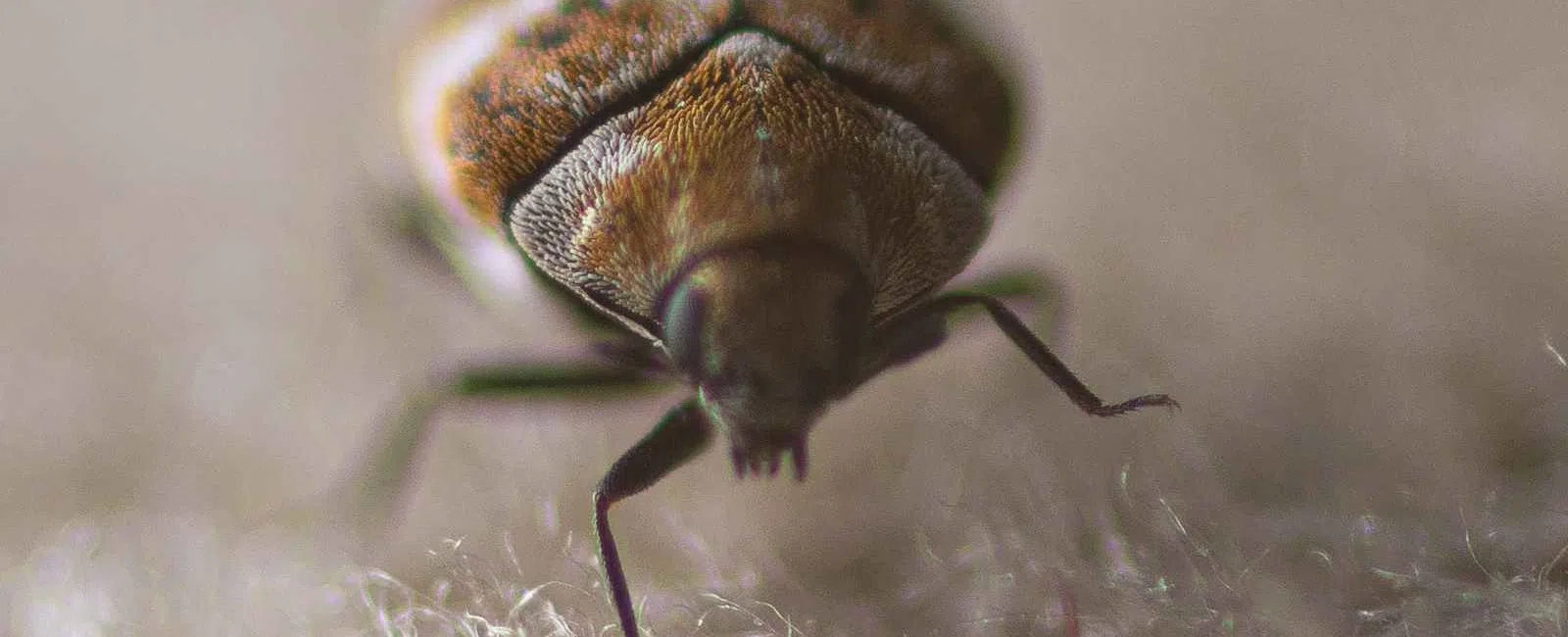
Carpet beetles are small, easy-to-miss pests that can damage clothing, rugs, furniture, and stored natural-fiber items before you ever see the insects themselves. In South Florida homes, they can be especially frustrating because the warm climate allows infestations to continue year-round if the source is not fully removed.
The larvae are the stage that causes damage. They feed on animal-based materials like wool, silk, leather, feathers, fur, cashmere, and dried animal products. Because the damage often resembles moth damage, worn fabric, or storage damage, many homeowners do not realize that carpet beetles are the problem until the infestation has spread.
Quick Signs You May Have Carpet Beetles
You may have a carpet beetle infestation if you notice:
- Irregular holes or thinning in wool, silk, cashmere, or natural-fiber clothing
- Damage along the edges of wool rugs or underneath furniture
- Small, bristly shed skins in closets, drawers, baseboards, or storage boxes
- Tiny dark fecal pellets around damaged fabrics
- Small oval beetles on windowsills or near lights
- Damage to taxidermy, feathers, fur, leather, or dried animal products
If the damage is limited to one item, cleaning and removal may solve the problem. If you are finding evidence in multiple rooms, closets, rugs, or storage areas, there is likely a hidden breeding source that needs to be found.
What Do Carpet Beetles Look Like?
Several carpet beetle species are active in Florida, including varied, black, and furniture carpet beetles. Their markings can look different, but their behavior and the damage they cause are similar.
- Adult carpet beetles are small, oval beetles, usually about 1.5 to 4mm long. Depending on the species, they may be patterned with white, brown, yellow, and black scales, or they may appear dark brown to black.
- Carpet beetle larvae cause the actual damage. They are small, light brown to golden, and covered in stiff hairs or bristles. These bristly hairs are one of the easiest ways to tell carpet beetle larvae apart from clothes moth larvae, which are usually smooth and white.
Larvae avoid light and usually hide in quiet, undisturbed areas. Common hiding spots include folded clothing, closets, storage boxes, under furniture, along baseboards, inside wool rugs, and in upholstered furniture.
What Do Carpet Beetles Damage?
Carpet beetle larvae feed on keratin, a protein found in animal-based natural materials. They do not usually damage synthetic fabrics unless those materials are blended with wool, silk, or another natural fiber.
- Clothing and textiles. Wool, cashmere, silk, felt, and wool-blend fabrics are common targets. Damage often appears as uneven holes or thin patches, especially around collars, cuffs, underarms, and areas where body oils collect.
- Wool and silk rugs. Carpet beetles often damage rugs in undisturbed areas, especially under furniture or near baseboards. The damage may begin at the base of the rug pile and remain hidden until it becomes more severe.
- Upholstered furniture. Furniture that contains natural stuffing materials like horsehair, wool batting, feathers, or down may attract larvae. Since the feeding can happen inside the furniture, damage is not always easy to spot right away.
- Stored animal-based items. Taxidermy, feathers, fur, leather goods, dried insect collections, museum specimens, and dried pet food can all become food sources.
- Dead insects, bird nests, and rodent nests. This is one of the most overlooked sources. Bird and rodent nests in attics, wall voids, eaves, or nearby exterior areas can support carpet beetle activity even if your fabrics have already been cleaned.
Where Carpet Beetle Infestations Start
Adult carpet beetles often enter South Florida homes from outside. They feed on pollen and nectar outdoors, then come inside through gaps around windows, doors, attic openings, and utility penetrations.
Once inside, female carpet beetles look for places where larvae will have food. That may include stored clothing, wool rugs, pet hair buildup, dead insects in light fixtures, taxidermy, or bird and rodent nesting material.
Outdoor nesting sources are a major issue. Bird nests in eaves, attic spaces, or ledges, and rodent nests in wall voids or attics, contain the hair, feathers, and dried organic material carpet beetles need to breed. If those sources are not removed, the infestation can keep coming back. See signs that you may have a rodent infestation to learn more about rodent nests.
How to Get Rid of Carpet Beetles
Getting rid of carpet beetles requires more than spraying. You need to remove infested materials, clean areas where larvae hide, and address any hidden breeding sources.
Step 1: Inspect and remove infested items.
Check natural-fiber clothing, blankets, woolens, rugs, upholstered furniture, leather goods, taxidermy, and stored items in the affected area. Anything with larvae, shed skins, fecal pellets, or visible damage should be cleaned, treated, removed, or discarded.
Step 2: Wash, dry-clean, heat, or freeze the affected materials.
Wash items in hot water, at least 120 degrees Fahrenheit, and dry them on high heat when the fabric allows. Items that cannot be washed should be dry-cleaned. Items that cannot be cleaned but may be infested can be frozen for 1 week at 0°F to kill carpet beetles at all life stages.
Step 3: Vacuum thoroughly.
Vacuum under furniture, along baseboards, inside closets, around rug edges, and anywhere larvae or shed skins were found. Vacuuming removes larvae, skins, fecal material, lint, pet hair, and other food sources. Empty the vacuum immediately and seal the contents in a bag before disposal.
Steam cleaning rugs, carpets, and upholstered furniture can help reach larvae deeper in the pile or fabric where regular vacuuming may not reach.
Step 4: Find and remove hidden breeding sources.
Check for bird nests, rodent nests, dead insects, and organic debris in attics, eaves, light fixtures, window frames, wall voids, and nearby exterior areas. These sources can keep carpet beetles active even after clothing and rugs are cleaned.
Our rodent control and general pest control programs help address the hidden nests and pest sources that can drive persistent carpet beetle activity.
Step 5: Treat affected areas.
Residual insecticide may be applied to baseboards, carpet edges, closet interiors, cracks, crevices, and other areas where larvae were found. This helps control surviving larvae and newly hatched larvae that may appear after the cleanout.
Do not apply insecticides directly to clothing, bedding, or fabrics that come into contact with skin.
Step 6: Store cleaned items properly.
Once items are cleaned or treated, store them in airtight plastic bins, sealed containers, vacuum storage bags, or cedar-lined storage chests. Cedar may help repel carpet beetles, but it will not kill an existing infestation and should only be used after items have already been cleaned.
How to Prevent Carpet Beetles From Coming Back
- Inspect secondhand items before bringing them inside. Used clothing, vintage rugs, antiques, secondhand furniture, taxidermy, and natural-fiber decor can introduce carpet beetles into the home.
- Clean natural-fiber items before storage. Carpet beetles are more attracted to fabrics with body oils, sweat, food residue, or pet hair. Wash or dry-clean items before placing them in long-term storage.
- Use sealed storage. Store wool, silk, cashmere, leather, feathers, and other natural materials in airtight containers rather than open boxes or loosely closed bags.
- Vacuum baseboards, closets, and under furniture. Lint and pet hair buildup can feed larvae, especially in quiet areas that are not cleaned often.
- Seal entry points. Gaps around windows, doors, utility lines, attic access points, and exterior openings can allow adult carpet beetles inside.
- Address bird and rodent nests quickly. Nests in or near the structure should be removed once they are inactive. If birds or rodents are active, professional pest control may be needed to stop the source safely.
Frequently Asked Questions About Carpet Beetles
Do carpet beetles bite? No. Carpet beetles do not bite people. Skin irritation from carpet beetles usually results from contact with the larvae's bristly hairs. In sensitive people, this can cause irritation that looks like insect bites.
What do carpet beetle larvae look like? Carpet beetle larvae are small, elongated, and covered in stiff brown hairs. They are usually light brown to golden in color. Their bristly appearance is one of the best ways to tell them apart from clothes moth larvae.
How do carpet beetles get into the house? Adult carpet beetles can enter through gaps around windows and doors, in attics, and through structural openings. They can also come in on cut flowers, secondhand clothing, used furniture, rugs, taxidermy, or other natural-fiber items.
How long does it take to get rid of carpet beetles? Many carpet beetle infestations can be brought under control within two to four weeks when infested items are removed, the area is cleaned thoroughly, and affected areas are treated. Larger infestations, or those connected to bird or rodent nests, may take longer because the hidden source must be eliminated.
Are carpet beetles harmful to pets? Carpet beetles do not bite or sting pets. However, pet hair can help feed carpet beetle larvae, and pets that rest on wool rugs or natural-fiber blankets may come into contact with larvae. Regular grooming and vacuuming of pet resting areas can help reduce activity.
Schedule a Carpet Beetle Inspection
If you are finding carpet beetle larvae, shed skins, damaged fabrics, or small beetles around windows, the infestation may involve more than one item or closet. A professional inspection can help identify the source, locate hidden breeding areas, and determine whether bird nests, rodent activity, or structural entry points are contributing to the problem.
Royal Pest & Termite is locally owned, based in Miramar, and has been serving South Florida homes since 2014. Our general pest control programs address carpet beetles, fabric pests, stored-product pests, and rodent or bird nest sources that can keep infestations active.
Call us at (754) 202-4605 or schedule a free inspection online.
We serve Miramar, Pembroke Pines, Davie, Hollywood, Fort Lauderdale, Boca Raton, South Palm Beach County, and most of Broward County, FL. We also service select areas in northern Miami-Dade County. Call us to confirm availability at your address.