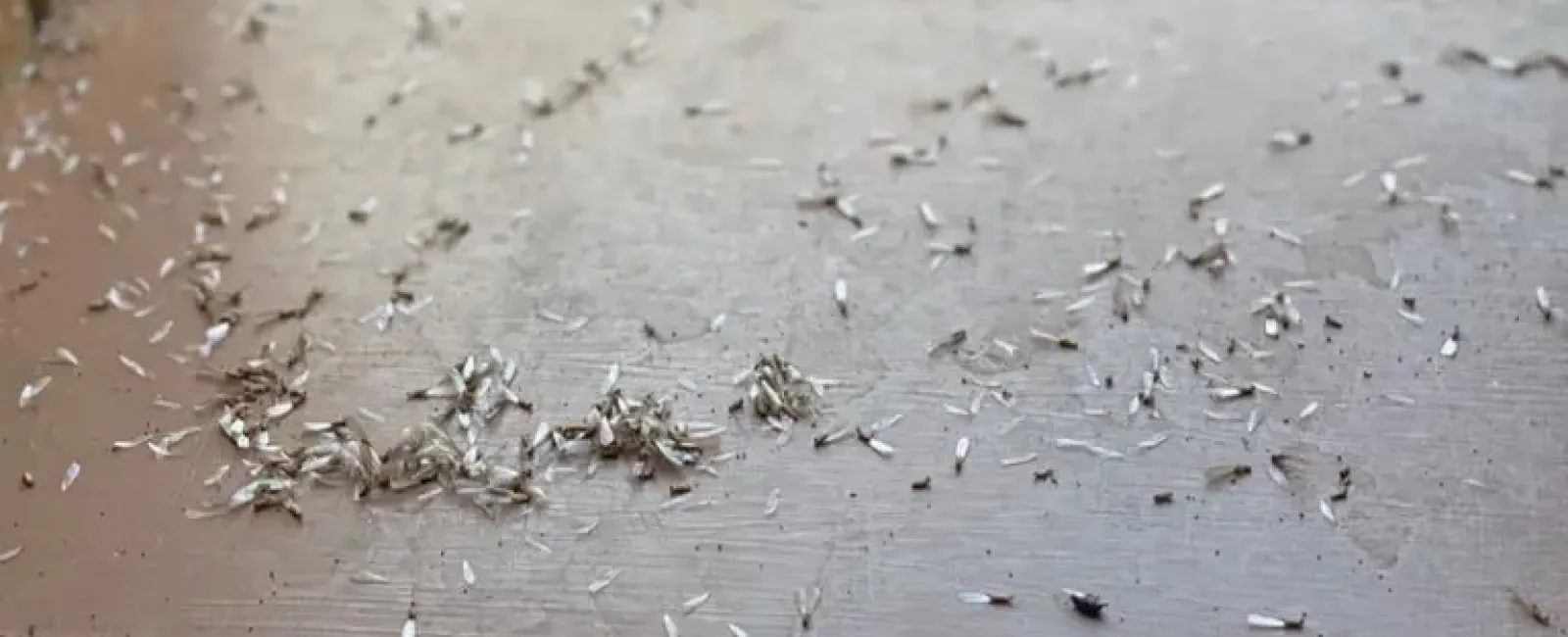
You notice what appears to be a small pile of sand or fine wood dust near a baseboard, window frame, or piece of furniture. You sweep it up. A few days later, it's back.
That's how most South Florida homeowners first encounter termite droppings, also called frass. And the reaction is usually somewhere between "what is that?" and full-blown panic.
At Royal Pest & Termite, we've been identifying and treating termite infestations across Broward County and South Florida since 2014. We know exactly what termite droppings look like, how to tell them apart from other common debris, what they mean for your home, and what to do when you find them.
What Are Termite Droppings?
Termite droppings, technically called frass, are the waste pellets that drywood termites push out of small kick-out holes in the wood they're consuming. As drywood termites eat through your structural wood, trim, furniture, or flooring, they produce tiny, hard pellets and periodically clear them out of their galleries by pushing them through small holes in the wood surface.
What falls out of those holes lands in small, neat piles on whatever surface is below: your floor, a windowsill, a shelf, or the top of a door frame.
Frass is specific to drywood termites. Subterranean termites, which travel through soil and build mud tubes, don't produce visible frass piles the same way. So if you're seeing these pellet piles, you're almost certainly dealing with a drywood termite infestation.
What Do Termite Droppings Look Like?
Termite frass is often described as looking like sand, coarse sawdust, or coffee grounds. Here's how to identify it more precisely:
Size and shape: Individual frass pellets are tiny, roughly 1mm in length, and have a distinctive elongated oval shape with six concave sides. Under a magnifying glass, they look almost like miniature footballs or slightly compressed grains of rice.
Color: Frass color varies depending on the type of wood the termites are consuming. It can range from cream or pale yellow to reddish-brown to almost black. A single pile often contains pellets of slightly different shades. This variation is one of the identifying features that distinguishes frass from uniform sawdust.
Texture: Frass pellets are hard and gritty, not powdery. If you press them between your fingers, they don't crumble the way fine sawdust does.
Location: You'll typically find frass directly below the kick-out hole in the wood, creating a small cone-shaped pile. Common locations include windowsills, baseboards, door frames, beneath wooden furniture legs, on floors under wooden beams, and near wooden trim or crown molding.
What Is Commonly Mistaken for Termite Droppings?
This is one of the most common questions we get, and it matters because misidentification can lead to either unnecessary panic or missing a real infestation. Here's what gets confused with termite frass:
Regular sawdust or wood shavings. Sawdust from drilling, sanding, or cutting wood is irregular in shape and powdery in texture. Termite frass pellets are uniform, oval, and gritty. If the debris near your baseboard is consistent in shape and feels hard, it's more likely to be frass than construction dust.
Carpenter ant frass. This is the most common mix-up. Carpenter ants also push debris out of their galleries, but their frass looks completely different: it's coarser, more irregular, and often mixed with parts of dead insects, soil, and insulation material rather than clean, uniform pellets. Carpenter ant frass tends to look like messy debris; drywood termite frass looks like neat, consistent piles.
Sand or dirt. In South Florida, sand tracks in from everywhere. However, sand particles are irregular in size and shape. Termite frass pellets are remarkably uniform in size. If the pile looks too consistent to be random dirt, take a closer look.
Coffee grounds or potting soil. People often notice frass on windowsills and assume it blew in from outside. Coffee grounds are irregular and clump when moist; termite pellets stay gritty and separate. Potting soil is dark, particle-size inconsistent, and often contains visible organic material.
Mouse or rat droppings. Rodent droppings are much larger, tapered at one or both ends, and dark brown to black. They are typically scattered rather than neatly piled. If what you're finding is larger than 1mm and tapered, you're probably looking at a rodent issue, not termites.
If you're genuinely unsure, take a close-up photo and text or email it to us. We'll tell you what it is.
Is Termite Frass Dangerous?
Termite frass itself is not toxic or directly dangerous to humans or pets. It's essentially compressed wood fiber waste. However, it can trigger allergic reactions or respiratory irritation in sensitive individuals, particularly in large quantities or in enclosed spaces with poor ventilation. People with asthma or dust allergies may be more sensitive.
The danger of frass is not what it is, but what it signals: an active drywood termite colony consuming the wood in your home. Left unaddressed, that colony will continue to expand, and the structural damage will compound over time. Termites cause billions of dollars in property damage annually in the United States, and homeowner's insurance almost never covers it.
Finding frass is not an emergency requiring you to leave your home. But it does require a professional inspection sooner rather than later.
Termite Frass After Fumigation: Why You're Still Seeing It
If you've recently had your home tented for termites and you're still finding frass, this is one of the most alarming things a homeowner can see post-treatment. We get calls about this regularly.
Here's why it happens and why it almost always means the fumigation worked, not failed.
Drywood termites live inside the wood they consume. When fumigation gas penetrates the structure and eliminates the colony, the frass packed inside the galleries remains physically present. Over the following days and weeks, as you walk through the house, close doors, or simply as the wood settles, vibrations cause that old trapped frass to fall out of the kick-out holes.
What you're seeing is old frass clearing itself out of the galleries, not new frass being produced by living termites.
The monitoring method: Clean up the frass completely and note exactly where you found it. If a new pile appears in the same spot within 48 hours and keeps reappearing over several weeks, that warrants a call to us for a follow-up inspection. If it appears once or twice and stops, it's debris clearing. The difference between old debris and a live colony is the pattern: a live colony produces frass consistently and repeatedly.
The scavenger ant situation: After fumigation, you might also notice ants appearing in the house. Don't panic. Scavenger ants are often drawn in to feed on the dead termites. It's temporary, and in the first 48 hours, it's essentially nature cleaning up after the treatment. If ants are still present after a week, give us a call.
What to Do If You Find Termite Droppings
1. Don't disturb the pile yet. Before you sweep or vacuum, take a clear, close-up photo. The location, size of the pile, and color all provide useful information for the inspection.
2. Check for the kick-out hole. Look at the surface directly above the pile for a small, round hole roughly the size of a BB pellet. Finding the hole confirms the frass source and indicates exactly where the termite gallery is.
3. Tap the surrounding wood. Use a screwdriver handle or your knuckle and tap the wood near the hole. A papery, hollow sound indicates termites have consumed the interior while leaving the surface intact.
4. Clean up the pile and monitor. After documenting, clean up the frass completely. Check the same spot daily for 48 to 72 hours. The reappearance of a pile at the same location is a strong indicator of active infestation.
5. Schedule an inspection. Don't wait for multiple signs to confirm what you're already seeing. A single frass pile in a location you can't explain warrants a professional inspection. Termite control is significantly less expensive when caught early.
The No-Clean Myth: What You Don't Need to Do
A common concern after fumigation (and after finding frass) is that the home needs to be thoroughly cleaned, surfaces wiped down, and belongings cleaned. This is not accurate.
Termite frass is inert wood fiber. It doesn't contaminate surfaces, clothing, dishes, or food containers the way chemical residues do. Vacuuming or sweeping the visible piles is sufficient. You don't need to wash walls, wipe down every surface, or launder curtains.
If you've had a fumigation specifically, the gas used (sulfuryl fluoride, marketed as Vikane) is a true gas that dissipates completely during aeration. It leaves no residue on any surface. Our technicians use certified air-monitoring equipment to confirm the home is clear before re-entry. Once you have the clearance notice, the house is clean. No deep scrubbing required.
Frequently Asked Questions
What do termite droppings look like in Florida? In South Florida, drywood termite frass appears as tiny, uniform, oval pellets roughly 1mm in length. The color varies from cream to reddish-brown to nearly black, depending on what wood the termites are consuming. You'll typically find them in small cone-shaped piles below kick-out holes in wood: near windowsills, baseboards, door frames, or wooden furniture. The gritty, consistent texture and uniform shape distinguish frass from sawdust, dirt, or sand.
What can be mistaken for termite droppings? The most common mix-ups are carpenter ant frass (coarser, more irregular, mixed with debris), regular sawdust (powdery and irregular), sand or dirt tracked in from outside, and occasionally mouse droppings (much larger and tapered). The key identifier for termite frass is the uniformity: the pellets are remarkably consistent in size and shape, and they fall in a neat pile below the source.
Is it safe to be in a house with termite frass? Yes. Termite frass is not toxic to humans or pets. It can irritate the respiratory tract in sensitive individuals at high doses, but it poses no direct health hazard. The concern with frass is what it indicates: an active drywood termite colony. That's the issue that needs attention, not the frass itself.
How do I know if the frass is from a current infestation or from old termites? Clean up the pile completely and monitor the spot for 48 to 72 hours. If a new pile reappears in the same location within that window and continues reappearing over weeks, the colony is active. If the pile was a one-time occurrence that doesn't return after cleaning, it may be old debris settling out of previously excavated galleries.
What do I do when I find termite droppings? Photograph the pile and the surrounding area, including any kick-out holes you can see. Tap the nearby wood for hollow sounds. Clean up the pile and monitor for reappearance. Then schedule a professional inspection. Early detection is the single most effective cost-control measure for drywood termites.
Ready for a Free Inspection?
Finding frass is your early warning. The earlier an infestation is confirmed, the less expensive and disruptive the treatment.
Royal Pest & Termite is locally owned, based in Miramar, and has been inspecting and treating South Florida homes since 2014. Our state-licensed technicians identify the species, locate the source, and give you a clear, upfront estimate before any work begins. No pressure, no guesswork.
Call us at (754) 202-4605 or schedule your free inspection online. We also handle termite fumigation, termite pre-treatment, and ongoing general pest control across Broward County and surrounding South Florida communities.
We serve Miramar, Pembroke Pines, Davie, Hollywood, Fort Lauderdale, Boca Raton, South Palm Beach County, and most of Broward County, FL. We also service select areas in northern Miami-Dade County. Call us to confirm availability at your address.