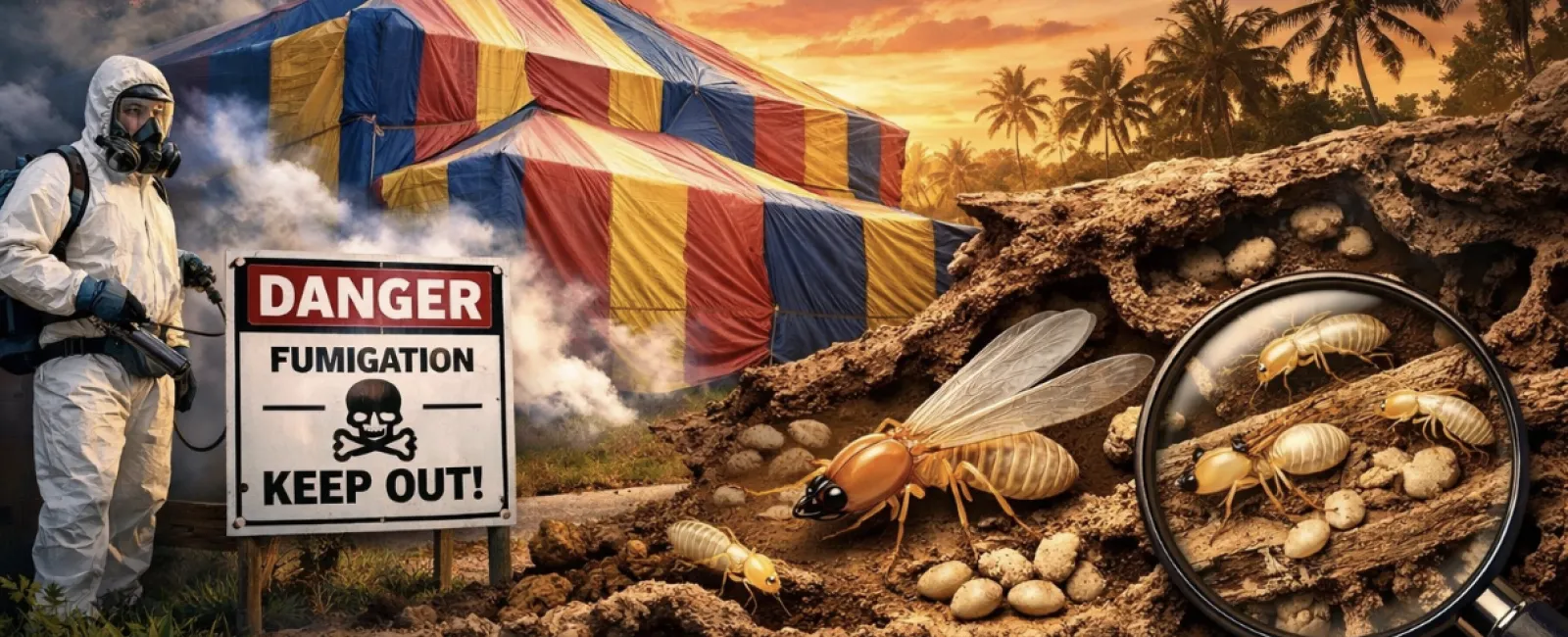
If you own a home in South Florida, termites aren't a hypothetical. South Florida sits at the center of the zone where the world's two most destructive invasive termite species, the Formosan and Asian subterranean termites, are most densely established. University of Florida researchers have documented both species spreading beyond their previously projected ranges, and Broward County is ground zero.
The region's mix of established neighborhoods, mature landscaping, year-round humidity, and high water tables along the extensive canal system provides termites with everything they need to thrive without seasonal interruptions.
Royal Pest & Termite has been based in Miramar and serving South Florida since 2014. Here's what every homeowner in Broward, Miami-Dade, and Palm Beach Counties should understand about termite risk, warning signs, and what protection actually looks like.
Why South Florida Has the Highest Termite Pressure in the Country
Several factors specific to South Florida create conditions where termite pressure is among the highest in the country:
- Established neighborhoods and mature wood. Communities throughout Broward County (from Coral Springs to Hollywood), Miami-Dade (from Hialeah to Coral Gables), and South Palm Beach County have older construction with mature wood framing that has had decades to develop the micro-cracks, moisture exposure, and wood-to-soil contact points that termites exploit. Newer builds face more pressure from subterranean species that attack through soil contact.
- Canal-adjacent soil. South Florida's extensive canal system runs through or adjacent to residential communities across Broward, Miami-Dade, and Palm Beach Counties. The consistently moist soil along canal banks and drainage easements creates ideal nesting and foraging conditions for Formosan and Asian subterranean termites, which need soil moisture to build their colonies and travel to structures.
- Swarm season pressure. Termite swarming season in South Florida runs roughly from late winter through summer, peaking in spring. Homeowners near wooded lots, retention ponds, or established tree canopies consistently see heavier swarmer activity than areas with less mature vegetation. A single swarm event near your home can establish a new drywood termite colony inside your structure within hours.
- Dense residential proximity. Across South Florida's established neighborhoods, homes are close together and share landscaping zones. Subterranean termite colonies can extend 300 feet or more from their nesting site. An active colony on a neighboring property is effectively an active colony threatening yours.
Warning Signs South Florida Homeowners Should Watch For
Termites work from the inside out, which is why most infestations are well-established before they're discovered. Here's what to look for:
- Discarded wings near windows or doors. During swarming season, reproductive termites fly out to establish new colonies and shed their wings once they land. Small, uniform, translucent wings on your windowsills or near light fixtures are one of the most reliable early signs of a nearby colony.
- Frass piles near wood surfaces. Drywood termites push their pellet-like waste out of small kick-out holes in the wood they're consuming. These small, sand-like piles beneath baseboards, window frames, or wooden beams are a reliable indicator of drywood termites.
- Mud tubes along the foundation. Subterranean termites build pencil-thin tunnels made of soil and wood particles to travel from the ground into your home without drying out. Check your concrete foundation, exterior walls below the soil line, and plumbing penetrations.
- Hollow-sounding wood. Tap your baseboards, door frames, and window surrounds with a screwdriver handle. A papery, hollow sound means the interior has been consumed while the surface remains intact.
- Bubbling or blistering paint. Moisture buildup from termite activity inside walls mimics the appearance of a water leak. If you see it in a location without plumbing nearby, consider termites.
The Difference Between Drywood and Subterranean Termites
South Florida homeowners typically deal with both species, and they require completely different treatments. Treating one with the other's solution wastes time and money.
- Drywood termites live entirely inside the wood they consume. No soil contact required. They're identified by frass piles and are treated with either localized spot treatments (for early, contained infestations) or full tent fumigation (for widespread infestations that have spread through multiple areas of the structure).
- Subterranean termites (Formosan and Asian) live in underground colonies and travel to your home through the soil. They're identified by mud tubes and require soil treatments or baiting systems that address the underground colony, not just the termites inside the structure. Termite fumigation eliminates drywood termites but does not reach subterranean colonies.
This distinction is why getting a proper inspection and identification before any treatment matters. Spending money on the wrong treatment type is one of the most common and frustrating mistakes we see.
Termite Swarming Season in South Florida
In South Florida, termite swarm season typically runs from February through July, with peak activity between March and June. Swarms are most often triggered by warm, humid evenings following afternoon rain, which describes about half the days from spring through early summer in Broward County.
If you see a swarm near your home or inside it, the instinct is to treat it immediately. The more important step is to capture a few specimens or take a clear photo before they're swept up. Identification determines whether you're dealing with drywood or subterranean termites, which in turn determines the treatment. Call us, and we'll help you identify what you're seeing before you spend any money.
A swarm inside your home is a stronger indicator than a swarm outside. Outside swarmers may simply be flying through. Inside swarmers typically indicate a colony already established within the structure.
Why In-House Fumigation Matters in South Florida
Many pest control companies operating across South Florida sell fumigation services and subcontract the actual tenting work to a third-party crew. That means the technicians who show up at your door may have no relationship with the company you hired and no accountability for the outcome.

Royal Pest & Termite is different. We perform our own fumigations with our own state-licensed technicians. We're based in Miramar and serve communities across Broward, Miami-Dade, and South Palm Beach County. When we tent a home in Pembroke Pines, Davie, Hollywood, or Fort Lauderdale, we treat it as a neighbor's home. Every step from prep to clearance is handled by our team, and if you have questions on day one after re-entry, you're talking to the same people who did the work.
We also offer the full range of termite control options beyond fumigation: liquid soil barriers, baiting systems, and termite pre-treatment for new construction or post-fumigation subterranean protection. The right treatment depends on what you have, and we tell you honestly which one applies to your situation.
Frequently Asked Questions
How much does termite control cost in South Florida? It depends heavily on what species are present and what treatment is required. Localized spot treatments for early drywood infestations are the most affordable option. Full tent fumigation for a typical South Florida single-family home varies depending on the structure's size. Subterranean termite soil treatments and baiting systems are priced by linear footage of foundation. We provide a free inspection and a clear, upfront estimate before any commitment, no pressure, no hidden fees.
How often should I have my South Florida home inspected for termites? At a minimum, once per year. Given South Florida's elevated termite pressure from both drywood and subterranean species, and the fact that termite damage is almost never covered by homeowner's insurance, annual inspection is the cost-effective baseline. Homes adjacent to canals, large trees, or older wood-frame construction benefit from twice-yearly inspections.
Does termite fumigation protect against subterranean termites? No. Tent fumigation eliminates drywood termites inside the structure but does not penetrate the soil where subterranean colonies live. After a fumigation, a separate soil treatment or baiting program is needed to protect against Formosan and Asian subterranean termites, which are active year-round across South Florida.
What should I do if I see termite swarmers in my South Florida home? Don't panic and don't immediately spray them. Take a clear photo or capture a few specimens before cleaning them up. The wing shape and body size help identify the species, which determines the treatment path. Call us for a same-day or next-day inspection. Swarmers inside the home typically indicate an established colony that warrants immediate professional assessment.
Ready to Protect Your South Florida Home?
Royal Pest & Termite is locally owned and based in Miramar. We've been protecting homes across Broward County, South Palm Beach County, and select Miami-Dade communities since 2014, and we know the specific termite pressure patterns across the tri-county area.
Call us at (754) 202-4605 or schedule your free inspection online. We'll walk your property, identify what's there, and give you a clear, honest assessment of what it takes to address it.
We serve Miramar, Pembroke Pines, Davie, Hollywood, Fort Lauderdale, Boca Raton, South Palm Beach County, and most of Broward County, FL. We also service select areas in northern Miami-Dade County. Call us to confirm availability at your address.