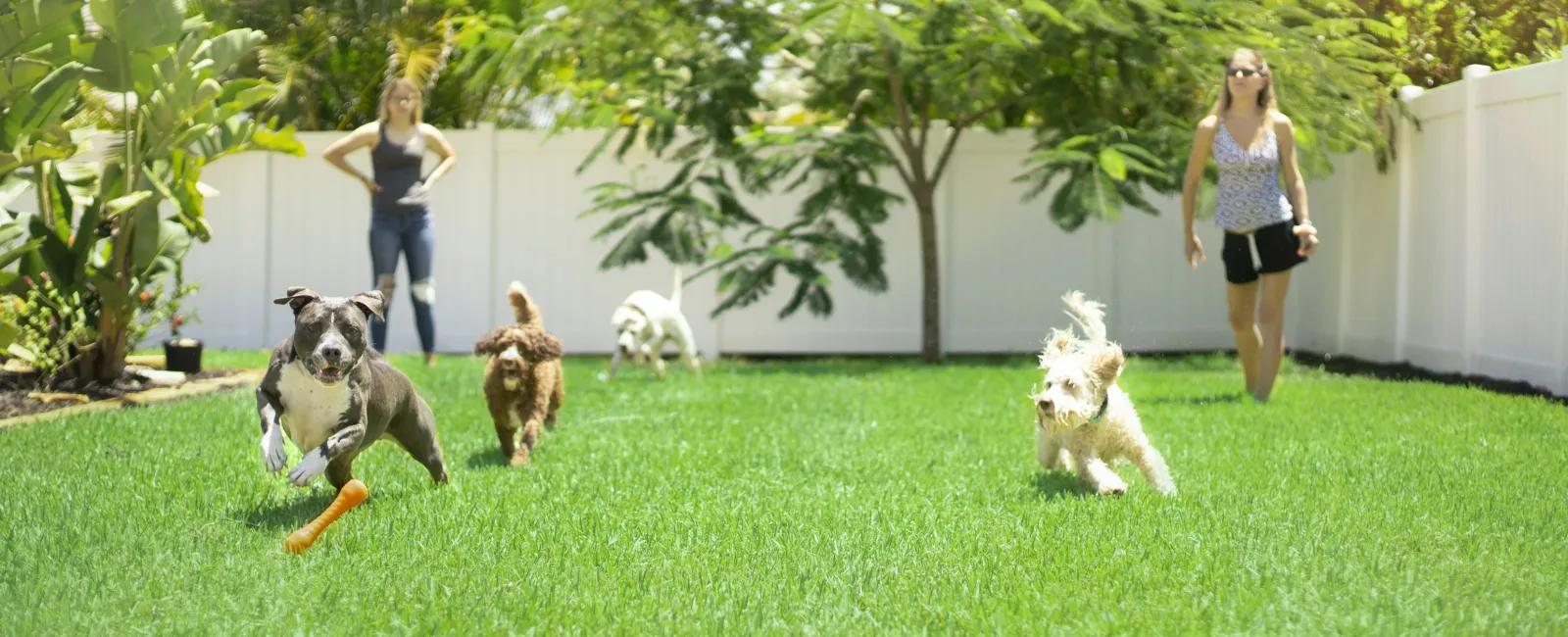
If your pets are scratching or you have seen ticks on pets after they came in the backyard, you already know the problem. Fleas and ticks aren't just a seasonal nuisance in South Florida. They're a year-round presence, and they're significantly harder to eliminate here than in most of the country.
At Royal Pest & Termite, pet safety is built into everything we do. South Florida creates ideal conditions for fleas and ticks, what effective yard treatment actually looks like, and how to protect your pets and family starting now.
Why South Florida Is One of the Worst States for Fleas and Ticks
In cooler climates, flea and tick populations get a natural reset every winter. Hard freezes kill off a significant portion of larvae and eggs in the soil, giving homeowners a few months of relief before populations rebuild in spring.
In South Florida, that reset hardly ever happens.
Our year-round warmth and humidity create conditions where flea and tick populations breed continuously without interruption. Flea eggs can hatch in as little as two days in Florida's summer heat, and larvae develop into adults in as little as two to three weeks under ideal conditions. By comparison, the same lifecycle takes several weeks or more in cooler, drier climates.
What this means practically: a flea or tick problem in a Broward County yard doesn't resolve on its own the way it might if you lived in the Midwest. Without treatment, populations grow steadily throughout the year. A small problem in March becomes a full infestation by June.
Fleas vs. Ticks: Understanding What You're Dealing With
They often come up together, but fleas and ticks are very different pests that require different treatment approaches.
Fleas are tiny, jumping insects that feed on the blood of mammals and birds. In South Florida, the cat flea (Ctenocephalides felis) is the dominant species. Despite the name, it infests dogs just as readily as cats, and will bite humans when animal hosts aren't available. Fleas complete their lifecycle in four stages: egg, larva, pupa, and adult. The pupal stage is the hardest to kill because the cocoon is highly resistant to insecticides. A single adult flea can lay up to 50 eggs per day, which fall off your pet and land on carpet, bedding, furniture, and lawn grass.
Ticks are arachnids, not insects, and they don't jump or fly. They wait on vegetation: in tall grass, shrubs, leaf litter, and along fence lines, and attach to a passing host. South Florida ticks include the American dog tick, the brown dog tick (common indoors and outdoors), and the lone star tick. Beyond being a nuisance, ticks transmit diseases including Lyme disease, Rocky Mountain spotted fever, and ehrlichiosis. Brown dog ticks in particular are known to establish indoor infestations and can be difficult to eliminate once they're inside the home. Learn more about South Florida ticks.
How to Get Rid of Fleas in Your Yard
Effective flea yard treatment requires addressing all four lifecycle stages simultaneously. Treating only the adults you can see while leaving eggs and larvae in the soil means the population simply rebuilds within weeks.
Step 1: Mow and clear before treatment. Fleas and their larvae shelter in tall grass and dense vegetation. Mow your lawn, rake up leaf litter, and clear any debris piles before treatment. Short, open turf allows treatment products to penetrate to the soil level where larvae live.
Step 2: Address shaded, moist areas first. Flea larvae avoid direct sunlight. In South Florida yards, they concentrate in shaded areas: under decks, along fence lines, beneath shrubs, and in any spot where your pet tends to rest or sleep. These are your highest-priority treatment zones, not the open lawn.
Step 3: Apply a professional-grade outdoor insecticide. Effective flea yard treatment uses an insecticide that kills adults and larvae combined with an insect growth regulator (IGR) that prevents eggs and pupae from developing into reproducing adults. Store-bought products typically lack adequate IGR concentrations for South Florida's conditions. Professional-grade formulations are more concentrated, UV-stable, and have longer residual activity in our heat and humidity.
Step 4: Treat the perimeter. Fleas don't just live in your yard; they come in from neighboring lots, from wildlife moving through, and from any vegetation that borders your property. A perimeter treatment around your fence line and foundation helps stop reinfestation from outside.
Step 5: Address the source. If your pet has fleas, the yard treatment is only part of the solution. Fleas from your pet are constantly dropping eggs back into your home and yard. Your veterinarian needs to be handling the pet side of this simultaneously for the yard treatment to hold.
How to Get Rid of Ticks in Your Yard
Tick control focuses on habitat modification and targeted treatment of the areas where ticks wait for hosts.
Reduce harborage zones. Ticks don't survive well in open, sunny turf. They concentrate at the edges: where your lawn meets wooded areas, mulch beds, shrubs, or ivy ground cover. Keep grass mowed short, trim vegetation away from fence lines and walkways, and eliminate leaf litter and debris where ticks shelter during the day.
Create a barrier zone. A 3-foot-wide strip of wood chips or gravel between your lawn and any wooded or brushy areas creates a zone that ticks are reluctant to cross. It's a simple structural change that significantly reduces the number of ticks migrating from adjacent properties or natural areas into your yard.
Apply targeted insecticide treatments. Professional tick treatments focus on the perimeter zones, shrub bases, and any vegetation at the edge of your lawn rather than the open turf itself. Products containing bifenthrin or permethrin applied by a licensed technician provide residual tick control for 4 to 6 weeks in South Florida's climate, at which point reapplication is typically needed.
Check for brown dog tick entry points. Unlike most tick species, the brown dog tick can complete its entire lifecycle indoors. If you're regularly finding ticks inside your home, you may have a structural infestation that requires indoor treatment in addition to yard control. This is more common in South Florida than most homeowners realize.
When Do Fleas Go Away on Their Own?
The short answer for South Florida: they don't.
In northern states, flea populations tend to peak in late summer and decline significantly through fall and winter as temperatures drop. Homeowners in those regions may see populations naturally fall off with the first hard freeze.
In Broward, Miami-Dade, and Palm Beach Counties, no such seasonal decline occurs. South Florida's "winter" provides no meaningful reduction in flea breeding activity. Populations that build up through spring and summer simply continue growing through fall and into the new year.
This is one of the reasons flea problems in South Florida tend to escalate more severely than homeowners expect. If you're waiting for the season to change, you're waiting for something that won't come.
Why DIY Flea and Tick Treatments Fall Short in Florida
Store-bought yard sprays and granules aren't ineffective by design; they're calibrated for average national conditions. South Florida is not average.
UV degradation. South Florida's direct sun breaks down active ingredients in insecticides significantly faster than the label assumes. A product rated for 30 days of residual activity in moderate conditions may lose effectiveness in 10 to 14 days here.
Heat volatilization. High temperatures cause some liquid insecticide formulations to evaporate from treated surfaces faster than in cooler climates, reducing the amount of active ingredient available in the soil.
IGR concentration. Most retail flea products don't include insect growth regulators at concentrations high enough to break the breeding cycle of a well-established South Florida flea population. Without an effective IGR, you're killing adults while the next generation continues to develop.
Humidity and pest pressure. South Florida's humidity is genuinely supportive of flea and tick survival and reproduction year-round. It's simply a more demanding environment than retail products are built for.
Professional treatments use formulations designed for high-humidity, high-UV environments, applied at appropriate concentrations, with proper IGR inclusion, and with scheduling that accounts for rainfall timing.
Pet Safety and Flea and Tick Treatment
The number one concern we hear from South Florida pet owners when discussing yard treatment is whether the products are safe for their dogs and cats. It's the right question to ask, and the answer matters.
At Royal Pest & Termite, we choose every product we apply with pet safety as a primary consideration, not an afterthought. Here's what that means practically:
Modern professional-grade insecticides applied outdoors are significantly safer for pets than older-generation products. Once the treatment has dried (typically 30 to 60 minutes in South Florida's heat), your pets can return to the treated yard normally.
We're transparent about re-entry times. Before any treatment, we tell you what we're applying, where we're applying it, and exactly how long to keep your pets off treated surfaces. If you have exotic pets, birds, fish ponds, or animals with known sensitivities, let us know before we start. We'll adjust the approach accordingly.
The dog in our logo is named Royal, and he's why this company exists. Pet safety isn't a feature we added. It's the foundation.
The South Florida Flea and Tick Treatment Schedule
Because flea and tick pressure is year-round in South Florida, effective protection requires a recurring treatment schedule rather than a single application.
For most residential properties, a quarterly treatment program maintains effective flea and tick suppression. Properties with heavy pest pressure (homes adjacent to wooded areas, retention ponds, or with multiple outdoor pets) may benefit from bi-monthly visits, particularly through the peak months of March through October.
Each visit includes a yard perimeter application, targeted treatment of high-harborage zones (under decks, along fence lines, beneath dense vegetation), and an assessment of any conditions that are increasing flea or tick pressure on the property.
How This Connects to Your Lawn Care
There's a direct relationship between lawn health and flea and tick pressure that most homeowners don't realize.
A thick, healthy St. Augustine lawn maintained at the right height creates less flea-hospitable conditions than thin, stressed turf. Fleas prefer the shaded, moist microenvironment created by overgrown or patchy grass. A lawn that's regularly fertilized, properly irrigated, and treated for fungal disease tends to be denser, more uniform, and less attractive to flea larvae.
Our lawn care services and lawn insect control programs work in combination with flea and tick treatment to address the pest pressure from multiple angles, healthy turf as a structural defense, plus targeted treatment where fleas and ticks concentrate.
Ready to Protect Your Yard and Your Pets?
Fleas and ticks in South Florida don't resolve on their own. The right treatment, applied at the right time with the right products, makes the difference between a yard your pets can enjoy and one that's working against them.
Royal Pest & Termite is locally owned, based in Miramar, and has been protecting South Florida homes and yards since 2014. Our general pest control and lawn care programs are built for this climate, not calibrated for national averages.
Call us at (754) 202-4605 or schedule a free inspection online. We'll assess your property, identify where fleas and ticks are concentrating, and put a treatment plan in place that actually works.
We serve Miramar, Pembroke Pines, Davie, Hollywood, Fort Lauderdale, Boca Raton, South Palm Beach County, and most of Broward County, FL. We also service select areas in northern Miami-Dade County. Call us to confirm availability at your address.