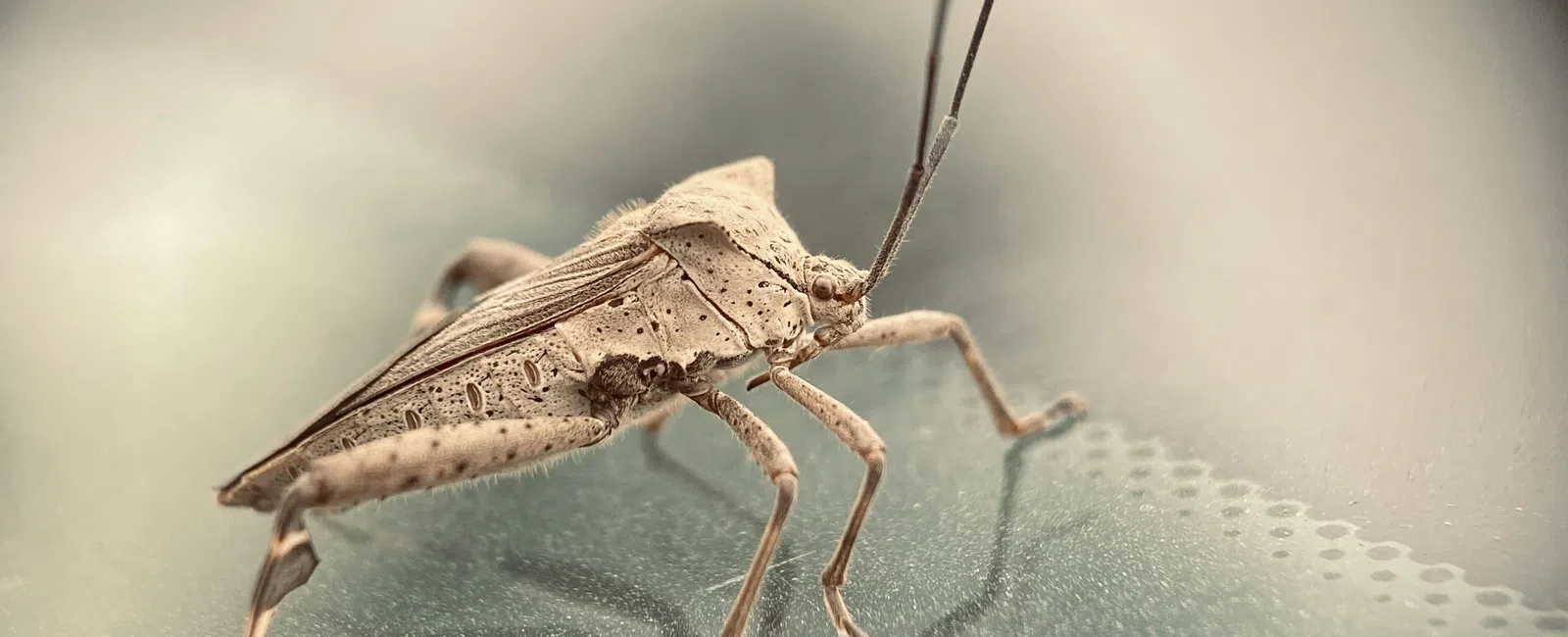
Killing the chinch bugs is the half that gets attention. The brown patch they left behind is the half that costs money.
That patch won't come back on its own timeline, and St. Augustine grass doesn't recover the way most homeowners expect. What happens over the next month determines whether the lawn closes the gap on its own or you end up paying for sod, and a repair done in the wrong order often gets paid for twice.
Chinch Bug Damage Does Not Grow Back The Way Other Grass Does
Most lawn repair advice assumes you can spread seed over a bare spot. St. Augustine does not work that way. It is established by vegetative propagation only, which means sod, plugs, or sprigs. Commercial seed doesn't exist, and anything sold under that name is either a different species or produces a patch that never matches the lawn around it.
Recovery instead depends on stolons, the runners that creep sideways across the soil and root as they go. Every repair option really comes down to whether you wait for those runners or buy more. That single fact is why chinch bug damage sits open for months in so many South Florida yards while the homeowner waits for growth that was never going to come from a bag.
The Step Almost Everyone Skips
Putting new grass down over a population that is still active is the most expensive mistake in this process. Fresh sod is tender, heavily watered, and sitting in the same full-sun spot the insects already selected once. It does not last the season.
Confirming the population is gone is harder than it sounds, because chinch bugs abandon the dead center and concentrate in the living margin, which is the part of the lawn that still looks fine. Checking the wrong few feet returns a clean result on a lawn that is still infested. This is the point where a free inspection pays for itself, well before any sod gets ordered. Our chinch bug control service handles both confirmation and treatment, and the post on chinch bug identification and treatment covers what the insects and their damage look like.
How Much Of The Lawn Is Actually Dead
Brown does not mean finished. Grass with a living crown still anchors when you tug a handful of blades, and it greens up once the feeding stops. Grass that lifts away with no resistance, trailing dry runners and loose soil, is not coming back.
Most patches are not uniform. The usual pattern is a dead core surrounded by a ring of stressed grass that recovers on its own, and that ring is what will eventually grow across the bare middle. Reading where one ends and the other begins determines whether you need to buy anything at all, and it is easy to get it wrong in a way that costs more than it should.
What Recovery Requires, And How Long Each Path Takes
Small openings, roughly under a foot across, generally close on their own from the surrounding runners as long as the grass around them is healthy, mowed tall, and the soil is not baking. In the warm season, that takes a few weeks. Heading into cooler months, it stalls, which is worth knowing before choosing to wait.
Past that size, waiting stops being realistic. Open soil in South Florida collects weeds faster than St. Augustine can cover, and a patch left through a season often becomes a bigger project than the original damage. Plugs bridge the middle range, with tighter spacing buying faster coverage at higher cost. Full sod is the answer once an area is large enough that runners cannot realistically close it.
Two things decide those calls more than patch size: the time of year, since the South Florida establishment window runs late fall through spring rather than mid-summer, and matching the cultivar already in the ground. Floratam, Palmetto, and the dwarf types differ enough in blade width and color that a mismatch stays visible for years.
Why Repairs Fail In The First Month
New grass fails for predictable reasons, and almost all of them happen in the first four weeks while the roots are still shallow.
Water is the main one. Establishment needs frequent light watering several times a day at first, tapering as the roots take hold, which is close to the opposite of the deep, infrequent schedule an established lawn wants. Running new sod on the existing irrigation program is the single most common way a repair dies. Uneven zone coverage does the same thing more quietly, killing corners and edges while the middle looks fine, which is why an irrigation inspection before sod goes down is cheaper than replacing it after.
Fertilizer is the other one, and the instinct here works against you. New sod should not be fed for roughly two months, because shallow roots cannot take up much of what is applied and the rest washes past them. There is a chinch bug reason to hold back as well: heavy nitrogen produces the soft, fast growth chinch bug populations build on fastest, so feeding fresh sod in a spot that already had an infestation invites the next one. A measured lawn fertilization program times that correctly rather than guessing at it.
The Conditions That Caused The Damage Are Still There
Repaired patches that brown out a second time are almost always in the same places: the strip along a driveway or sidewalk, the south-facing wall, the edge of a slab. Reflected heat dries those spots first, and drought-stressed turf in full sun is exactly what chinch bugs are looking for.
New sod does not change any of that. The spot is still the hottest and driest part of the lawn, and it will be the first place a new population settles. Fixing the irrigation coverage feeding that area, keeping the mowing height up, and keeping a preventive treatment on the calendar through the warm months is the difference between one repair and an annual one. Heat-stressed St. Augustine also invites fungal problems that look similar from a distance.
Get It Looked At Before You Buy Sod
The decisions that cost the most in this process all come early: whether the population is actually gone, how much of the lawn is genuinely dead, and whether the area will close on its own or needs material. Getting those wrong means paying for the repair twice, and none of them are obvious from the curb.
Our chinch bug control service includes a preventive application that protects new grass through its first summer and a curative treatment when a population is still feeding, while broader lawn insect control targets grubs, mole crickets, and sod webworms that leave damage easily mistaken for chinch bugs.
We choose every product we put on a lawn to be safe for kids and pets once it has settled, which is the standard Royal Pest & Termite was built on and the same standard that has kept us at 4.8 stars across 173 Google reviews. Inspections and estimates are free, and our guarantee includes free call-backs between scheduled visits if the problem returns. We serve homeowners across Miami-Dade, Broward, and Palm Beach counties.
Call us today to schedule a free lawn inspection and get the repair done right before the next warm season brings the chinch bugs back.