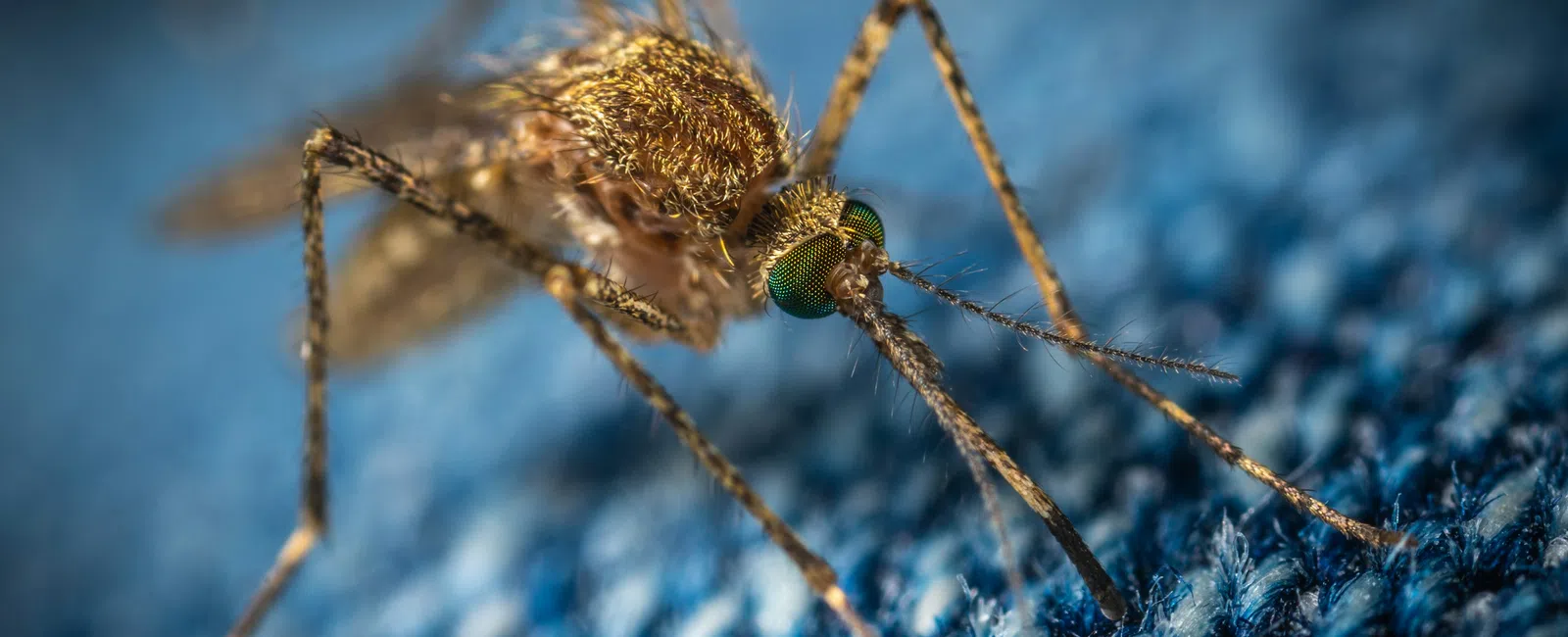
If you have lived in Miami-Dade, Broward, or Palm Beach County through even one summer, you have probably wondered when mosquito season in Florida actually starts, and more to the point, when it finally lets up. Here's what surprises people who moved here from anywhere north of Orlando. In South Florida, mosquito season is less a season and more a permanent condition, with a few very loud months in the middle.
South Florida Never Really Gets An Off Season
Mosquitoes start moving once temperatures hold above roughly 50 degrees. Up in the Panhandle, that rules out a decent chunk of winter. In Miramar, Pembroke Pines, and Hollywood, we get a handful of cool mornings in January and February, and then it is back to shorts weather by lunch.
So when someone asks whether there are mosquitoes in Florida in December, the honest answer is yes, just fewer of them. Populations thin out during the dry stretch, and most families do notice the difference, but they never fully disappear.
The Wet Season Is When Things Get Loud
Real pressure builds with the rain. Once those afternoon storms settle into their daily routine in late May and June, every container in your yard turns into a nursery. Some species get by on less water than a bottle cap holds, and they can go from egg to biting adult in about seven to ten days.
That gives South Florida homeowners a rough calendar:
- November through April: lighter activity, still very much present
- May and June: numbers climb quickly as the rains return
- July through October: peak season, with surges in the days after heavy storms and king tides
- Late October into November: a gradual taper rather than a shutdown
When Does Mosquito Season End Around Here?
This is where our corner of the state differs from most of the country. In much of the U.S., the first hard freeze ends the season, and everyone gets a few months of relief. We do not get a hard freeze. Activity tapers as the rains stop and nights cool, usually somewhere in November, and the lighter dry-season pattern holds until spring wakes everything back up.
Which is exactly why treating mosquitoes as a summer-only project tends to backfire. Fewer mosquitoes still means mosquitoes, and a population that never gets knocked all the way down has a serious head start come May. Homeowners on a year-round pest control plan usually spend far less time swatting in June than the ones who start calling around after the first bad weekend.
What Time Of Day Are Mosquitoes Most Active?
That depends on which one is biting you, and Florida has roughly 80 mosquito species to choose from. The three groups South Florida families run into most often keep different hours.
- Dawn and dusk belong to Culex mosquitoes, the ones waiting for you when you water the yard or sit outside after sunset
- Midday and afternoon belong to Aedes aegypti and Aedes albopictus, container breeders that live close to houses and will happily bite you at noon on a Tuesday
- The days right after heavy rain bring floodwater species, including the enormous gallinipper that always ends up in somebody's group chat
Useful information hides in that pattern. If you are getting bitten during a two o'clock pool party, you are almost certainly dealing with a species breeding somewhere on your own property rather than drifting in from a canal a mile away.
Not every welt comes from a mosquito, either. On a still evening, some of the worst bites come from no-see-ums in South Florida, which slip through standard window screens without much trouble.
Why Your Street Can Be Worse Than The Next One Over
Two houses ten minutes apart can have completely different mosquito problems, and it usually comes down to water and wind.
Properties near the Everglades boundary and the canal systems running through Weston, Southwest Ranches, and western Miramar carry heavier pressure year-round. Coastal homes in Hollywood, Dania Beach, and Hallandale Beach deal with salt marsh species that travel real distances inland when the wind cooperates. Older neighborhoods handle the problem differently, since dense hedges, bromeliads, and shaded irrigation zones stay damp long after the rain quits.
Then there is the detail most people miss. The mosquitoes biting you at the patio table probably hatched within a few hundred feet of where you are standing. Your yard or your neighbor's is the likely source, not some distant swamp.
What Actually Keeps The Population Down
Dumping standing water every week genuinely helps, and it costs nothing. Clogged gutters, plant saucers, folded tarps, forgotten toys, birdbaths, and bromeliad cups all hold enough water to produce a generation. Walk the yard on Saturday and tip everything over.
Yard work alone rarely keeps a South Florida property comfortable, though, because your neighbor's untreated hedge is part of your problem too. Professional mosquito control works both ends of the life cycle at once, treating the shaded resting spots where adults wait out the heat and the breeding sites producing the next batch. That combination is what separates a lasting yard mosquito treatment from one that fades within a week.
It also matters for health reasons. Several mosquito-borne diseases circulate in Florida, and the species carrying them are the same ones breeding in backyard containers.
At Royal Pest and Termite, we choose every product to control mosquitoes while staying safe around kids, dogs, and cats. That was the company's founding promise, named after the owners' dog, and it still guides every treatment we apply.
Ready To Take Your Yard Back?
South Florida mosquito season does not really end, but your mosquito problem can. Royal Pest and Termite has earned 4.8 stars across 173 Google reviews, serving families throughout Broward, Miami-Dade, and Palm Beach counties, and we are proud members of the Florida Pest Management Association.
We are licensed, insured, and happy to take a look at no charge. If the mosquitoes come back between visits, so do we, at no additional cost.
Call today to schedule your free inspection and get your evenings back.