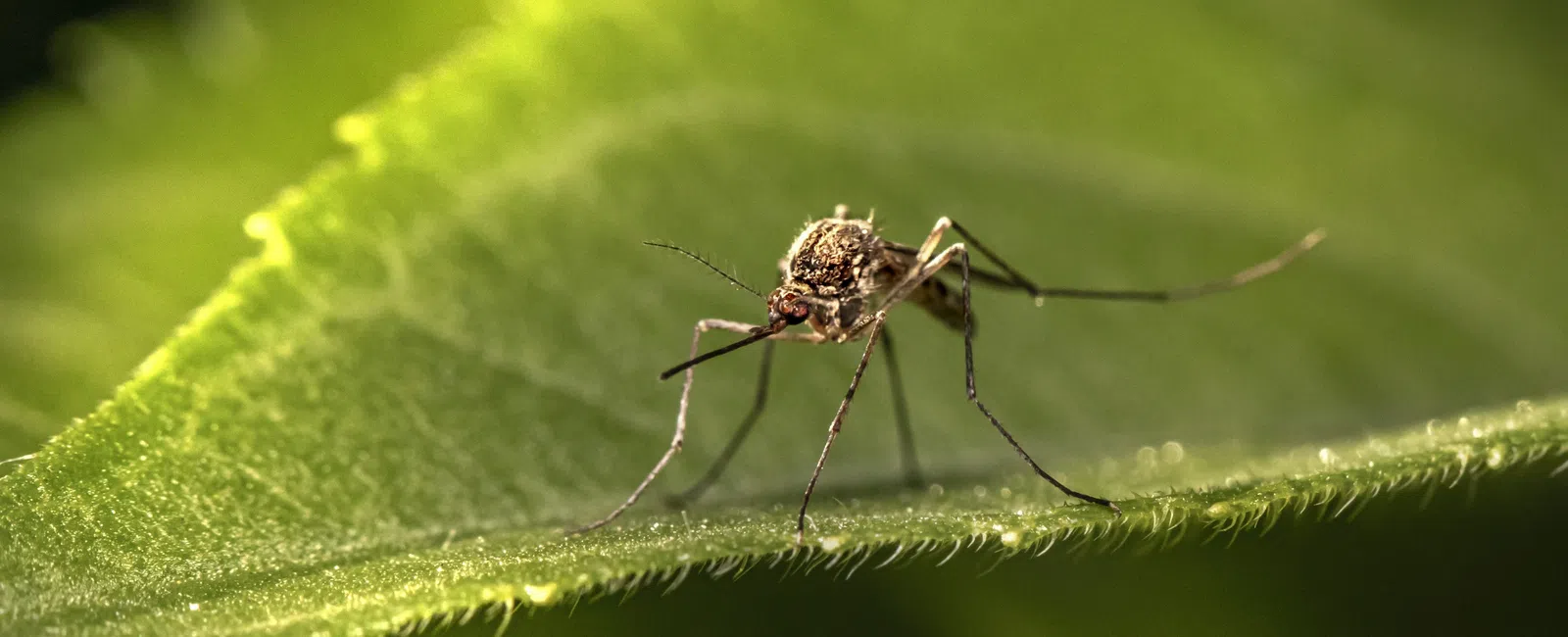
South Florida has one of the highest mosquito pressures of any residential region in the United States. The combination of year-round warmth, daily summer rainfall, an extensive drainage canal system, and two mosquito species with distinct breeding behaviors creates conditions where backyard mosquito control is a year-round necessity rather than a seasonal concern.
Understanding which mosquito species are active in your yard, where they breed, and which treatment approaches are appropriate for each is the starting point for effective control. Generic mosquito products purchased at a hardware store are typically formulated for national-average conditions and yield limited results in South Florida's specific environment.
The Two Primary Mosquito Species in South Florida
Two species are responsible for the majority of residential mosquito complaints and health risks in Broward County, Miami-Dade County, and Palm Beach County. They breed in different environments and require different control approaches.
Yellow Fever Mosquito
This mosquito is the primary vector for dengue fever, Zika virus, chikungunya, and yellow fever in Florida. It is a daytime biter, most active in the two hours after sunrise and the two hours before sunset. It breeds exclusively in small, stagnant water containers, not in ponds, canals, or large bodies of water. Flower pot saucers, bird baths, clogged gutters, tarps, children's toys, upturned bottle caps, and any container that holds even a small amount of water serve as breeding sites.
The Yellow Fever Mosquito is primarily a yard and structure-adjacent mosquito. It does not travel far from its breeding site, so the source of a problem is almost always on or immediately adjacent to your property.
Southern House Mosquito
This mosquito is the primary vector for West Nile virus and St. Louis encephalitis in Florida. It bites primarily at night and breeds in larger, organically rich standing water, drainage ditches, stormwater retention areas, irrigation swales, neglected pools, and the canals and waterways that run through residential communities across Broward County.
Because Southern House Mosquitoes breed in water bodies they do not own, homeowners cannot fully eliminate their source the way they can with container-breeding sites. They also travel farther from their breeding sites, up to several miles in some conditions, which means mosquitoes biting in your yard may have originated from a canal several streets away.
Effective mosquito control for South Florida properties typically addresses both species simultaneously, since both are present throughout the region.
Why South Florida Mosquito Pressure Is Year-Round
In northern states, mosquito populations are largely eliminated by hard freezes and cold winters. Eggs and larvae that cannot withstand freezing temperatures die off, and populations rebuild from a reduced baseline in spring. South Florida experiences no such annual reset.
Mosquito populations in Broward County and Miami-Dade are active every month of the year. Peak activity runs from May through October when daily afternoon rainfall fills container breeding sites and sustains larger water bodies. However, the absence of winter suppression means baseline populations never fully collapse, and a warm December rain event can trigger a significant surge in Aedes aegypti activity even in South Florida's dry season.
This is why single-application or seasonal mosquito treatment approaches that work in other regions consistently underperform in South Florida. Effective yard mosquito control here requires a recurring treatment schedule with no off-season.
What Doesn't Work for South Florida Backyard Mosquito Control
Several common approaches to outdoor mosquito control produce limited or no sustainable results in South Florida's conditions.
Citronella candles and torches. These products repel mosquitoes in the immediate vicinity of the flame by dispersing scent. In South Florida's outdoor conditions, where mosquito populations are high, and wind disperses scent rapidly, they provide negligible protection beyond a very small radius.
Consumer foggers and bug zappers. Propane foggers and electric bug zappers kill mosquitoes on contact or attract and electrocute them. Neither approach addresses breeding sites nor suppresses population growth. The immediate relief from fogging dissipates within hours as mosquitoes from adjacent areas repopulate the yard.
Retail yard sprays applied without larvicide. Consumer yard sprays containing permethrin or bifenthrin kill adult mosquitoes on vegetation where the product is applied. Without concurrent larvicide treatment of standing-water breeding sites, the adult population is partially reduced, while the next generation continues to develop unimpeded. In South Florida's conditions, where Aedes aegypti can complete a lifecycle from egg to adult in approximately 7 to 10 days, the adult population recovers within 2 weeks of a spray-only treatment.
Single treatments without follow-up. Given the rapid life cycle and year-round activity of South Florida mosquitoes, a single professional treatment provides short-term relief but not sustained control. Recurring mosquito treatment on a monthly or bimonthly schedule is necessary to maintain population suppression by exerting continuous breeding pressure.
Effective Outdoor Mosquito Control: The Professional Approach
Professional backyard mosquito control in South Florida uses a multi-component strategy that simultaneously targets adult mosquitoes and their breeding sites.
Larviciding breeding sites. Identifying and treating all standing water on the property with larvicide products, a biological larvicide, or growth regulators that prevent larvae from developing into adults is the most important component of control. Larvicide eliminates the next generation at the source rather than waiting for adults to emerge.
Containers that cannot be drained or eliminated should be treated with appropriate larvicide products. This includes bird baths, ornamental ponds, drainage areas, and any fixed water feature. Container elimination, removing, overturning, or properly covering anything that holds water, is the most permanent solution where practical.
Residual adult treatment of resting sites. Adult mosquitoes rest during the day in shaded, humid vegetation: dense shrubs, tall grass along fence lines, ground cover, the undersides of large leaves, and any shaded, cool area adjacent to the lawn. Professional residual spray treatment of these resting sites with professional-grade pyrethroid or organophosphate products kills resting adults and provides residual protection that continues to kill newly arriving mosquitoes for several weeks.
South Florida's UV intensity and heat degrade residual products faster than in cooler climates, which is one reason professional-grade formulations with UV-stable carriers produce better persistence than retail alternatives.
Treating the perimeter and entry zones. In addition to interior resting sites, treatment of the fence line, dense perimeter vegetation, and any areas adjacent to water sources where mosquitoes concentrate creates a buffer zone that reduces the mosquito population in the property's primary outdoor living areas.
Recurring service schedule. Monthly service during peak season (May through October) and bi-monthly service during South Florida's cooler months maintain the population suppression between treatments. Given the 7- to 10-day lifecycle, treatment intervals longer than 30 days allow a full generation cycle to complete before the next application.
Our mosquito control services use this integrated approach, combining larvicide treatment of breeding sites with residual adult treatment of resting vegetation, on a recurring schedule calibrated to South Florida's conditions.
Mosquito Control and Standing Water Management
The most cost-effective mosquito control intervention a South Florida homeowner can implement is systematic elimination or treatment of standing water on the property. Aedes aegypti, the disease-vector species, breeds only in containers and small water bodies that are almost entirely within the homeowner's control.
A property audit for standing water should include:
- Gutters and downspout extensions: Clogged gutters are among the most productive breeding sites
- Any container in the yard that holds water: flower pots, saucers, buckets, wheelbarrows, tarps, toys
- Bird baths: change water every 3 to 4 days or treat with BTI dunks
- Air conditioning condensate drain lines: ensure proper drainage away from the foundation
- Pool covers that collect rainwater
- Irrigation system drip emitters or low spots that create persistent puddles
- Tree holes and bromeliad plants: both are natural container breeding sites
Eliminating or treating these sites reduces production on the property, regardless of any other treatment applied. A yard mosquito-spray program will not remain effective if active breeding sites remain untreated.
Disease Risk: What South Florida Homeowners Should Know
South Florida is one of the few regions in the continental United States where locally-acquired dengue fever and Zika virus transmission has been documented. Miami-Dade County reported locally acquired dengue cases in recent years, and the Florida Department of Health maintains active surveillance for arboviral disease activity throughout the region.
The Yellow Fever mosquito, responsible for these transmissions, is the same species breeding in flower pot saucers and bird baths in residential yards. This is not an abstract risk; it is the direct reason that consistent mosquito control in South Florida has a health dimension beyond nuisance reduction.
Southern House Mosquitoes, the night-biting species associated with the canal system, are the vector for West Nile virus in Florida. West Nile activity is monitored throughout Broward and Miami-Dade Counties, with positive mosquito pool detections reported regularly during peak season.
Scheduling a Mosquito Treatment
Royal Pest & Termite is locally owned, based in Miramar, and has been providing mosquito control services throughout South Florida since 2014. Our mosquito control programs include breeding-site assessment, larvicide treatment, and residual adult treatment on a recurring schedule tailored to your property's specific conditions.
Call us at (754) 202-4605 or schedule a free property assessment online.
We serve Miramar, Pembroke Pines, Davie, Hollywood, Fort Lauderdale, Boca Raton, South Palm Beach County, and most of Broward County, FL. We also service select areas in northern Miami-Dade County. Call us to confirm availability at your address.