Understanding what wasps eat is the starting point for understanding almost everything else about how a colony forms, grows, and eventually shows up around your home. The diet of a wasp connects directly to the queen wasp who founds the colony, the baby wasps she raises, and how long wasps live once they reach adulthood. All of these pieces fit together into a single life cycle, and that life cycle plays out for an unusually long stretch each year when it comes to wasps in Florida.
What Do Wasps Eat
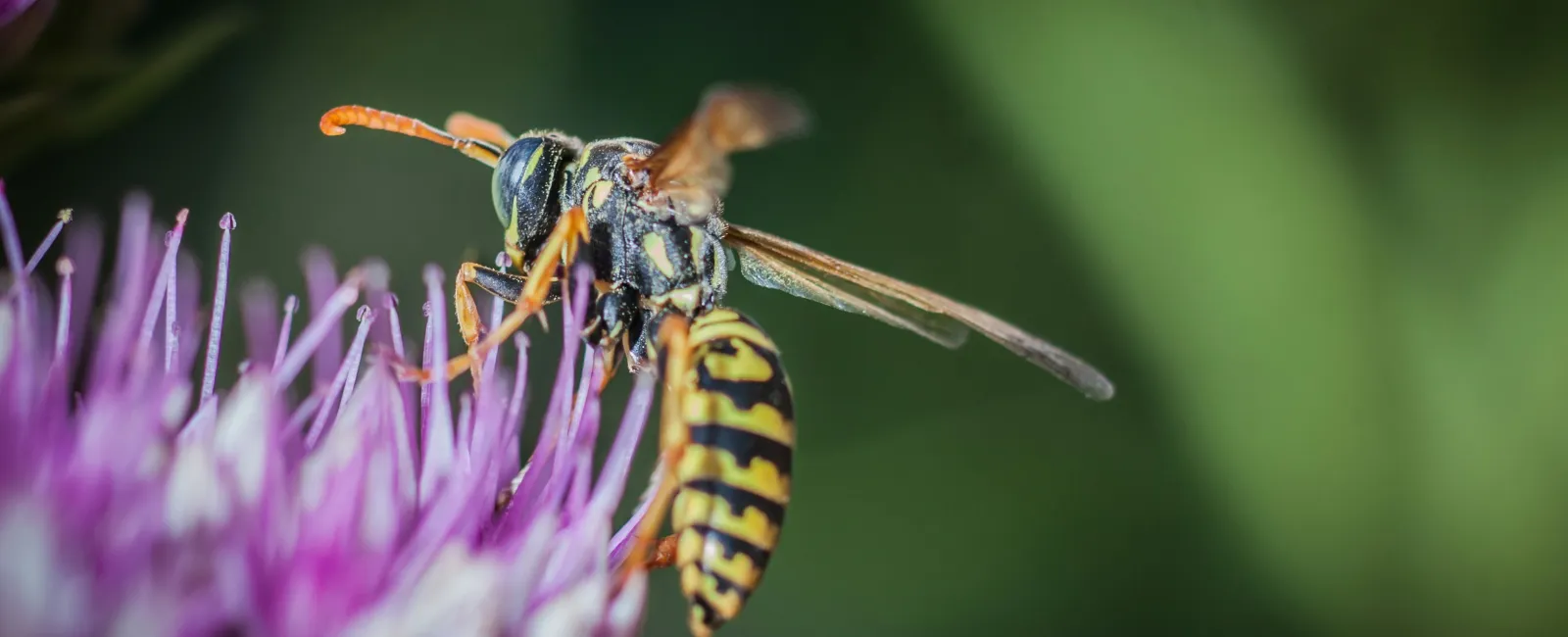
Adult wasps feed mainly on sugars such as flower nectar, ripe fruit, and sweet liquids, which gives them the energy they need to fly and forage throughout the day. The larvae, however, require protein, so adult workers hunt caterpillars, flies, spiders, and other soft-bodied insects, chew them into a paste, and carry that food back to the young. This split between sugar for the adults and protein for the babies is the reason a colony needs constant hunting trips, and it is also the reason paper wasps and similar species become more aggressive around food late in the season when insect prey grows scarce and they rely more heavily on the sugar sources found in backyards.
The Queen Wasp and How the Colony Begins
That feeding system depends on a single founder, and the queen wasp sits at the center of it because she is the one who begins the colony and relies on workers to keep it fed. In early spring she emerges from winter dormancy, selects a nesting site, and builds the first cells herself before laying her initial batch of eggs. A queen wasp is generally larger than the workers around her, and she carries the same yellow and black or reddish markings depending on the species. Once her first workers mature, they take over foraging and feeding duties so that she can focus entirely on laying eggs, and from that point the colony can expand into the thousands as the warm months continue.
What a Baby Wasp Looks Like
The eggs the queen lays become the baby wasps that depend completely on the protein their colony brings in, which ties them back to the hunting behavior covered above. A baby wasp begins as an egg and then becomes a larva, and at that larval stage it appears pale, soft, and grub-like, resting inside the papery cells of the nest without the ability to fly or sting. The workers feed each larva the chewed insect paste until the larva is ready to seal its cell, pupate, and develop into a fully formed adult.
How Long Do Wasps Live
Once those larvae reach adulthood, how long they live depends on the role each wasp fills within the same colony structure. Worker wasps generally survive somewhere between twelve and twenty-two days, while the male wasps live only long enough to mate before dying shortly afterward. The queen wasp is the exception, since she can live close to a full year and survive through the winter in order to establish a brand new colony the following spring. This difference in lifespan explains why the workers you notice around your yard are short-lived even though the colony itself continues season after season through the surviving queen.
Wasps in Florida
Wasps in Florida follow this entire pattern, but our warm climate stretches the active season far longer than it lasts in northern states, sometimes keeping colonies busy for most of the year. Paper wasps, yellowjackets, and mud daubers are all common throughout South Florida, including across Broward County, and the extended warm season gives their nests additional months to grow larger than they would elsewhere.
Pet-Friendly Wasp Control in Broward County
At Royal Pest and Termite, we have spent more than ten years helping Broward County families reclaim their yards with pet-friendly pest control that stays safe around the people and animals you care about. If you have noticed a nest or an increase in wasp activity, we can remove it safely so that no one in your household has to risk a sting. Contact us for a free quote or call (754) 800-5284 to schedule your pet-friendly wasp treatment.