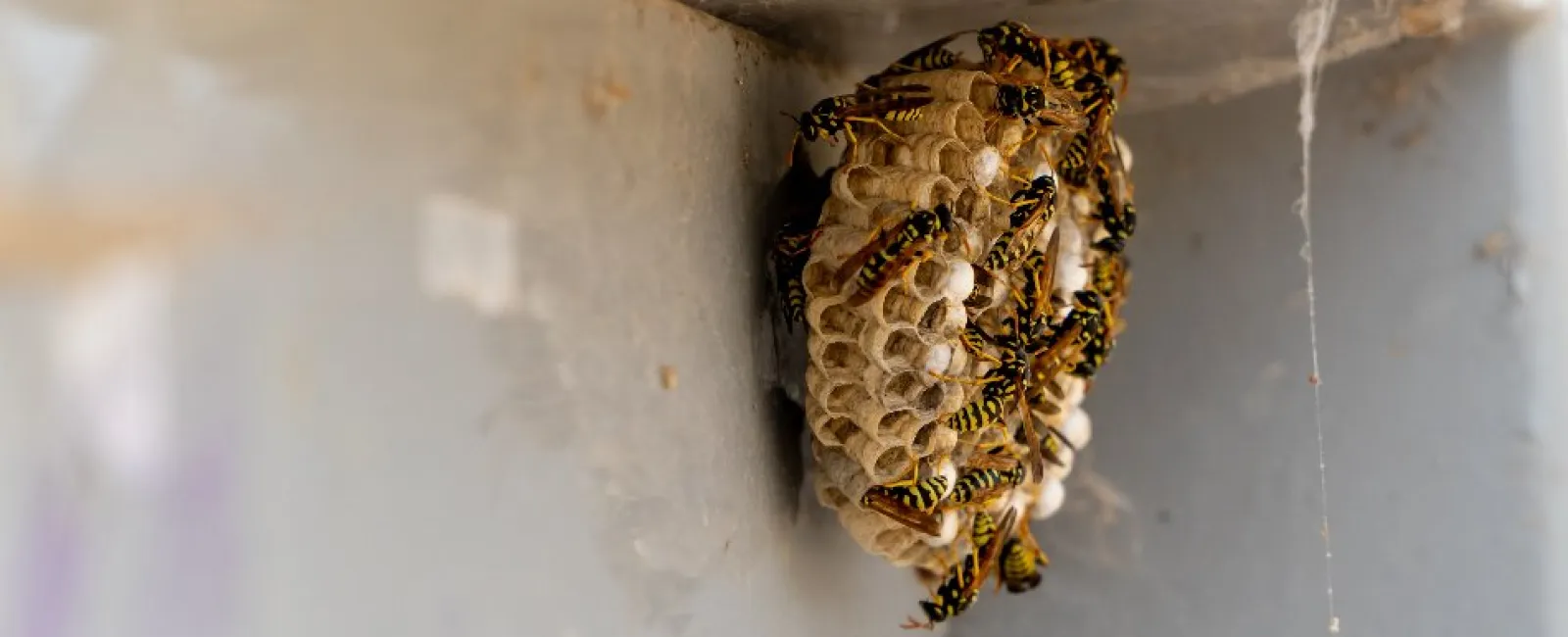
Wasps are flying insects that have smooth, slender bodies with a narrow waist, elongated wings, and are brightly colored with black, yellow, and brown markings. In Florida, wasps are most problematic during the warmer months when their populations peak. From spring through early fall, they are actively foraging for food and expanding their nests. These insects construct their nests in sheltered spots like trees, shrubs, and bushes, as well as under eaves, porches, and in attics or wall voids. To safely remove a wasp nest, it's best to call a professional pest control company to avoid the risk of injury from stings.
What Do Wasps Look Like?
Wasps are flying insects that are often mistaken for bees, but they have distinct differences. They typically have slender bodies with a narrow waist, a stark contrast to the more robust bodies of bees. Their bodies are often brightly colored, displaying combinations of black, yellow, and brown markings. Unlike bees, most wasp species have smooth bodies devoid of the dense hair that covers bees. Another distinguishing feature is their elongated wings, which fold lengthwise when at rest. Wasps vary in size, with some as small as a few millimeters, while others can reach several centimeters in length.
What Times of the Year are Wasps a Problem?
In Florida, wasps pose a particular nuisance during the warmer months when their populations peak. From spring through early fall, these insects are actively foraging for food and expanding their nests, increasing the likelihood of encounters. During spring, wasp queens emerge from hibernation to establish new colonies. Summer sees a peak in activity as temperatures soar and nests flourish. By fall, natural food sources diminish, prompting wasps to become more aggressive and swarm in greater numbers.
Where Do Wasps Make Their Nests?
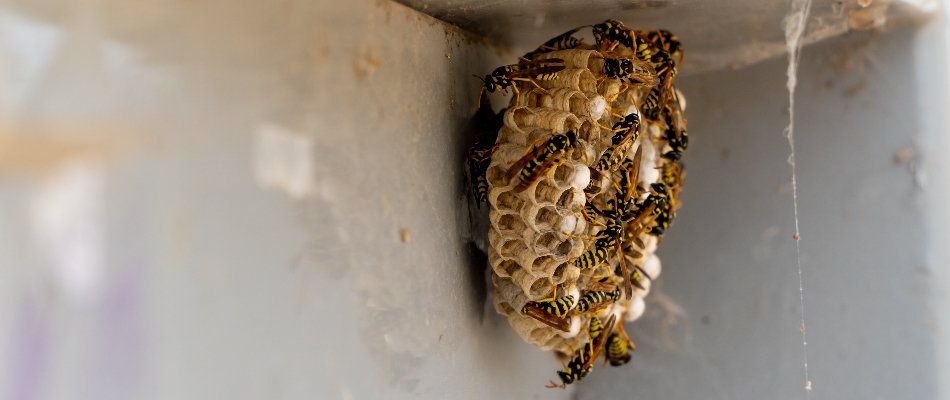
Wasps are known to construct their nests in a variety of locations, often seeking sheltered spots that offer protection from the elements. Common locations for wasp nests in Florida include trees, shrubs, and bushes, where they can be found hanging from branches or nestled among foliage. Additionally, wasps may build nests under eaves, porches, and roof overhangs, taking advantage of the sheltered spaces these structures provide. They are also known to nest in attics, wall voids, and other enclosed spaces, which can lead to potential conflicts with humans. Understanding where wasps are likely to build their nests can help homeowners take proactive measures to prevent infestations and minimize the risk of stings.
How to Get Rid of Wasps
When dealing with a wasp nest, it's crucial to prioritize safety. You should never try to remove a wasp nest on your own, as doing so can result in serious injury from stings. Instead, the safest and most effective approach is to call a professional pest control company. Pest control professionals have the expertise and equipment needed to remove the nest and eliminate the wasp colony safely. They can also help identify and address any conditions around your home that may attract wasps, helping to prevent future infestations. If you notice a wasp nest on your property, it's best to leave it undisturbed and contact a professional for assistance.