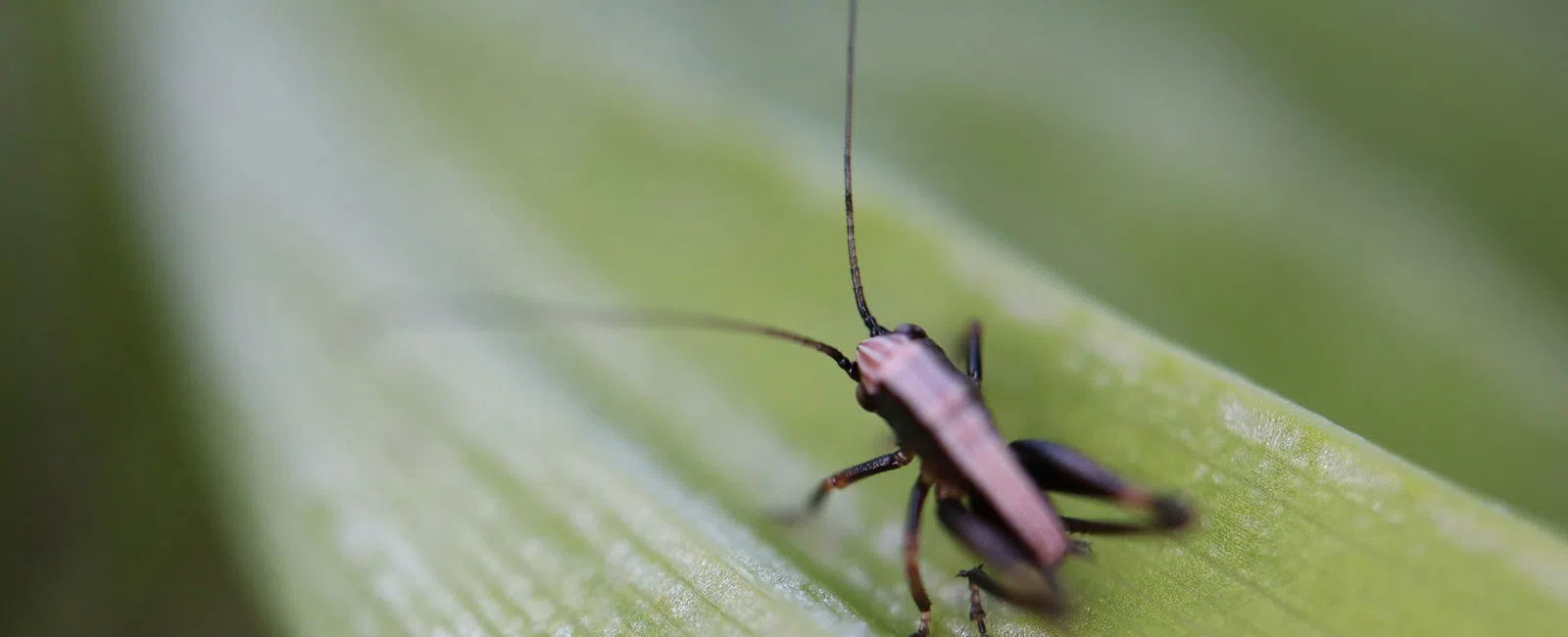
A homeowner gets a treatment, the palmetto bugs go quiet for a few weeks, and then one walks across the kitchen floor again. The natural conclusion is that the treatment failed.
Usually it did exactly what it was supposed to do. They came back because a palmetto bug problem isn't really a pest control problem in the way people expect. It is an environmental problem. These insects live outdoors in South Florida by the thousands; they are drawn toward houses by conditions rather than by an absence of chemicals, and no product applied indoors changes the conditions that brought them to the wall in the first place.
That is worth understanding before you spend money on it, because it changes what you should be asking for.
Why This Is An Environmental Problem, Not A Chemical One
The useful way to think about palmetto bugs is that your house sits inside their habitat. They are not an infestation that originated indoors and needs to be wiped out. They are an outdoor population living in the landscaping, the mulch, the palms, and the storm drains, and a handful of them find a way in.
That distinction has consequences. A chemical barrier is a timed obstacle. It degrades in sun and rain, and the population outside it does not shrink while it works. Physical exclusion is permanent, because a sealed gap stays sealed. Correcting a moisture source is permanent too, because a dry foundation stops supporting the population that was sitting against it.
The realistic goal is not an empty yard. Nobody achieves that in South Florida. The goal is to stop the yard population from having a reason to come toward the structure and a route in once it does.
They Are Not Coming Inside For Your Food
This overturns the assumption most people bring to the problem. The Florida woods palmetto bug, the slow, heavy one that turns up walking across a tile floor, is a detritivore. It feeds on dead and dying plant matter: fallen leaves, bark, lichens, mosses, molds. Entomologists studying the species note that it gains no nutritional benefit from urban environments at all.
In practical terms, your pantry is not the attraction. That insect was living in the landscaping, wandered through a gap, and is now somewhere it has no reason to be and no ability to thrive. Sweeping up crumbs won't change its behavior, because crumbs were never why it came.
Moisture Is The Condition That Matters Most
Water, not food, is the resource these insects organize their lives around. Laboratory work on roach species found survival of only about 12 days with food and no water, against roughly 42 days with water and no food.
That ratio also explains seasonality that runs opposite to what people expect. Palmetto bugs push indoors during dry stretches specifically because they are hunting moisture, so activity can climb in the middle of a dry winter rather than during the summer rains.
On a South Florida property, the sources that matter are rarely the obvious ones. Air handler condensate lines and drip pans. Irrigation heads throwing spray directly against stucco. Pool equipment pads that never fully dry. The soil under a hose bib. Saucers beneath potted plants, bromeliads holding water in their centers, and gutters holding a wet layer of leaf debris. Any of those supports a population a few feet from an exterior wall indefinitely, and none of them is affected by what gets sprayed.
Your Landscaping Is Where They Actually Live
Landscaping is the shelter side of the equation. Documented harborage for these species includes leaf litter, mulch, dense vegetation, tree holes, and palm trees, and they breed prolifically in pine straw mulch in particular. Worth knowing in neighborhoods where pine straw is the default bed covering every spring.
Palm boots and old frond bases, ficus hedges, thick ground cover, stacked pots, and a layer of leaves behind a hedge all work the same way. The mature landscaping that makes an established South Florida yard look good is also the most dependable palmetto bug habitat on the property. They don't live in your house. They live in your yard and occasionally come in.
The Plumbing Route Most Homeowners Never Check
The larger, faster palmetto bug, the American, arrives by a path that neither yard work nor housekeeping touches. These insects live in sewers and drainage systems and move into homes from the sewer through plumbing. A single sewer access point can support more than 5,000 of them.
Inside a house, the weak points are predictable and almost always ignored: a guest bathroom nobody uses, a garage floor drain, an unused laundry standpipe. The water in those traps evaporates, the seal disappears, and what remains is an open pipe joining the sewer to the room. When palmetto bugs appear in a rarely used bathroom before anywhere else, plumbing is the first thing to examine, and that is a plumbing condition rather than a pest control one.
Exterior Lighting Puts Them At The Door
Lighting is the condition homeowners almost never suspect. Several species called palmetto bugs are drawn towards lights, fly to porch lights, and find their way in from there.
The issue is placement, not brightness. A fixture mounted beside a door, uplighting aimed at a wall near an entry, and pool deck lighting all concentrate flying insects at precisely the points where getting inside is possible. Where the light sits relative to the opening determines whether it matters.
Which Palmetto Bug You Have Changes The List
South Floridians use one name for several different insects, and they are not drawn in by the same conditions.
The Florida woods palmetto bug is the landscaping resident. It cannot fly; it has no food motive indoors, and it reaches the house by walking from mulch, leaf litter, or a hedge against the wall. The work for this one happens in the yard.
The American palmetto bug uses moisture and plumbing. It travels through drains and sewer lines, rests near water pipes and fixtures, and will use a dry trap as a door.
The smokybrown and Australian varieties sit outdoors in shrubbery and attics and respond strongly to lights. First, sort out which insect is on your floor, and the palmetto bug identification markers will get you there.
What Actually Fixes It
None of this means a professional has no role. It means the valuable work is not the part most people picture.
Research on controlling these insects is clear: chemical use alone is the least effective approach, and combining treatment with changes to conditions works much better. Treatment handles the insects present right now, which is worth having. Exclusion and condition correction stop the next population from having a reason to come and a way in, and that is the part of the job that lasts.
So ask for an inspection that reads the property, not a visit that sprays it. Whether a population is breeding in a wall void or walking in nightly from a hedge, whether a trap in an unused bathroom has gone dry, which of several candidate gaps is in use, how much moisture is sitting at the foundation, and whether a light fixture is doing more harm than good are all questions answered by looking rather than by assuming. Palmetto bug treatment based on the wrong guess puts product in the wrong places, and the activity continues on schedule.
At Royal Pest & Termite, every product we use in a kitchen or along a foundation is chosen to handle palmetto bugs while staying safe for kids and pets, the same standard that has kept us at 4.8 stars across 173 Google reviews. We are licensed, insured, and a member of the Florida Pest Management Association, and we offer free inspections and estimates across our South Florida service areas in Miami-Dade, Broward, and Palm Beach counties, backed by a guarantee with free call-backs between scheduled visits.
Call us today to schedule a free palmetto bug inspection and find the conditions drawing them in before the dry season pushes them toward your plumbing.