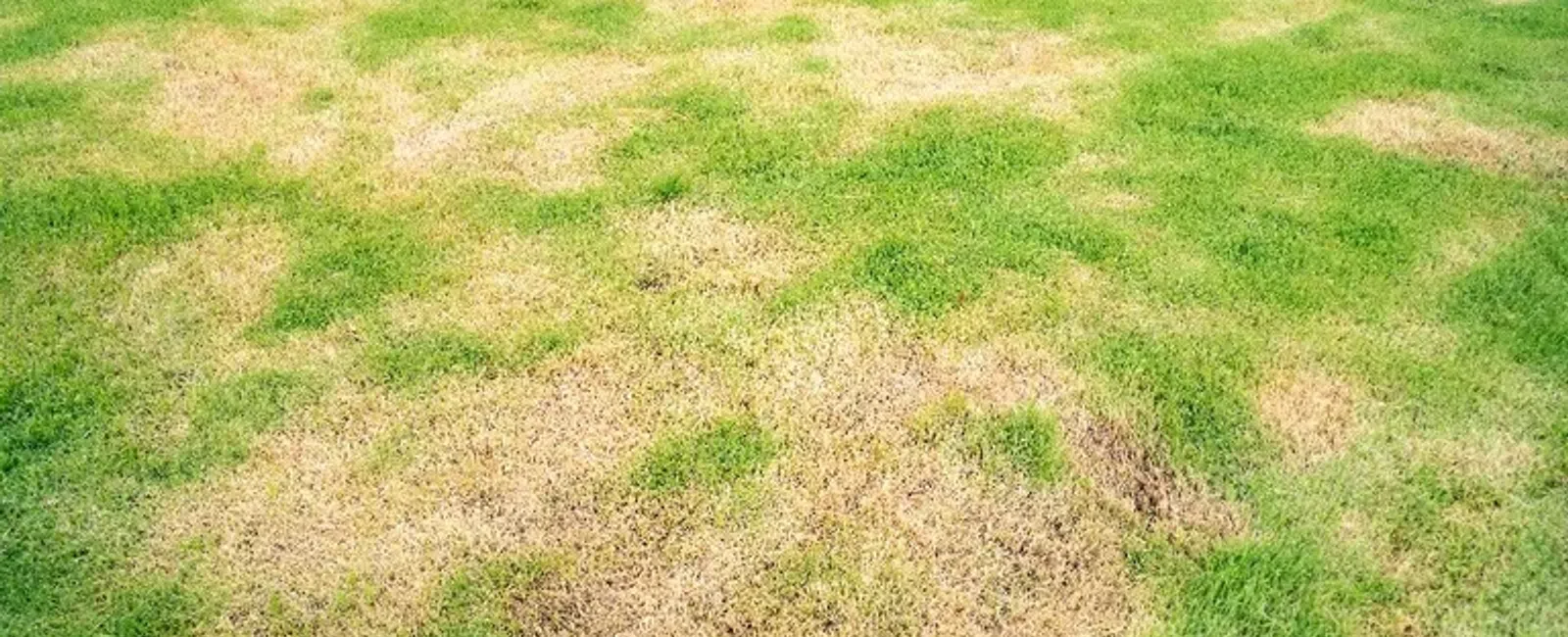
Mole crickets feed two to four inches below the surface, tunneling sideways through the root zone and cutting grass roots as they go. Brown patches show up only after the turf above those tunnels has lost the roots it needs to pull water from the soil, which is why the grass keeps wilting no matter how much the sprinklers run.
What Mole Cricket Damage Looks Like
The insects feed at night and stay underground during the day, so the tunneling is what gives them away. Walk the lawn early in the morning, before the sun dries the surface, and look for:
- Raised, winding ridges about the width of a finger that run a few feet and vanish
- Small mounds of loose excavated soil, like miniature mole hills
- Ground that feels spongy underfoot
- Grass that lifts away with no resistance, because the roots holding it have been cut
- Thinning patches that widen over several weeks rather than appearing overnight
Damage starts in sunny, open areas with sandy soil. Mole crickets prefer moist ground, so the most heavily irrigated sections of a yard usually thin out first. Birds tearing at the turf are digging for the crickets, not causing the damage.
Which Grasses Are at Risk in South Florida
Bahiagrass and bermudagrass take the worst of it. Both are heavily fed on by tawny mole crickets, the most destructive of the three species found in Florida.
St. Augustine, which covers most lawns in Miramar, Pembroke Pines, and Davie, is not a preferred food source. It still gets damaged, but mechanically: southern mole crickets tunnel through the root zone without eating much grass. Homeowners with St. Augustine tend to notice loose soil and spongy footing well before any real thinning. Zoysia sits in the middle.
If the pattern does not match, the cause is probably something else. Chinch bug damage produces yellow patches spreading from the hottest, driest parts of a lawn, along driveways and south-facing edges, and the roots stay intact. St. Augustine grass diseases leave lesions on the blades and often form circular patterns.
The Soap Flush Test
Confirming a population takes five minutes and costs nothing. Mix about 1.5 fluid ounces of lemon-scented liquid dish soap into two gallons of water and pour it slowly over a two-foot square where you suspect activity.
Mole crickets surface within roughly three minutes. Two to four in a test square means the population is worth treating. One or none points to a different problem, and treating for mole crickets would waste a service call.
Test several spots rather than one. Populations cluster, and a single negative test in the wrong corner tells you very little. Late afternoon works better than midday, since the crickets sit closer to the surface as the ground cools.
Why Timing Decides the Outcome
Mole crickets are one of the few lawn pests where the calendar matters more than the product.
Adults fly and mate from March into June, and females lay eggs a few inches down. Those eggs hatch by late spring. The nymphs are small, they feed near the surface, and their shells are soft, which makes them far easier to control than anything that comes later.
June into early July is the window. One well-timed application against small nymphs does more than repeated applications in October against full-grown adults, which tunnel deeper and have already finished most of their feeding damage. Waiting until the brown patches are obvious means treating at the least effective point in the cycle. The application still protects the lawn going into next spring, but that season's damage is done. Areas where the root system was destroyed may need re-sodding.
How We Treat Mole Crickets
We confirm the pest before treating it. Several South Florida lawn problems produce thinning, yellowing turf, and each one needs a different response. A free lawn insect control evaluation covers your grass type, active insect and disease problems, weed pressure, and your irrigation setup.
Our lawn insect control program includes preventive and curative treatments. Preventive insecticide puts a barrier in the soil before the eggs hatch, which removes the next generation before it ever feeds. Mole crickets respond well to this because their seasonal pattern is predictable, and the same timing applies to grub control. Curative treatment handles an infestation already underway. Every product is selected to be safe for children and pets. Royal Pest & Termite is named after the owner's dog, and that sets the standard for what goes on a lawn where a dog rolls in the grass.
Prevention runs past insecticide. Fertilization builds root depth and density, and a strong lawn absorbs feeding that would thin a stressed one. Watering habits matter as much, since mole crickets seek moist ground and consistently overwatered zones pull them in, so irrigation inspection and repair often explains why one section of a yard keeps failing. Those pieces reinforce each other inside a turf care program.
If sections of your lawn feel spongy or the grass lifts away with no resistance, schedule a free lawn evaluation. Call 754-800-5284.