Grub control is one of the few lawn treatments where timing matters more than the product you use. Apply six weeks too late and you will see almost no result. The catch is that most grub advice online was written for lawns in Ohio or Michigan, and following a northern calendar in Broward County is one of the most common reasons homeowners treat and see nothing change.
Why the Northern Calendar Doesn't Work Here
In colder climates, grubs follow a tidy annual rhythm. Those lawns have cool-season grass, a hard winter, and one dominant beetle species: emergence in early summer, eggs, feeding through late summer, then a deep burrow to survive the cold. That predictability is why northern guides can point to a specific two-week window.
South Florida works differently. Our warm-season lawns never go fully dormant, soil temperatures stay high nearly year-round, and several different beetle species share the same lawn on staggered emergence schedules. The result is a longer, less rigid window and the real possibility of overlapping generations in the same yard.
Practically, that means two things. Our treatment window opens earlier than most guides suggest, and "wait until August" advice, which is standard in the north, is often far too late here.
The Preventive Window: April Through June
Preventive treatment is the most reliable approach, and in Broward County the window runs April through June.
The logic is straightforward. Adult beetles lay eggs in the soil in late spring. Preventive products need time to move into the soil and settle in the root zone before those eggs hatch. When the newly hatched grubs begin feeding, the product is already waiting for them.
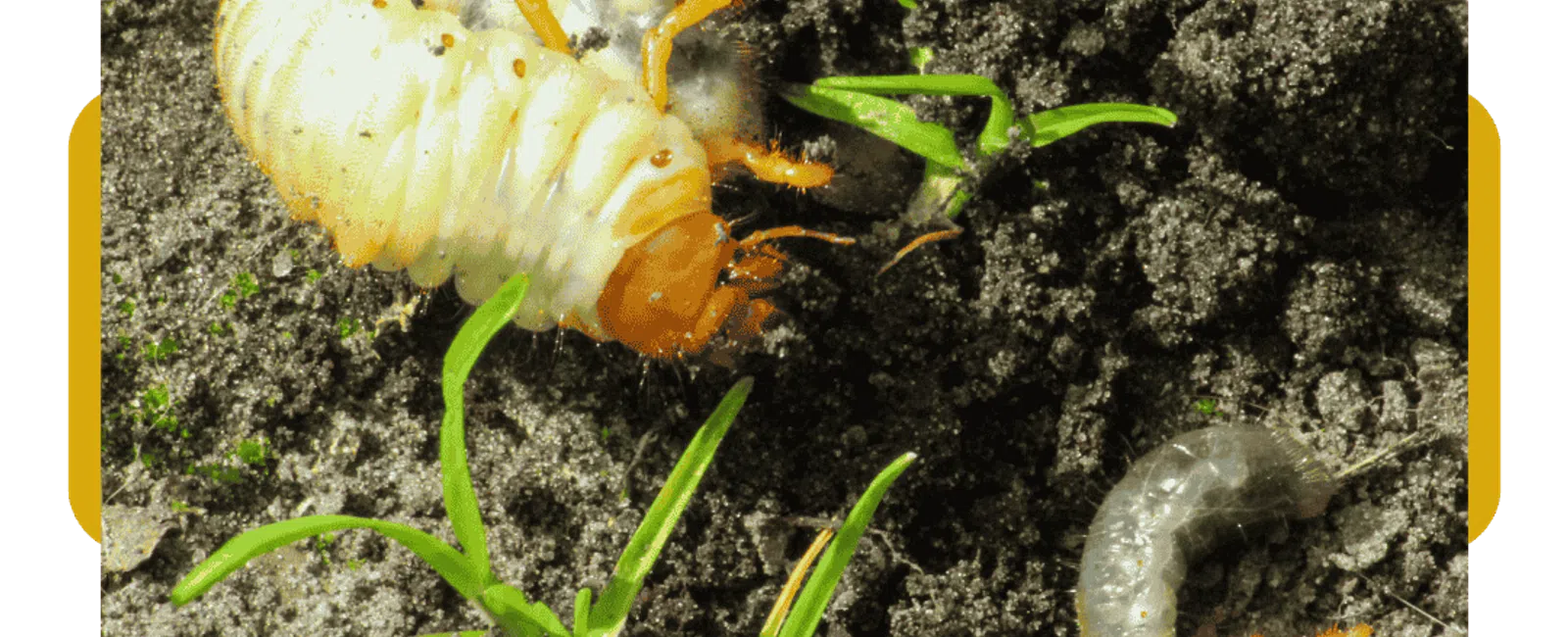
That timing matters because of what happens to grubs as they age. A newly hatched grub is about a quarter inch long, sitting in the top inch or two of soil, with a soft body and no real defenses. A mature grub can exceed an inch, sits deeper in the soil, and is dramatically harder to kill. The same product that works easily on a small grub may barely affect a large one. You are not just treating earlier for convenience. You are treating them while they are still vulnerable.
This is also why preventive treatment feels counterintuitive. You apply it when the lawn looks perfectly healthy, because by the time it stops looking healthy, the easy window has closed.
The Curative Window: The Moment Damage Appears
If you missed the preventive window, curative treatment is the fallback. Curative products are designed for fast knockdown of grubs that are already feeding.
The rule here is simple: treat as soon as you see damage, not after you have waited to see whether it spreads. Every week of delay means larger grubs sitting deeper in the soil. Curative treatments still work best on younger grubs near the surface, so the earlier you catch it, the better the outcome.
Watering matters with curative applications. The product needs to reach the grubs in the root zone rather than sitting on the thatch layer, which is why we recommend watering the lawn both before and after a curative treatment.
Signs that it is time to act:
- Brown patches that don't respond to watering. Drought-stressed grass greens up after a deep soak. Grub-damaged grass stays brown, because the roots that would absorb the water are gone.
- Turf that peels up like carpet. Grab a handful of brown grass and pull. If it lifts with almost no resistance, the roots have been severed.
- Spongy, soft ground underfoot in specific areas of the lawn, often before any browning shows.
- Overnight digging. Raccoons, armadillos, and skunks can sense grubs beneath the surface and will tear through turf to reach them.
- C-shaped white larvae in the soil when you pull back a damaged section. This is the only confirmation that removes all doubt.
- Beetles swarming your outdoor lights in spring and early summer, which often means eggs are going into your lawn right now.
If Your Lawn Has Had Grubs Before, Treat Annually
Grub problems repeat. Beetles return to lay eggs in the same lawns year after year, drawn back by the same conditions that made the yard attractive the first time.
For a lawn with any history of grub damage, annual preventive treatment in late spring is the single most reliable way to avoid the problem entirely. It removes the guesswork of monitoring, and it means you are never trying to rescue a lawn that has already lost its root system.
That last point deserves weight, because grub damage is not always reversible. If the grass crowns and runners are still alive, the turf can regrow with proper watering and fertilization once the grubs are gone. If the grass is fully dead and lifts away with no resistance, those sections need to be resodded. Prevention is not just easier than treatment. It is often the difference between a lawn that recovers and one that has to be replaced.
A Simple Grub Calendar for South Florida Lawns
- Spring (April-June): Apply preventive treatment. This is the highest-value window of the year and the one worth protecting on your calendar.
- Late spring, at night: Watch your outdoor lights. Heavy beetle activity signals egg-laying in progress.
- Summer: Check for early damage. Test suspicious areas with the tug test rather than waiting for obvious browning.
- Any time damage appears: Apply curative treatment immediately. Do not wait to see whether it spreads.
- Following spring: If you had grubs this year, schedule preventive treatment before the season starts.
Why DIY Grub Treatment Often Fails
Store-bought grub products can work. Most failures come down to three things, and none of them are the product.
The first is timing, applied too late in the season when grubs have already matured. The second is rate, since insufficient product spread across too large an area produces partial control that looks like no control at all. The third is watering, because most grub products must be watered in to reach the root zone where the grubs actually live. A product left sitting on top of the thatch never gets near its target.
There is also a diagnostic problem. Several other issues produce brown patches in South Florida lawns, including chinch bugs, fungal disease, and irrigation failures. Treating for grubs when the actual cause was something else costs you both the product and the weeks in which the real problem kept spreading.
Get the Timing Right
Royal Pest & Termite provides both preventive and curative grub control to lawns throughout Miramar, Pembroke Pines, Davie, Hollywood, and surrounding areas in Broward, Miami-Dade, and Palm Beach counties. We time preventive applications to the local window rather than a generic national calendar, and every product we use is safe for children and pets when applied as directed.
If your lawn has brown patches now, or if it had grubs last year and you want to stay ahead of them this time, call us at 754-800-5284 for a free estimate.