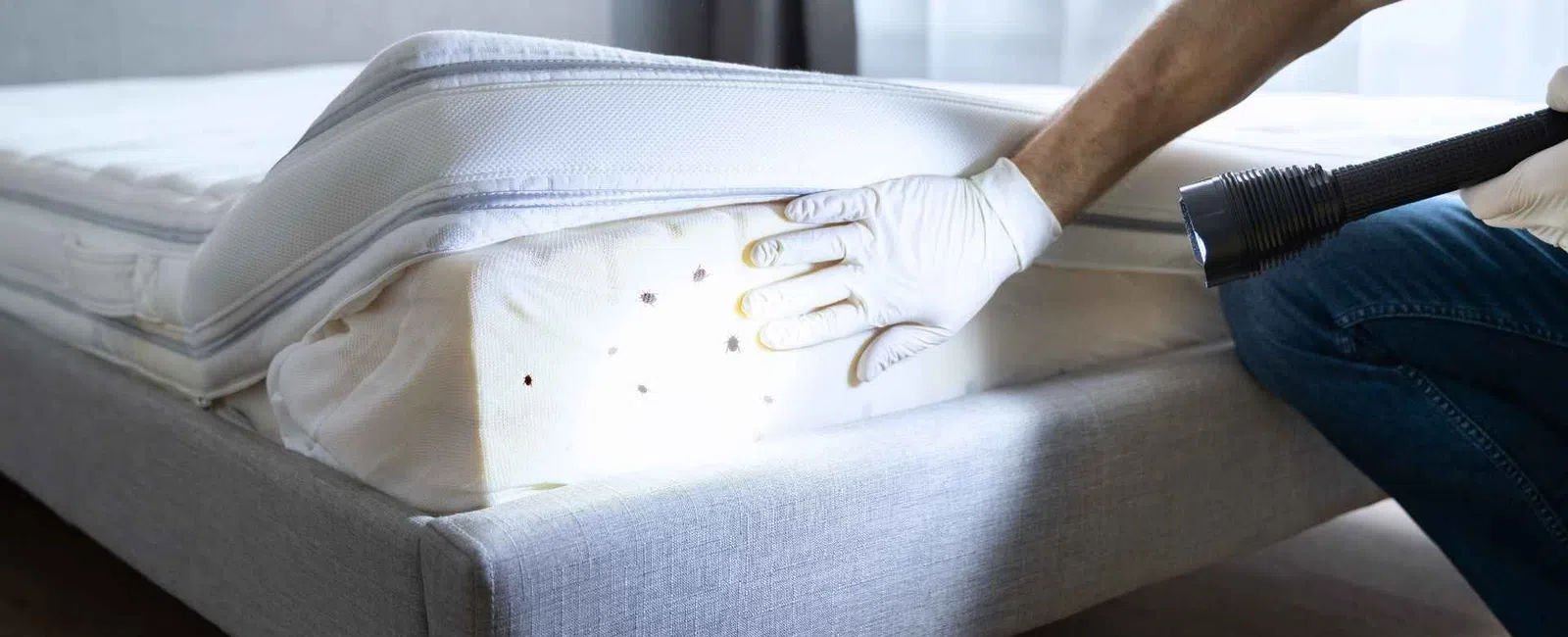
Bed bugs are a growing pest problem in South Florida. The region's tourism industry, high-density housing, and frequent traveler traffic through Miami International, Fort Lauderdale-Hollywood International, and Port Everglades create consistent pressure for introductions, making bed bug infestations more common here than in most inland residential areas.
Bed bugs are not a reflection of home cleanliness. They travel on luggage, clothing, used furniture, and through shared walls in multi-unit housing. They are found in hotels, apartments, single-family homes, and any environment where people sleep. The primary factors are access and opportunity, not sanitation.
What Do Bed Bugs Look Like?
Correct identification is the first step. Bed bugs are often mistaken for other small insects, and treating for the wrong pest wastes time and money.
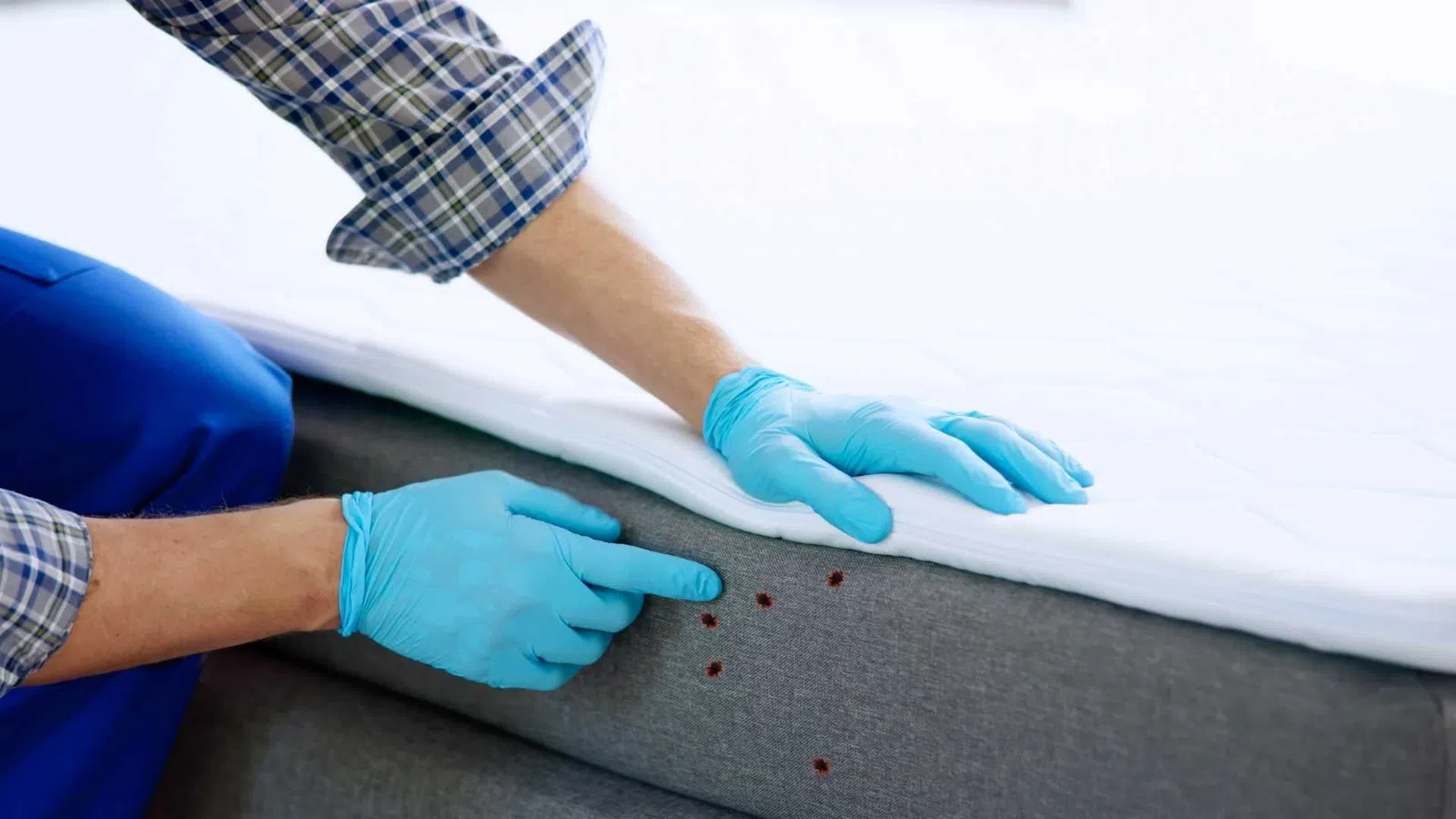
Adult bed bugs are approximately 5mm long (about the size of an apple seed), oval and flat when unfed, and reddish-brown in color. After feeding, they become engorged and darker. Nymphs (juveniles) are smaller and lighter in color, ranging from nearly translucent to tan as they develop through five growth stages before reaching adulthood.
Bed bugs do not fly or jump. They move by crawling and can travel several feet to reach a host. They are primarily nocturnal, emerging to feed while hosts are asleep and retreating to harborage sites in the surrounding environment during the day.
A professional inspection, including a physical examination of suspected harborage areas, is the most reliable method for confirming the presence of bed bugs.
Signs of Bed Bugs
Bed bug infestations are often identified through the evidence they leave rather than direct observation of the insects, which are small, hide in tight spaces, and are primarily active at night.
- Bites. Bed bug bites are small, red, and itchy, often appearing in clusters or linear patterns on exposed skin, arms, legs, neck, and face. However, bites alone are not a reliable diagnostic indicator. Approximately 30% of people do not react to bed bug bites at all, and the appearance of bites varies significantly between individuals. Many other insects and conditions produce similar skin reactions. Bites should prompt a search for physical evidence in the sleeping environment, not an immediate treatment.
- Dark spotting on mattress seams and bedding. Bed bugs produce small, dark fecal spots where they rest and feed. These spots appear on mattress seams, box spring fabric, and bed frame joints, as well as on bedding and pillowcases near harborage areas. Fresh spots are darker; older spots may appear rusty brown.
- Blood staining on sheets. Small blood smears on sheets result from crushing engorged bed bugs during sleep or from feeding puncture sites that continue to bleed briefly after feeding.
- Shed skins. Bed bug nymphs shed their skin at each growth stage. Translucent, empty casings found in mattress seams, furniture joints, and baseboards indicate an established population that has been present long enough to produce multiple generations.
- Live or dead bugs in harborage sites. Checking the mattress seams, box spring fabric, bed frame joints, and headboard with a flashlight is the most direct way to confirm. Bed bugs also harbor in furniture near the bed, behind picture frames, inside electrical outlets, and along baseboards in rooms where infested people sleep regularly.
- Musty odor. A heavy infestation can produce a distinctive, sweet-musty odor in the room from the pheromones that bed bugs release. This is not present in all infestations but is notable when detected.
How Bed Bug Infestations Start in South Florida
Understanding how infestations originate helps prevent future introduction after treatment.
- Travel. Hotels, vacation rentals, cruise ships, and any shared sleeping environment are the most common sources of introduction. Bed bugs transfer from infested bedding and furniture to luggage, clothing, and personal items. Inspecting hotel rooms before unpacking and keeping luggage elevated off the floor reduces, but does not eliminate, this risk.
- Used furniture. Bed bugs in used mattresses, bed frames, sofas, and upholstered chairs are a significant and frequently overlooked source of introduction. Used furniture acquired from unknown sources, garage sales, curbside, or online marketplaces should be thoroughly inspected before being brought inside.
- Multi-unit housing. In apartments, condominiums, and townhomes, bed bugs can move between units through wall voids, shared plumbing chases, and under doorways. An infestation in one unit creates pressure on adjacent units regardless of occupant behavior.
- Visitors and their belongings. Guests who have recently stayed in infested accommodations can unknowingly introduce bed bugs through their luggage and clothing.
Why DIY Bed Bug Treatment Rarely Works
Bed bugs are among the most difficult household pests to eliminate without professional treatment. Several factors specific to their biology account for this.
- Harborage in inaccessible locations. Bed bugs hide in mattress seams, box spring interiors, bed frame joints, behind wallpaper, inside electrical outlets, in wall voids, and in furniture joints. Consumer insecticide sprays applied to visible surfaces do not reach these harborage sites. Bugs in untreated harborage areas survive and continue reproducing.
- Pesticide resistance. Bed bug populations in the United States have developed widespread resistance to pyrethroids, the active ingredient class in most consumer bed bug sprays. Products that were effective 20 years ago consistently underperform against current bed bug populations. Professional treatment uses products from multiple chemical classes in rotation, which is not available in consumer retail channels.
- Egg survival. Bed bug eggs are highly resistant to most insecticide products. Even when adult bugs and nymphs are killed by a treatment, eggs that survive the application hatch within 6 to 10 days and reestablish the infestation. Effective treatment must address eggs, which requires either heat treatment (which kills eggs on contact at high temperatures) or a residual insecticide program with a follow-up application timed to the egg-hatch cycle.
- Treatment of the entire room is required. A bed bug infestation is not contained to the bed. By the time an infestation is noticed, bugs typically have dispersed throughout the room and into adjacent areas. Treating only the mattress or bed frame leaves the surrounding population intact.
Professional Bed Bug Treatment Options
Two primary treatment methods are used by professional bed bug exterminators, and both are effective when applied correctly. The appropriate option depends on the extent of the infestation, the structure of the home, and practical considerations.
Heat treatment
Thermal remediation raises the temperature of the entire treatment space to 120-135 degrees Fahrenheit for a sustained period. Bed bugs at all life stages, including eggs, are killed by heat above 113 degrees Fahrenheit sustained for 90 minutes or higher temperatures for shorter periods. Heat penetrates furniture, mattresses, wall voids, and other harborage areas that insecticides cannot reliably reach.
Heat treatment advantages include treating the entire room in a single visit without requiring occupants to discard furniture. It eliminates eggs, which chemical treatments do not always address effectively. It produces no chemical residues.
Heat treatment requires preparation, removing heat-sensitive items, ensuring the space can be properly sealed to retain heat, and allowing technicians access for the full treatment duration (typically 6 to 8 hours). It is effective for treating an entire room or floor but is more costly than chemical-only approaches.
Chemical treatment
A combination of insecticides from multiple chemical classes, pyrethroids, neonicotinoids, and insect growth regulators (IGRs), is applied to all known and probable harborage sites throughout the infested area. IGRs specifically target the reproductive cycle, preventing nymphs from reaching reproductive maturity and, over time, breaking the breeding cycle.
Chemical treatment typically requires two to three visits spaced approximately two weeks apart, timed to address any eggs that survived the first application as they hatch. Preparation requirements include bagging and laundering clothing and bedding, removing clutter, and vacating the home for several hours during treatment.
Combined approach
For severe infestations or high-value situations where comprehensive confidence in a single treatment is required, heat and chemical treatment can be combined, heat for immediate elimination of all life stages, and chemical residual for ongoing protection against any surviving eggs in areas where heat did not fully penetrate.
Our bed bug treatment services include a thorough inspection to confirm the infestation, assess its extent, and determine the appropriate treatment approach for your specific situation.
Preparing for Bed Bug Treatment
Preparation before treatment significantly affects its effectiveness. Your exterminator will provide specific preparation instructions based on the treatment method selected. General requirements typically include:
- Laundering all bedding, clothing, and fabric items in the infested room on high heat (at least 120 degrees Fahrenheit for 30 minutes) and sealing them in bags until treatment is complete
- Vacuuming the room thoroughly before treatment, and immediately disposing of the vacuum bag or contents in a sealed bag outside the home
- Moving furniture away from walls to allow access to baseboards and wall areas
- Removing clutter from floors and closets to allow thorough treatment
- Vacating the home (and removing pets) during chemical treatment for the time specified by your technician
For heat treatment, additional preparation involves removing heat-sensitive items such as candles, pressurized canisters, certain electronics, and plants.
Following preparation instructions thoroughly is one of the most important factors in treatment success.
What to Do After Bed Bug Treatment
After chemical treatment, do not clean treated surfaces for at least 2 weeks to preserve the residual protection. Avoid sleeping in an untreated room; moving sleeping locations spreads the infestation. Report any continued activity to your exterminator promptly so follow-up can be scheduled within the treatment warranty.
After heat treatment: The room can typically be re-entered the same day once it has cooled. Items removed before treatment can be returned. Your exterminator will advise on any follow-up inspection timeline.
Monitor for activity. Use mattress encasements on the treated mattress and box spring; these trap any surviving bugs and make new activity visible against the white surface. Bed bug interceptor traps placed under bed legs capture any bugs moving toward the bed and help monitor for renewed activity in the weeks following treatment.
Schedule a Bed Bug Inspection
Bed bug infestations do not resolve without treatment and become more extensive and more costly to address the longer they are present. Early inspection and treatment are consistently the most cost-effective approach.
Royal Pest & Termite is locally owned, based in Miramar, and has been serving South Florida homeowners since 2014. Our bed bug treatment services include a thorough inspection, a clear assessment of the infestation's extent, and an upfront treatment plan with transparent pricing.
Call us at (754) 202-4605 or schedule a free inspection online.
We serve Miramar, Pembroke Pines, Davie, Hollywood, Fort Lauderdale, Boca Raton, South Palm Beach County, and most of Broward County, FL. We also service select areas in northern Miami-Dade County. Call us to confirm availability at your address.