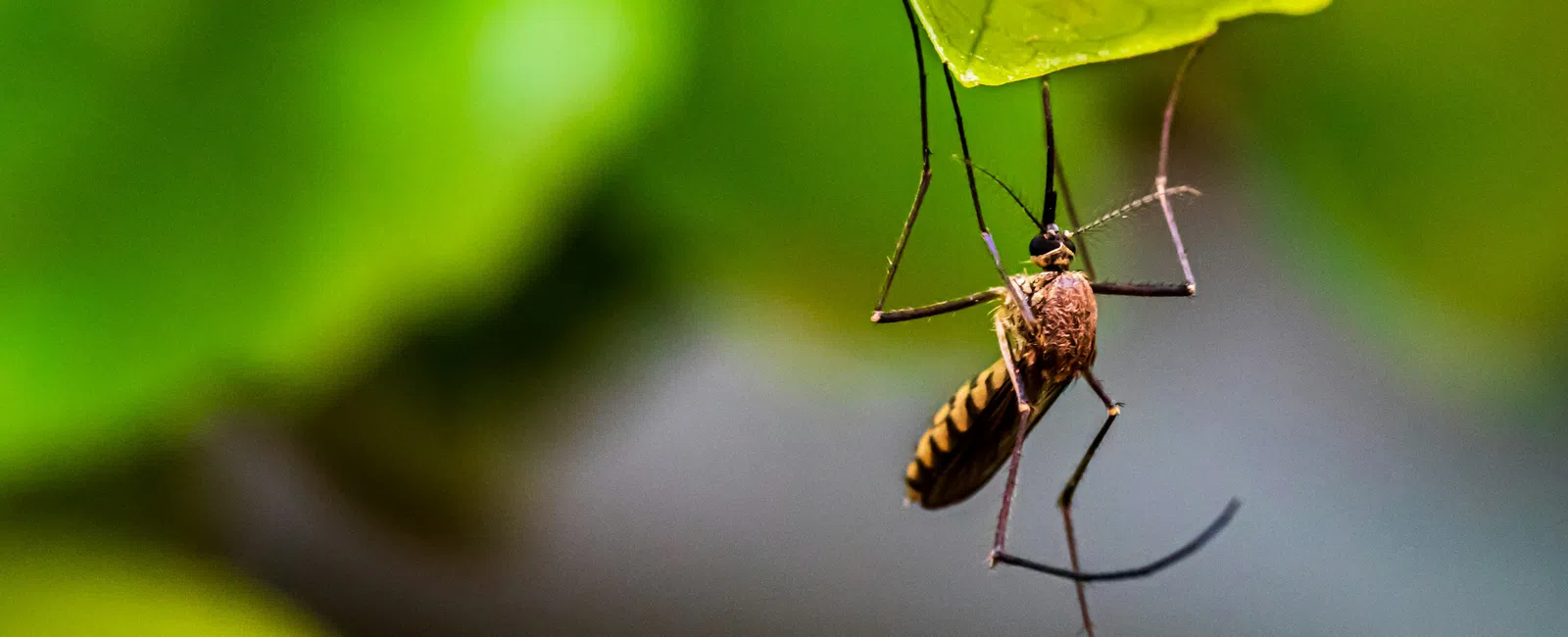
Gallinippers are one of the largest mosquito species in North America; they bite day and night aggressively and show up in waves after heavy rain rather than steadily throughout the season. It is not a meaningful disease carrier, which separates it from most mosquitoes people worry about, but the bite is genuinely painful, and the flooded ground that produces one produces thousands.
What A Gallinipper Actually Is
The gallinipper is Psorophora ciliata, sometimes called the American giant mosquito or the shaggy-legged gallinipper. It is a real mosquito, not a look-alike, and one of the largest species in North America. Adults run about half an inch long, which puts them at roughly 20 times the body mass of the common house mosquito most of us picture.
Its range runs east of the Continental Divide, from South Dakota down through Central America and across to Florida, so it is not unique to us. What is unique is how often our weather gives it what it needs.
How to Identify A Gallinipper
Size is the first clue, but a few details confirm it:
- A yellow-brown to golden body with a dark brown thorax marked by a thin bright yellow stripe down the middle
- Long hind legs covered in banded, shaggy scales that stick out and look almost feathered
- A yellow proboscis tipped in black, which is the needle-like mouthpart it uses to bite
- A wingspan in the 7 to 9 millimeter range, with an overall silhouette that reads as an oversized version of a normal mosquito
If you get a photo before it flies off, those shaggy hind legs are the giveaway. No other mosquito you are likely to see in Miami-Dade, Broward, or Palm Beach counties has them.
Gallinipper Vs. Crane Fly: Telling The Two Apart
Most people searching for a huge mosquito online have actually found a crane fly, the leggy insect Floridians call a mosquito hawk or skeeter eater. Crane flies are bigger than gallinippers, sometimes two inches across, and they are completely harmless. They have no biting mouthparts at all, and they do not eat mosquitoes despite the nickname.
The test is simple. A crane fly has extremely long, thin, dangling legs, a slender body, and it bumbles into walls and porch lights. A gallinipper flies fast, holds its body tight, and lands on you with intent. If it bit you, it was not a crane fly.
Why A Gallinipper Bite Hurts So Much
A bigger mosquito means a heavier proboscis and a deeper puncture, and people frequently describe the sensation as being stabbed rather than pricked. Gallinippers will also bite through thin clothing, so a t-shirt is not the barrier you might hope for.
They feed day and night, preferring large mammals, and they will follow you across the yard. DEET repellents do work on them, though their size may make them somewhat more tolerant of it.
The news is better for disease risk. Psorophora ciliata is not considered a significant vector of mosquito-borne illness in people or animals, which sets it apart from the Aedes and Culex species responsible for mosquito-borne diseases in Florida such as West Nile and dengue. A gallinipper is a painful nuisance, not a health threat.
Where Gallinippers Breed In South Florida
Gallinippers are floodwater mosquitoes, and that single fact explains everything about their timing here.
Instead of laying eggs directly in standing water like a typical mosquito, the female lays them on damp soil and in low spots that flood periodically. Those eggs then wait. They can stay dry and dormant for months or even years until high water reaches them, at which point an entire batch hatches at once. That is why a yard with no mosquito problem in May can be overrun the week after a tropical system parks over Broward County.
The breeding grounds that matter most on a South Florida property tend to be:
- Low, poorly draining corners of the lawn where water pools for days after a storm
- Swales, ditches, and canal edges along the property line
- Retention areas and undeveloped lots next door
- Ground that stays saturated under dense landscaping or an overwatered irrigation zone
- Sod-lined depressions around downspouts and A/C condensate lines
Our May through October rainy season, tropical storm rainfall, and high water table give gallinipper eggs repeated chances to flood, which is why populations spike in waves rather than building steadily. Their larvae are predatory, feeding on other mosquito larvae and even tadpoles, so a flooded swale can produce a small number of very large, very hungry adults.
How to Defend Your Home Against Gallinippers
Because the eggs sit in soil rather than water, the usual advice about dumping buckets only gets you partway. Grade and drainage matter just as much.
Start by walking the property two days after a hard rain and marking every spot still holding water. Those are your breeding sites. Regrading a low area, extending a downspout, or reducing irrigation on a saturated zone removes the flood trigger. Dumping and scrubbing birdbaths, plant saucers, tarps, and clogged gutters is the other half of reducing mosquitoes in your yard, since those containers feed the smaller species sharing the space.
Keep grass cut and shrubs thinned, since adult gallinippers rest in shaded vegetation during the hottest part of the day. Repair torn screens, and if you are outside at dawn or dusk, long sleeves plus a DEET or picaridin repellent make a real difference.
For persistent pressure, a professional barrier treatment applied to resting sites, combined with larvicide in water that cannot be drained, is what breaks the cycle. Royal Pest & Termite's pet-safe mosquito control uses products chosen to work on adult mosquitoes while staying safe around children, dogs, and cats, which is the promise the company was built on.
When To Call For Help
If the gallinippers keep coming back after every storm, the source is usually just off your property, and knocking down the adults on a schedule is the practical answer.
Royal Pest & Termite is licensed, insured, and a proud member of the Florida Pest Management Association, with a 4.8 star rating across 173 Google reviews and free inspections across Miami-Dade, Broward, and Palm Beach counties. Every service includes free call-backs, so if mosquitoes return between visits, we do too.
Call us today to schedule a free mosquito inspection and take your yard back before the next downpour.