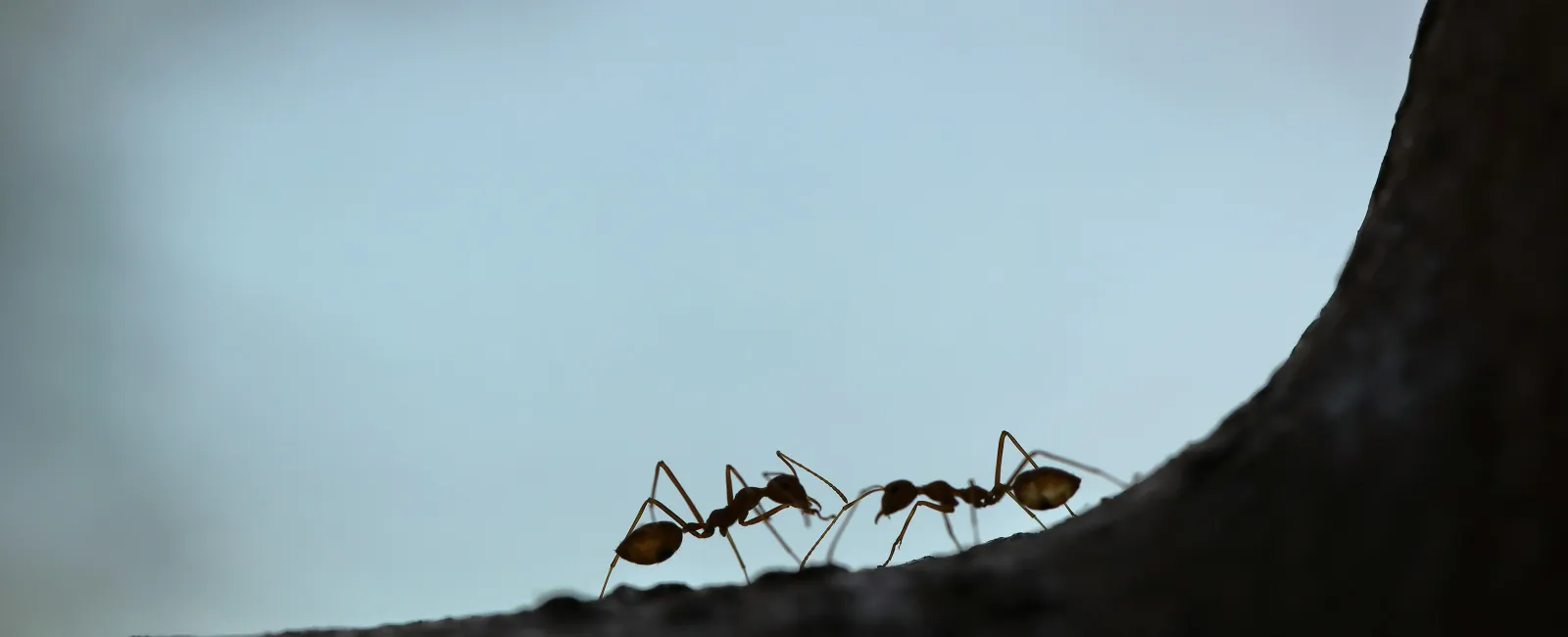
If you've lived in Broward County for any length of time, you know the pest roster by heart. Mosquitoes thick enough to make you question your life choices, palmetto bugs that appear without warning, and fire ants that build mounds in the worst possible places. But lately, a different kind of invader is showing up in yards from Pembroke Pines to Fort Lauderdale, and it's unlike anything most homeowners have dealt with before.
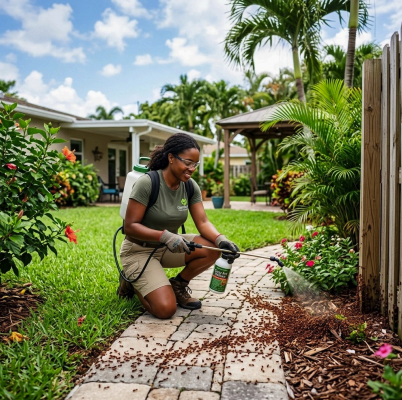
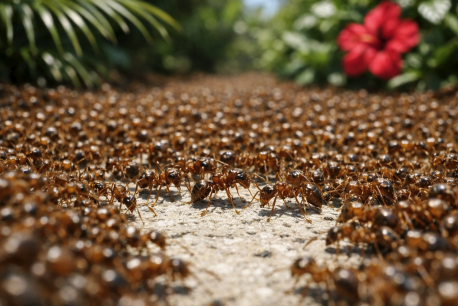
Meet the Caribbean crazy ant (Nylanderia pubens), also known as the tawny crazy ant or Raspberry crazy ant. They don't march in a neat single file as you'd expect. They dart, scatter, and swarm in numbers that can cover an entire patio or garden bed before you realize what you're looking at. One homeowner in Davie described it as watching her mulch "come alive."
At Royal Pest & Termite, based in Miramar and serving Broward County since 2014, we've watched Caribbean crazy ants spread steadily across the region, and we've developed a strategy that actually works against them. This guide explains what you're dealing with, why the hardware store spray is making things worse, and how to get rid of crazy ants for good.
What Are Caribbean Crazy Ants (and Why Are They Called "Crazy")?
The name is a scientific description of their behavior, not just a catchy label. Most ant species follow pheromone trails in orderly, predictable formations. Caribbean crazy ants (Nylanderia pubens, sometimes classified as Nylanderia fulva) move in erratic, jerky patterns with no apparent direction, which is exactly what gives them their name.
You'll also hear them called tawny crazy ants (for their reddish-brown coloring) or Rasberry crazy ants, named after Tom Rasberry, the Texas exterminator who documented their U.S. invasion in 2002. All three names refer to the same aggressively invasive species that has become firmly established across South Florida, including throughout Broward County.
Their movement looks chaotic. Their colonization is calculated and relentless.
How to Identify Them in Your Broward County Yard
Spotting a crazy ant infestation early is the difference between a manageable treatment and a full-scale takeover that's already spread to three neighboring lots. Here's what to look for:
- Movement: Fast, frantic, and directionless, they scatter in all directions rather than following a line, especially when disturbed
- Appearance: Small (about 1/8 inch), golden-brown to reddish-brown, with noticeably long legs relative to their body size
- Trails: Instead of a thin single-file line, you'll see wide "highways" of ants along sidewalks, fence lines, tree trunks, and the sides of your house
- Scale: A mature Caribbean crazy ant colony can contain millions of individual workers operating across multiple nesting sites simultaneously. What looks like a trail is often just the visible surface of a much larger underground network
Why Broward County Is a Perfect Environment for Crazy Ants
Broward County's geography and climate create conditions that Caribbean crazy ants find ideal for establishing massive, persistent colonies. The combination of year-round warmth, high humidity, frequent afternoon rain, and dense residential landscaping gives them everything they need: water, shelter, food, and thermal stability, without the seasonal die-offs that slow infestations in cooler climates.
The county's extensive canal system, running through neighborhoods in Miramar, Pembroke Pines, Davie, Cooper City, and west Fort Lauderdale, creates moist, loose soil along banks and easements that are prime nesting territory. Properties that back up to these canals, retention ponds, or drainage swales tend to see the heaviest infestations, and re-infestation pressure from adjacent properties is constant.
Unlike fire ants, which build visible mounds you can spot from across the yard, crazy ants nest invisibly, under leaf litter, deep in mulch beds, inside root masses, beneath pavers, and inside electrical conduits. There's rarely a single visible nest to target, which is why treatment requires a fundamentally different approach than most homeowners expect.
They're More Than a Nuisance: The Real Damage They Cause
Caribbean crazy ants don't sting the way fire ants do, so they're not a direct physical threat. But the damage they cause to property and the local ecosystem is significant and often expensive.
Ecological disruption: Crazy ants are so aggressively territorial that they displace native ant species, spiders, and small lizards that naturally regulate other pest populations. When they take over a yard, the ecological balance shifts, and other pest problems often get worse as a result.
Plant damage: These ants actively farm aphids and scale insects, protecting them from predators in exchange for the sugary honeydew they produce. This accelerates damage to ornamental plants and palms that are already under stress from Broward's heat. If your plants look like they're declining alongside an ant surge, aphid farming is often the culprit.
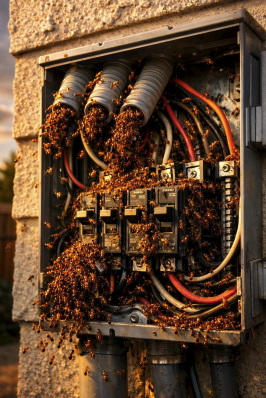
Electrical and mechanical damage: This is where crazy ants become genuinely costly. For reasons still under study, they're strongly attracted to electrical equipment and enclosed, warm spaces, including AC condensers, pool pumps, irrigation controllers, and circuit breaker panels. When one ant is electrocuted, it releases an alarm pheromone that draws more ants to the same location. The accumulation builds until it causes a short circuit or equipment failure. We've seen homeowners in Hollywood and Plantation face unexpected repair bills for pool and HVAC equipment due to severe ant damage that was completely invisible until the system stopped working.
Why Your DIY Spray Isn't Working
We get this call constantly across Broward County: "I've sprayed the whole perimeter twice, and there are just as many ants as before, maybe more."
There's a specific reason for that, and it's not the product's strength. It's the colony's biology.
The super-colony problem. Most ant species have a single queen. Eliminate the queen, and the colony collapses. Caribbean crazy ants maintain hundreds of queens spread across a single colony. If you apply a repellent spray around your foundation, you may kill thousands of foragers, but the queens embedded in the soil will simply accelerate egg production or relocate the nest a few feet in another direction. The colony doesn't collapse; it adapts.
Standard bait stations don't work on them. The small sugary bait stations that eliminate ghost ants and pharaoh ants, common Broward County pests, are largely ignored by crazy ants. Their dietary preferences shift between protein and carbohydrate phases throughout the season. Using the wrong attractant at the wrong time is a waste of money.
Repellents cause budding. Most hardware store ant sprays are repellents. With crazy ants, a repellent spray triggers a survival response called budding: the colony senses a perimeter threat, the queens split up, and new satellite colonies establish themselves in different parts of your yard, garden, or inside your walls. It's possible to turn one infestation into five with the wrong product. This is the call we dread most: a homeowner who was treated aggressively and is now dealing with crazy ants in four places instead of one.
How to Get Rid of Crazy Ants: What Actually Works
Effective crazy ant control is not a single-product fix. It requires coordinating multiple treatment types simultaneously, timed to the colony's current behavioral phase.
Non-repellent liquid treatments are applied to active nesting zones, harborage areas, and structural entry points. Because these products are undetectable to ants, foragers carry them back into the colony through normal contact and grooming, thereby creating a transfer effect. The colony spreads the treatment itself.
Bait rotation using protein-phase and carbohydrate-phase attractants timed to what the colony is actively foraging for. Getting this wrong means the ants walk around the bait entirely.
Insect growth regulators (IGRs) that disrupt reproductive development and prevent new queens from maturing, breaking the cycle at the source rather than just reducing the forager population.
Integrated Pest Management (IPM) identifies what attracts them. This includes bridge points like tree limbs touching your roofline, mulch beds piled against the foundation, irrigation leaks creating consistent soil moisture, and debris that provides nesting cover along your fence line or pool deck.
Our ant control treatments at Royal Pest & Termite are built around this coordinated approach. We've been treating Broward County ant problems, including persistent crazy ant infestations, since 2014, and our technicians know the specific conditions in this county: the canal-adjacent soil moisture, the landscaping styles common in Miramar, Pembroke Pines, Davie, Hollywood, and Plantation, and the seasonal patterns that drive crazy ant foraging activity. This is local expertise that a national franchise call center can't replicate.
We never subcontract. When you call Royal, a Royal technician shows up.
What Broward Homeowners Can Do Right Now
Professional treatment handles the active colony. These steps reduce how attractive your property is to new colonies moving in from neighboring lots, which in a dense Broward neighborhood, is a real and ongoing pressure:
- Pull mulch back from your foundation. A thick mulch bed pressed against your home's exterior is a ready-made nesting site. Keep it no more than 2-3 inches deep and at least 6 inches from the foundation.
- Trim anything touching your house. Branches, shrubs, or vines contacting your walls or roofline are direct entry highways. Maintain 12 inches of clearance around the exterior perimeter.
- Fix irrigation leaks. Crazy ants need water to sustain large colonies. A leaky irrigation head or dripping outdoor faucet anchors a colony to your property. Fix it, and you remove one of their primary reasons to stay.
- Clean your outdoor cooking areas. Grease residue on a grill, patio table, or outdoor kitchen, even in small amounts, is a food source. A thorough cleaning after weekend cookouts removes one more attractant.
- Check your electrical equipment. If you have a pool pump, AC condenser, or irrigation controller showing signs of ant activity, get it inspected before it becomes an electrical failure. Catching it early is far cheaper than the repair.
Frequently Asked Questions
Do Caribbean crazy ants bite? Technically, yes, but the bite is barely noticeable; they have no functional stinger like fire ants. The real threat isn't physical harm to you; it's the property damage, plant destruction, and electrical risk they create over time.
Are crazy ants harmful to humans? Not directly in the way fire ants are. But their tendency to damage electrical equipment, disrupt your yard's ecosystem, and facilitate the spread of plant-damaging insects causes real financial harm. In Broward County's climate, an untreated crazy ant infestation grows steadily worse; it doesn't resolve on its own.
How long does it take to get rid of crazy ants in Broward County? With professional non-repellent treatment, most homeowners see a meaningful reduction in activity within 7-10 days. Full elimination, particularly when neighboring properties are also affected, is common in the dense residential neighborhoods throughout Broward and can take several weeks. Our recurring service keeps active pressure on new colonies before they can re-establish.
Can I use fire ant bait on crazy ants? No. Fire ant baits use attractants tuned to fire ant dietary preferences, which crazy ants largely ignore. They require completely different products. Using the wrong bait is one of the most common and costly mistakes we see from homeowners who've already spent money on treatments that didn't work.
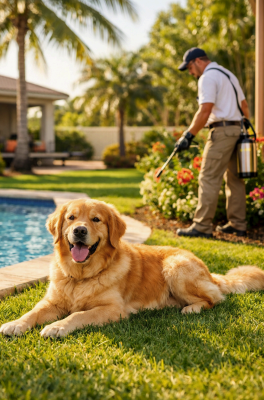
Are your treatments safe for pets and kids? Yes. Once the product has dried, which doesn't take long in South Florida's heat, your pets and children can return to the yard as usual. Choosing pet-safe and child-safe products is a core part of how we operate, not an afterthought.
What's the difference between Caribbean crazy ants, tawny crazy ants, and Rasberry crazy ants? They're all the same species (Nylanderia fulva / Nylanderia pubens) referred to by different common names. "Tawny" refers to their color, "Rasberry" honors the exterminator who identified the U.S. invasion, and "Caribbean" describes their geographic origin. If you're in Broward County seeing fast-moving, erratic, reddish-brown ants in large numbers, you're looking at the same pest regardless of the name.
Ready to Take Your Yard Back?
You shouldn't have to avoid your patio, skip the backyard cookout, or worry about your pool equipment because of an ant infestation. Royal Pest & Termite is locally owned, based in Miramar, and has been protecting Broward County homes since 2014.
Our general pest control services cover everything from crazy ants and fire ants to cockroaches and termites, all handled in-house by our own technicians, never subcontracted. And if the ants come back between scheduled visits, so do we, at no extra charge.
Call us at 754-800-5284 or request a free inspection online. Let's get your yard back.
We serve Miramar, Pembroke Pines, Davie, Hollywood, Fort Lauderdale, Boca Raton, South Palm Beach County, and most of Broward County, FL. We also service select areas in northern Miami-Dade County. Call us to confirm availability at your address.